Bangkok hums with a rhythm all its own. For a first-timer, its sheer scale and vibrant intensity can feel a little overwhelming at first. Yet, beneath the initial rush of senses, I’ve found a city rich in quiet moments, profound history, and genuine warmth. Approaching Bangkok with an open mind and a calm pace allows its true character to slowly reveal itself. This is not a city to conquer, but one to experience, one slow morning, one street food stall, one river journey at a time.
No one pays to be recommended here, and we say when a free or cheaper option wins. Our promise →
In this guide9 sections
- Getting Your Bearings: Arrival and First Steps
- Navigating the City: Water, Rail, and Road
- The Old City’s Heart: Rattanakosin
- A Taste of Bangkok: Markets and Street Food
- Finding Your Pace: Neighborhoods and Quiet Corners
- More to Do: Canals, Rooftops and Day Trips
- Practicalities and Comforts
- What this means for your trip
- Frequently asked questions
Getting Your Bearings: Arrival and First Steps

Emerging from the airport at Suvarnabhumi (BKK) or Don Mueang (DMK), the city’s warmth – the humid air, the welcoming smiles – is the first thing that greets me. For many, the Airport Rail Link from Suvarnabhumi offers a smooth and efficient journey into the city, connecting to the BTS Skytrain at Phaya Thai station. It’s a clean, modern introduction to Bangkok’s public transport, allowing me to bypass the initial traffic of the expressways. Once settled, I find that a good first step is simply to walk a little in your chosen neighborhood. Observe the rhythm of daily life: the vendors setting up their stalls, the local cafés beginning to stir, the scent of jasmine and spices drifting through the air. This quiet observation, even for a few moments, helps me settle before diving into the city’s more famous sights. Taking a moment to find a local spot for a quiet cup of iced Thai tea or coffee is always my first mission.
Navigating the City: Water, Rail, and Road

Navigating Bangkok’s scale calls for a bit of thought. Fortunately, getting around is part of the experience here, with a wonderful array of choices, each with its own character. The BTS Skytrain and MRT subway will likely become familiar companions for covering longer distances efficiently. They are air-conditioned, generally reliable, and connect many of the modern commercial and residential areas like Sukhumvit and Silom. You can purchase single-journey tickets or opt for a Rabbit Card for the BTS if you plan extensive use.
For journeys to the older parts of the city, such as Rattanakosin, the Chao Phraya Express river boats are not just practical but also a delightful experience. Gliding along the Chao Phraya River offers a lovely perspective of the city’s landmarks and allows you to escape the road traffic. The local (orange flag) boat is an affordable way to hop between key piers like Tha Tien (for Wat Arun and Wat Pho) and Saphan Taksin (connecting to the BTS). For shorter distances, or simply for the experience, a tuk-tuk can be a memorable way to travel. Just remember to agree on a fare before you start your journey. Ride-hailing apps like Grab also provide a convenient way to get around, especially in the evenings or when the heat is intense.
The Old City’s Heart: Rattanakosin
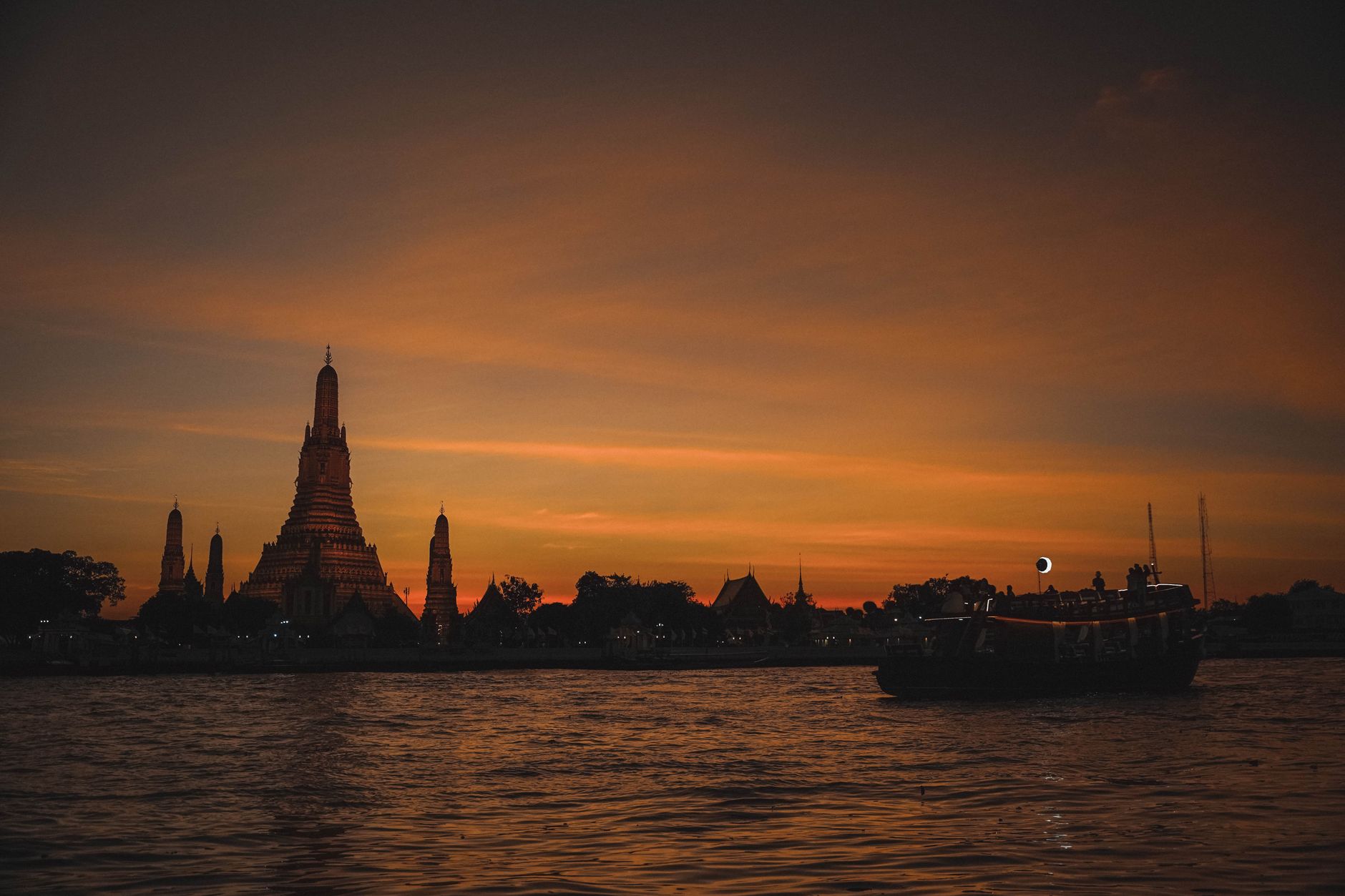
Rattanakosin Island holds the heart of Bangkok’s historical grandeur. Here, you’ll find the majestic Grand Palace and the revered Wat Pho, home to the enormous Reclining Buddha. Visiting these sites, I always arrive early, just after opening, to experience a quieter reverence before the main crowds arrive. The intricate details of the temples, the golden spires catching the morning light, are best absorbed in moments of relative calm.
A short ferry ride across the Chao Phraya River from Tha Tien pier takes you to Wat Arun, the Temple of Dawn, whose porcelain-encrusted spires are particularly beautiful at sunset or sunrise. When visiting any temple or sacred site in Thailand, modesty in dress is important – shoulders and knees should be covered for both men and women. Loose, lightweight trousers or a long skirt and a t-shirt are usually just right. You’ll also need to remove your shoes before entering temple buildings, so easy-to-slip-on footwear is practical. It’s also worth noting that around the Grand Palace, friendly strangers might approach you claiming the palace is ‘closed’ or directing you elsewhere; it’s almost always a scam. Always verify information at the official entrance.
A Taste of Bangkok: Markets and Street Food
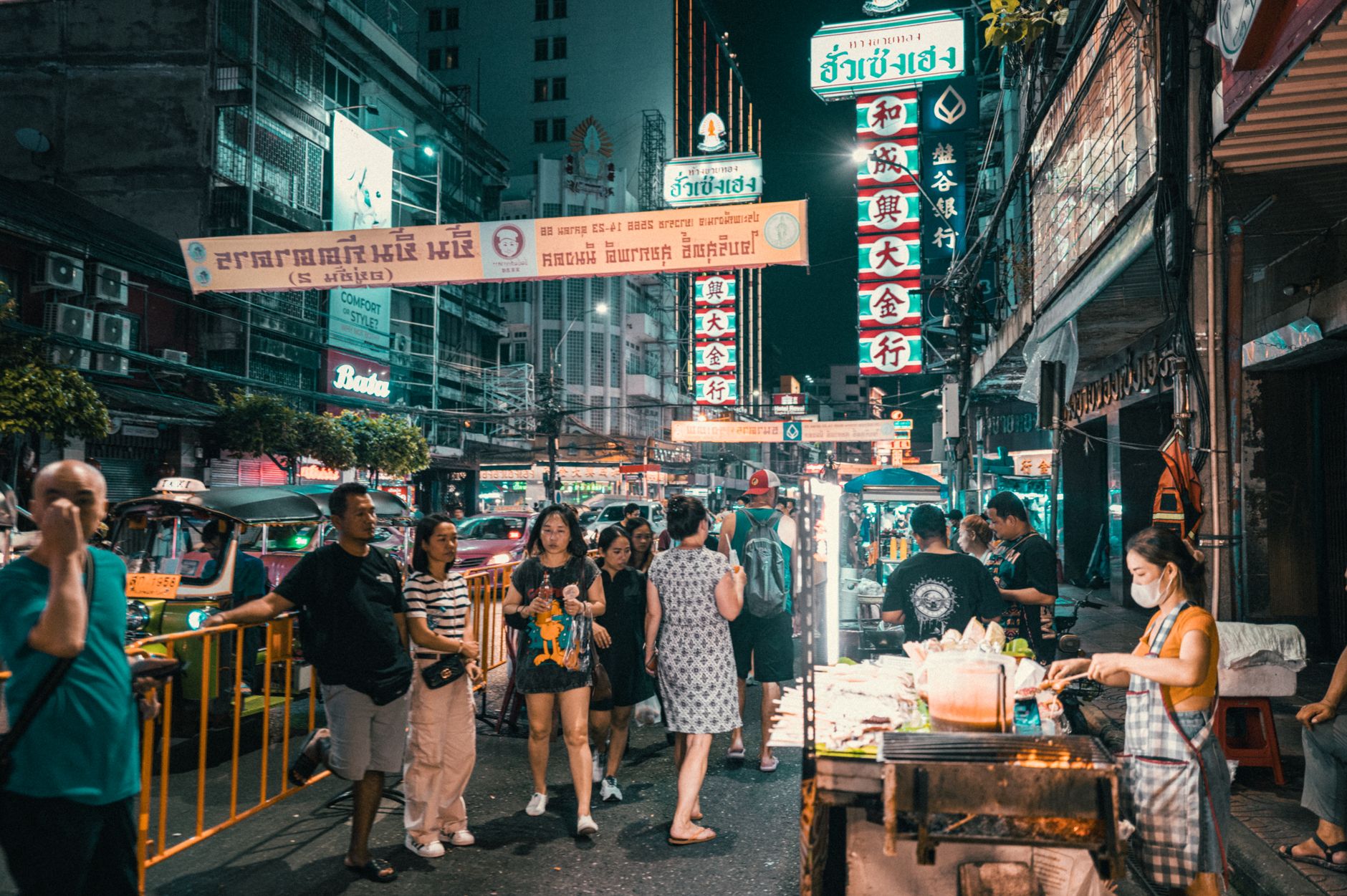
Nowhere does Bangkok truly come alive for the senses more than in its markets and street food scene. For an immersion in local commerce, the sprawling Chatuchak Weekend Market offers an immersion in itself, with everything from local crafts to street snacks. It’s vast, and I find it’s best explored with an open mind and comfortable shoes, allowing yourself to get wonderfully lost for a few hours.
For many, myself included, the highlight of Bangkok’s culinary landscape is its street food. The vibrant night market along Yaowarat Road in Chinatown has a wonderful reputation. The aromas of wok-fried dishes, sweet desserts, and grilling seafood fill the air as vendors prepare their dishes right before your eyes. I often find myself sampling Pad Thai, the classic stir-fried noodle dish; rich Boat Noodles (Kuay Teow Ruea); spicy and refreshing Som Tam (papaya salad); and for a sweet ending, fragrant Mango Sticky Rice. I always make a point to try whatever catches my eye from stalls with bustling crowds; it’s a good sign of freshness and local popularity.
Finding Your Pace: Neighborhoods and Quiet Corners

Beyond the major landmarks, Bangkok offers a mosaic of neighborhoods, each with its own distinct character. Sukhumvit is known for its modern shopping malls, international restaurants, and rooftop bars, offering a more contemporary feel. Nearby Silom blends business districts with lively night markets and excellent local eateries. For those interested in the more historical and bohemian side, Banglamphu is home to Khao San Road, known for its lively backpacker scene, but also quieter side streets where local life still unfolds.
Choosing a base? Where to stay in Bangkok compares five areas, from Sukhumvit to the Old Town, and names 12 hotels, with the catch for each.
I always enjoy exploring neighborhoods like these on foot, especially in the early mornings, when the city is just waking up. It’s in these moments, watching a vendor prepare their breakfast cart, or seeing children walk to school, that you truly connect with the everyday rhythm of Bangkok. Finding a quiet local café, perhaps with an old-fashioned sign and a strong iced coffee, provides a wonderful respite from the city’s energy. It’s a chance to simply observe, to let the world flow by, and to appreciate the small, unfolding details of daily life.
More to Do: Canals, Rooftops and Day Trips
Inside the Grand Palace grounds, Wat Phra Kaew holds the Emerald Buddha, Thailand’s most sacred image, carved from a single block of jade, with murals of the Ramakien epic around it. Next door, Wat Pho is the birthplace of traditional Thai massage, and you can take one on the spot.
To see the older, riverine city, hire a longtail boat into the klongs (canals) of Thonburi, past stilt houses and waterside temples. It is cooler and more scenic than the roads above.
After dark, the Rot Fai (Train Night Market) mixes vintage stalls with street food. In Chinatown, look out for oyster omelettes and grilled seafood; some Yaowarat stalls have earned Michelin recognition.
For a quieter hour, the Jim Thompson House is the teak home of the American who revived Thai silk before vanishing in 1967, now a leafy museum of art and architecture. To end an evening, a rooftop bar such as the Sky Bar at Lebua looks out over the lit city.
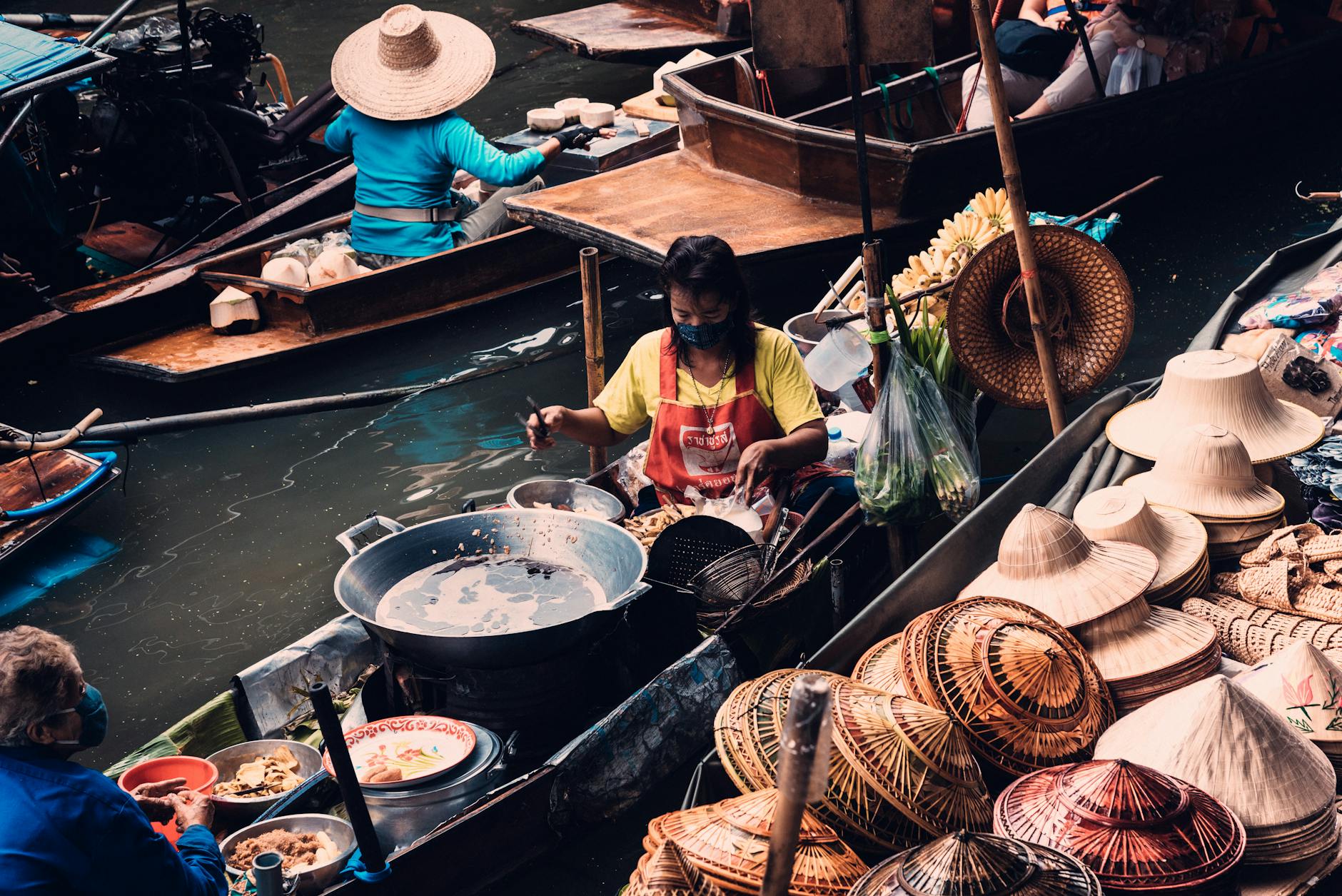
With one day to spare, choose between history and water:
- Ayutthaya, the ruined former capital 80 km north, is a UNESCO site of brick prangs, including the Buddha head held in tree roots. It is reachable by train, bus or river cruise.
- A floating market such as Damnoen Saduak or the calmer Amphawa means an early start, and is often paired with the Maeklong Railway Market, where stalls fold away as a train passes through.
A guided tour saves a lot of dawn logistics for either. If you want to be at the palace gates when they open, our stay guide covers the Old Town.
Practicalities and Comforts

Bangkok’s tropical climate means it’s almost always warm, often hot and humid. Staying hydrated is incredibly important; bottled water is readily available and inexpensive. Plan your outdoor activities for cooler parts of the day, typically mornings or late afternoons, and don’t hesitate to duck into an air-conditioned mall or café for a break when the sun is at its peak.
For staying connected, I find that an eSIM is very practical. It allows you to have data access from the moment you land, without the hassle of swapping physical SIM cards. It’s useful for navigating with maps, checking opening hours, and keeping in touch without searching for Wi-Fi. It’s a small detail that makes a big difference in ensuring smoother travels. eSIM providers for international travel
Another essential I always consider for international travel is a comprehensive travel insurance policy. While we hope to never need it, having comprehensive coverage for unexpected medical situations or travel disruptions brings a real peace of mind. It allows me to fully immerse myself in the experience, knowing I’m prepared for unforeseen circumstances. Reputable travel insurance comparison site
What this means for your trip

A first visit to Bangkok has a quiet way of shifting your perspective. It’s a city of contrasts: ancient temples stand beside gleaming skyscrapers, quiet canals weave through bustling markets, and the pace of life can swing from frenetic to wonderfully slow. My hope is that by approaching it with curiosity and a gentle pace, you’ll discover your own unique rhythm within its vibrant embrace. Allow yourself to get a little lost, to try a dish you’ve never heard of, and to simply sit and watch the world go by. Bangkok has a way of leaving you slightly wiser, perhaps a little more patient, and certainly with a heart full of new memories. It’s a place that teaches you to embrace the unexpected and find beauty in the everyday.
Frequently asked questions
What's the best way to get around Bangkok?
The BTS Skytrain and MRT subway are efficient for longer distances. For riverside attractions, the Chao Phraya Express boats are ideal. Tuk-tuks offer a distinct experience for shorter hops, but agree on a price first.
What should I wear when visiting temples in Bangkok?
Temples require modest attire. This means shoulders and knees covered for both men and women. Loose, breathable clothing is best in the heat, and remember to remove shoes before entering temple buildings.
Is Bangkok street food safe for first-timers?
Generally, yes, especially at popular stalls with high turnover. Look for vendors with queues and clean preparation areas. Starting with well-cooked dishes like Pad Thai or grilled skewers can be a gentle introduction.
How can I avoid common tourist scams near attractions?
Be wary of overly friendly strangers offering unsolicited advice or claiming an attraction is 'closed today.' Always confirm information at the official entrance. Use reputable transport and agree on fares upfront, especially with tuk-tuks.
What's the best way to stay cool in Bangkok's heat?
Hydration is key – drink plenty of water. Plan outdoor activities for cooler mornings or evenings. Seek air-conditioned breaks in malls or cafés, and dress in light, breathable fabrics. A small, portable fan can also be helpful.
Keep reading on Gently Yonder
- Where to Stay in Bangkok Five areas and 12 hotels, from Sukhumvit to the Old Town, starting with the Mandarin Oriental of 1876.
- What Counts as Rude in 12 Cultures Goffman, Hofstede, and twelve country case studies for international travellers.
- Best eSIM for Thailand (2026) Coverage across Bangkok, Chiang Mai, and the islands, and how much data you'll need.
- Where to Book a Bangkok Dinner Cruise KKday for the cheapest Chao Phraya boats; Klook for the headline vessels and clearer piers — but the sunset departure saves more than either.
- Chiang Mai: A First-Timer's Guide Old City temples, Doi Suthep, ethical elephant sanctuaries, and khao soi.