Gion is the Kyoto that people picture before they arrive: wooden machiya houses leaning over narrow lanes, paper lanterns coming on at dusk, the sense that something quietly formal is happening just out of view. It is Kyoto’s most famous entertainment district and the heart of its geiko and maiko culture — and it is also a place where a little understanding goes a long way, because much of what looks like a film set is in fact people’s homes and workplaces.
No one pays to be recommended here, and we say when a free or cheaper option wins. Our promise →
In this guide10 sections
A note on words, and on respect
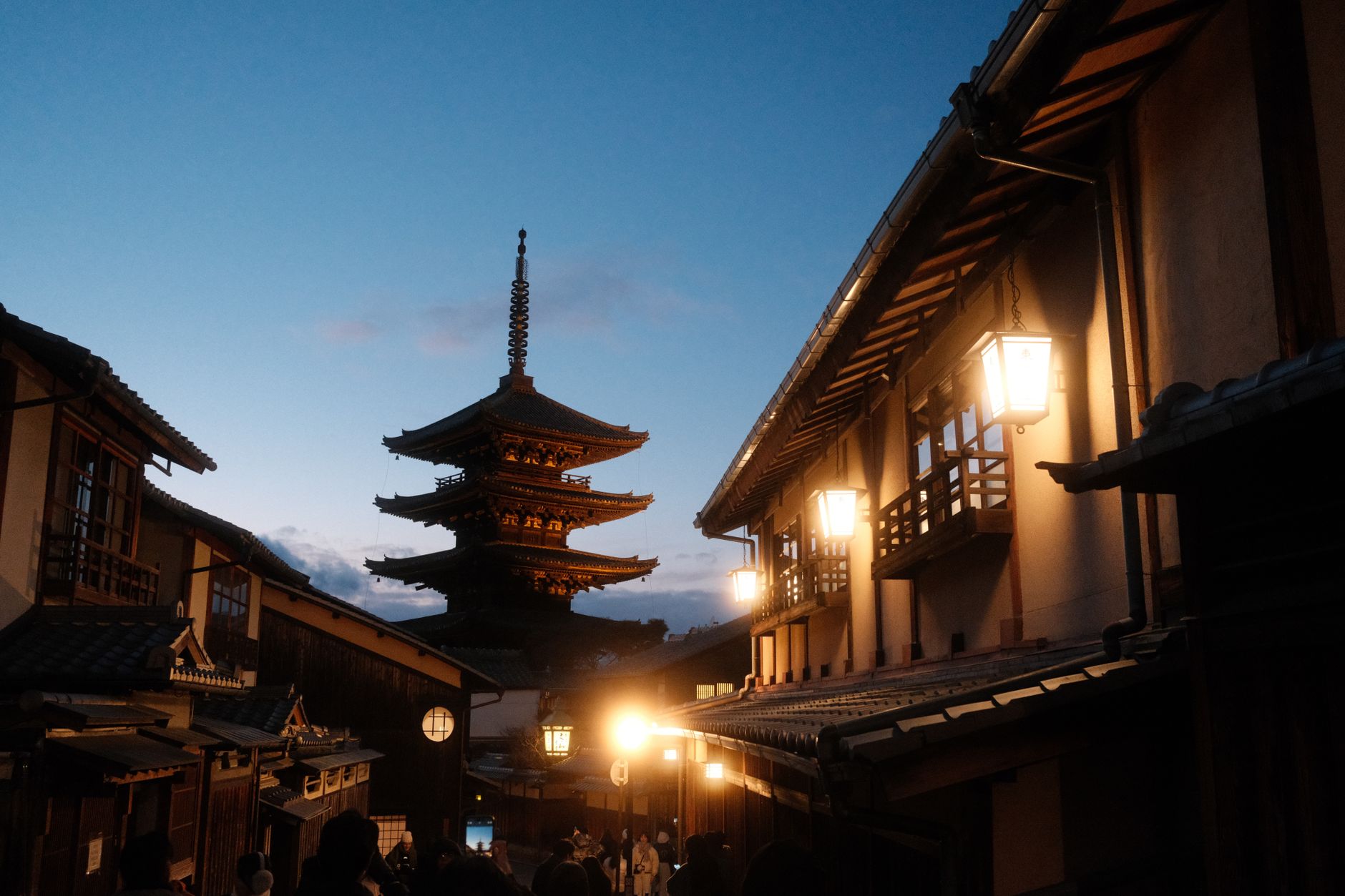
In Kyoto the women you may have heard of as “geisha” are called geiko, and their apprentices are maiko. They are highly trained performers of music, dance, and conversation, and they are usually hurrying to an appointment when you glimpse one, not posing. Gion is also not the whole story: Kyoto has five geisha districts — hanamachi, “flower towns” — of which Gion Kōbu is the largest and most famous, with Gion Higashi, Pontochō, Miyagawa-chō, and Kamishichiken carrying the same traditions at a quieter volume. Knowing that much already puts you ahead of most visitors standing in the lane.
It helps to understand why the district feels closed: it is. The teahouses operate on the old principle of ichigen-san okotowari — no first-time guests without an introduction from an existing patron. That is not unfriendliness; it is a system of trust that has protected performers and patrons alike for centuries. In recent years parts of Gion — particularly the private alleys off the main street — have restricted photography after visitors crowded and harassed maiko, and there are posted rules and fines in places. The simple, gracious approach: stay on the public streets, do not chase or photograph people without consent, and treat the district as the working neighbourhood it is. You lose nothing and you keep the place worth visiting.
Hanami-kōji: the classic street
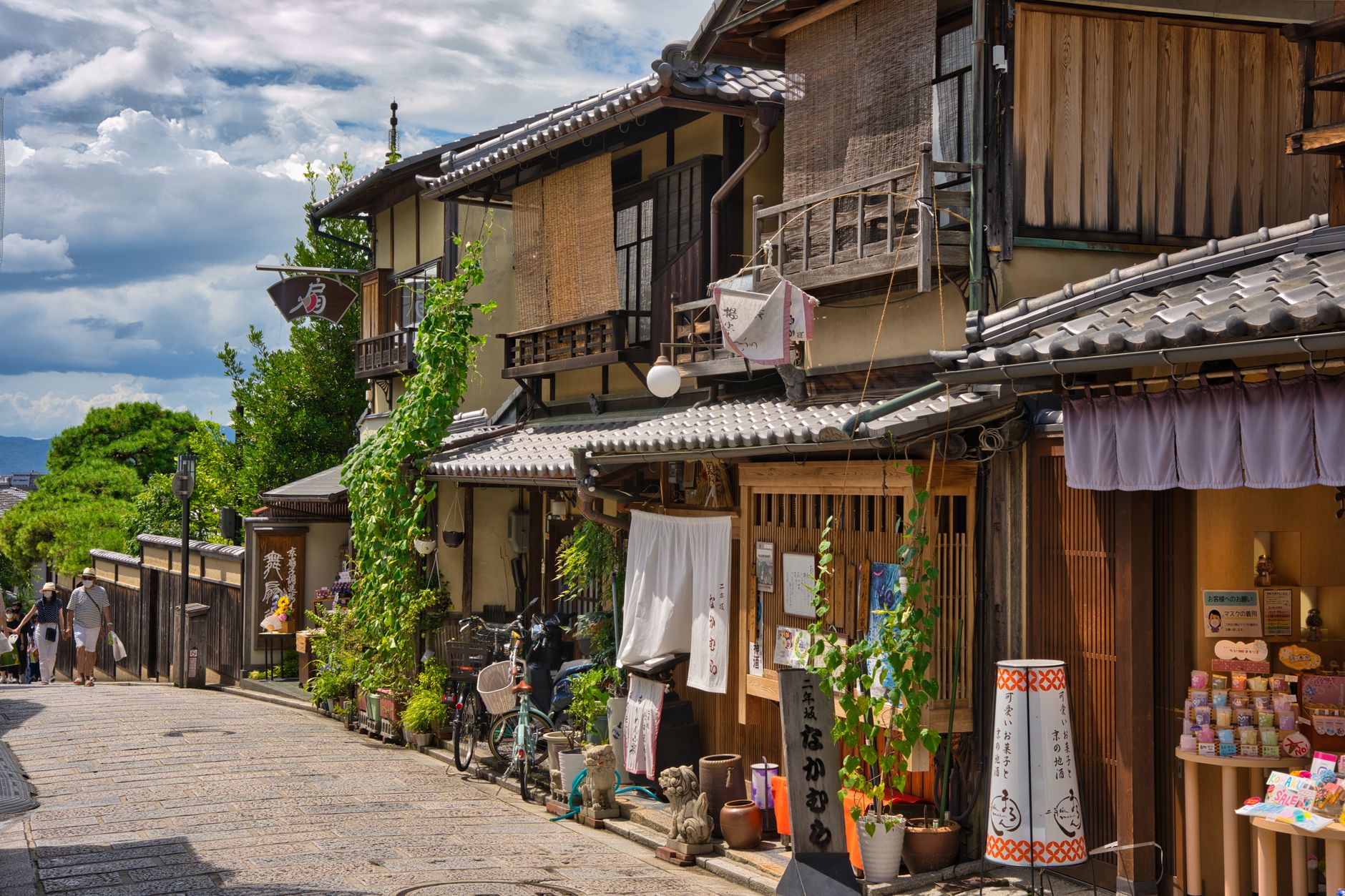
The spine of Gion is Hanami-kōji, running south from Shijō Street. Along it stand the traditional teahouses — ochaya — and restaurants behind discreet wooden façades and short curtains. At the corner where the lane meets Shijō sits the most storied of them all: Ichiriki Chaya, its red-ochre walls instantly recognisable, host to more than three centuries of entertaining and a setting in the famous tale of the forty-seven rōnin. You will not get in — see the note on introductions above — and somehow that makes standing outside it better, not worse; the building keeps its secrets in plain sight.
Early evening is the atmospheric hour, when lanterns glow and the lane fills with a soft, expectant quiet. Walk it slowly, look up at the lattice-work and tiled roofs, and resist the urge to peer through doorways; the pleasure here is in the whole, not in catching a single figure. The stone paving underfoot, the smell of cypress and grilled fish drifting from hidden kitchens, a taxi easing past with its doors shut on some appointment you will never know about — that is Gion working, and watching it work is the actual attraction.
Shirakawa: the gentler side

North of Shijō, the mood softens along the Shirakawa canal, where willows trail over the water and a row of restaurants faces the stream. The small Tatsumi Bridge and the shrine beside it make one of the most photographed corners of Kyoto — and because it is public and open, it is an easy place to enjoy without any of the awkwardness of the private alleys. In cherry-blossom season it is particularly lovely, and busy to match.
Yasaka Shrine and Maruyama Park

At the eastern end of Shijō, Gion runs up to Yasaka Shrine, a large and welcoming shrine sometimes called Gion-san, lit with rows of lanterns bearing the names of local businesses. It is free to enter and open late, which makes it a natural evening destination — and it is also the reason the district exists at all: the neighbourhood grew up to serve the shrine’s pilgrims, and the shrine’s great festival, Gion Matsuri, has been held since the ninth century, when it began as a procession to appease the gods during an epidemic. Every July the festival takes over central Kyoto for the whole month, with grand float processions on the 17th and 24th and lantern-lit evenings beforehand.
Behind the shrine lies Maruyama Park, Kyoto’s popular public garden and one of the city’s best-loved spots for cherry blossoms in spring, when its great weeping cherry becomes the centrepiece of the city’s hanami. North of the park, and often missed, the vast gate of Chion-in and the small garden temple of Shōren-in continue the walk for anyone not ready to turn back.
Kennin-ji and Minami-za
Just south of Hanami-kōji sits Kennin-ji, founded in 1202 and regarded as Kyoto’s oldest Zen temple. Its grounds and halls offer exactly the calm that the busy lanes do not, and it is often quieter than Kyoto’s headline temples: raked gravel gardens, painted screens, and — filling the ceiling of its Dharma hall — a pair of vast twin dragons that make everyone lie back on the tatami-edge benches and stare. That a temple this good sits two minutes from the busiest lane in Kyoto, largely ignored, tells you something useful about how crowds work in this city.
Back towards the river, at the Shijō bridge, the Minami-za theatre is the historic home of kabuki in Kyoto — worth knowing even if you only admire its distinctive façade from outside. If your December dates are lucky, its kaomise season is the theatrical event of the Kyoto year, and single-act tickets are the approachable way in.
Tea, sweets, and small tables

You cannot enter the ochaya, but Gion’s public tables are their own tradition, and a few have been at it for centuries. Kagizen Yoshifusa, on Shijō, has been making Kyoto confectionery since the Edo period; its speciality is kuzukiri — cool, translucent ribbons of arrowroot served with black-sugar syrup — eaten in a quiet tearoom behind the shop that feels like a secretless version of everything else in the district. Gion Tsujiri, with roots in the Uji tea trade going back to the 1860s, is where the matcha runs from properly bitter bowls to towering parfaits, and the queue tells you which the crowd came for.
For something entirely unfancy, Issen Yōshoku on Nawate-dōri serves exactly one dish — its namesake, a lacy egg-and-scallion pancake that predates modern okonomiyaki — in a room decorated with a wink. It is cheap, fast, strange, and has fed this neighbourhood for generations. Between these three you can eat your way through Gion’s registers — refined, fashionable, and cheerfully ordinary — without a reservation to your name.
The Gion calendar
If you can choose your dates, the district keeps a rhythm worth knowing. In April, the geiko and maiko of Gion Kōbu give their annual public performances — the Miyako Odori, staged since 1872 at the district’s own Kaburenjō theatre. This is the honest answer to “how do I actually see a maiko perform?”: buy a ticket like everyone else, and see the artistry properly presented rather than snatched on a street corner. Book ahead; April in Kyoto sells out.
In July, Gion Matsuri fills the month (the festival belongs to Yasaka Shrine, so this is its home turf), and the evenings before the two great processions turn the wider neighbourhood into a lantern-lit street party. In early November, the smaller Gion Higashi district gives its own dance season, the Gion Odori — less famous, easier to book, and beloved by people who prefer it that way. Exact dates and ticketing change year to year, so confirm with official sources once your trip is fixed.
Getting there, and fitting it in
Gion is easy to reach: Gion-Shijō Station on the Keihan line puts you at the west end of the district, Kyoto-Kawaramachi Station on the Hankyu line is just across the river, and from Kyoto Station the number 206 bus runs to the Gion stop by Yasaka Shrine. The classic way to arrive, though, is on foot from Kiyomizu-dera, letting the preserved lanes of Sannenzaka and Ninenzaka funnel you gently downhill to the shrine — the route our Kyoto guide maps as the city’s best walking afternoon. If you are deciding where to sleep, basing in this eastern belt is the strongest argument in the Osaka-or-Kyoto question: Gion at 7 a.m., before the day begins, belongs to residents, delivery bicycles, and anyone wise enough to be out early.
Staying close by? Where to stay in Gion and Higashiyama names three hotels in this part of Kyoto.
How to spend an evening here
Gion rewards an unhurried early evening on foot. Arrive before dusk, walk Hanami-kōji while the lanterns come on, drift north to the Shirakawa canal, and finish at Yasaka Shrine as it lights up. Eat somewhere that welcomes walk-ins, or simply cross the river afterwards to the more casual streets of Pontochō and the Kamo riverside, where in summer the restaurants build wooden terraces out over the water.
If you would like to understand what you are seeing more deeply, a guided walk or a properly arranged cultural experience is the respectful way in — far better than hoping to glimpse a maiko on the street. A hosted tea ceremony, a small-group evening walk with a guide who knows which lanes welcome visitors, or a dinner arranged with a performance are all bookable in English on KKday or Klook, and the money goes to people whose work is precisely to open these traditions properly. Booked ahead, they also solve the one real problem of a Gion evening — that everything you can see from the street closes its doors at exactly the hour the street is most beautiful.
As always, specifics change — opening times, which lanes are off-limits to photography, seasonal events — so confirm the details close to your visit. What endures is the feeling: Gion at dusk is one of the quietly extraordinary experiences of Kyoto, and it stays that way precisely because visitors treat it with care.
Frequently asked questions
Can you take photos in Gion?
On the public streets, yes, respectfully. Parts of Gion — particularly the private alleys off Hanami-kōji — have restricted photography after visitors crowded and harassed maiko, with posted rules and fines in places. Stay on public streets and do not photograph people without consent.
What is the difference between a geiko and a maiko?
In Kyoto, geiko is the local word for what many call a geisha, and maiko are their apprentices. Both are highly trained performers of dance, music, and conversation. When you glimpse one in Gion she is usually hurrying to an appointment, not posing.
What is the best time to visit Gion?
Early evening is the atmospheric hour, when the lanterns come on along Hanami-kōji. A gentle route is to walk Hanami-kōji at dusk, drift north to the Shirakawa canal and Tatsumi Bridge, and finish at Yasaka Shrine as it lights up.
What can I visit in Gion that is open and public?
Yasaka Shrine is free and open late, with Maruyama Park behind it; the Shirakawa canal and Tatsumi Bridge are public and easy to enjoy; and Kennin-ji, regarded as Kyoto's oldest Zen temple, offers a calm contrast to the busy lanes.
How do I get to Gion?
Gion-Shijō Station on the Keihan line sits at the district's west end, Kyoto-Kawaramachi Station on the Hankyu line is just across the river, and the number 206 bus from Kyoto Station stops by Yasaka Shrine. Walking down from Kiyomizu-dera through Sannenzaka and Ninenzaka is the most atmospheric approach.
Keep reading on Gently Yonder
- Kyoto: The Places Worth Your Time Fushimi Inari, Arashiyama, Kiyomizu-dera, the Golden Pavilion, Gion, and a Nara day trip.
- Three Slow Days in Kyoto A gentle, unhurried first-timer's itinerary — Fushimi Inari at dawn to Arashiyama's bamboo.
- Kyoto in Autumn 2026 Where the colors peak and when — temples, timing, and quieter alternatives.
- What Counts as Rude in 12 Cultures Goffman, Hofstede, and twelve country case studies for international travellers.
- Osaka or Kyoto: Choosing Your Kansai Base Two very different home bases compared — cost, food, day trips, and atmosphere.