No one pays to be recommended here, and we say when a free or cheaper option wins. Our promise →
In this guide7 sections
- Understanding the Japan Rail Pass in 2026
- The Core Calculation: Tokyo to Kyoto and Back
- When the JR Pass Truly Wins: The Rail-Heavy Itinerary
- When Point-to-Point Tickets or Regional Passes Make More Sense
- Practicalities: Purchasing and Activating Your Pass
- What This Means for Your Trip
- Frequently asked questions
When planning a trip to Japan, a question about money often comes up first: is the Japan Rail Pass still a good choice? Since the significant price adjustment in late 2023, this question has become even more pertinent. What used to be a nearly automatic choice for many travelers now asks for a closer look at the numbers. As someone who enjoys the rhythm of train travel in Japan, I appreciate the need for clarity here, so let’s walk through the numbers together and see when the pass truly makes sense for your journey.
| Option | When it wins | The math |
|---|---|---|
| Nationwide JR Pass, 7-day | Tokyo → Kyoto → Hiroshima → Tokyo inside a week | ¥50,000 — needs more than a Tokyo–Kyoto round trip to pay off |
| Point-to-point tickets | One or two long legs, flexible dates | Tokyo–Kyoto round trip ≈ ¥28,000 |
| Regional passes (e.g. JR West) | Basing in Kansai and day-tripping | A fraction of the nationwide price for the same ground |
Understanding the Japan Rail Pass in 2026

The Japan Rail Pass is still a well-known way to travel efficiently across Japan’s wide rail network. It offers unlimited travel on most Japan Rail (JR) lines, including the famous Shinkansen (bullet trains), limited express trains, local trains, and even some JR buses and ferries. It’s designed for visitors, a convenient way to explore Japan’s many different places, from bustling cities to quiet countrysides.
The prices, however, changed significantly in late 2023. The 7-day Ordinary Pass, for example, now stands at approximately 50,000 yen. There are also 14-day and 21-day options, and Green Car (first-class) passes. A Green Car pass offers a bit more space and comfort, often in a less crowded carriage, which can be a lovely touch for longer journeys or if you simply prefer a quieter ride. Like any big expense, its value depends on how you use it.
It’s important to remember what the pass generally doesn’t cover. While it offers wide access to JR lines, it specifically excludes the fastest Nozomi and Mizuho Shinkansen services without paying a supplemental fee. This means you’ll typically be taking the slightly slower Hikari or Sakura services on the Tokaido/Sanyo Shinkansen lines. Additionally, it does not cover urban subway systems (like the Tokyo Metro or Toei Subway) or private railway lines (such as Odakyu or Keio lines that serve popular day trip destinations). For these, you’ll rely on individual tickets or an IC card like Suica.
The Core Calculation: Tokyo to Kyoto and Back

For many, a trip to Japan begins in lively Tokyo and finds calm in Kyoto. These two cities are connected by the Tokaido Shinkansen line, a swift, comfortable journey. Let’s consider the most common scenario: a round trip between Tokyo and Kyoto within your travel window.
A one-way Shinkansen ticket (Hikari service) from Tokyo to Kyoto costs around 14,000 yen. This means a direct round trip between these two major cities would come to approximately 28,000 yen.
Now, compare this figure to the 7-day Ordinary Japan Rail Pass, priced at about 50,000 yen. You can see clearly that a simple Tokyo-Kyoto-Tokyo itinerary alone does not justify the cost of the pass. You would still be about 22,000 yen short of breaking even. This is the crucial point for many travelers to grasp: the pass isn’t a default cost-saver for every itinerary anymore. For a pass to truly pay off, you need to incorporate more substantial long-distance rail journeys into your plans.
A simple way I like to check if a pass will work for my own journey is to list out all my intended long-distance train trips. Then, using an online fare calculator like Jorudan or Hyperdia (both have English options), I look up the individual price for each of those journeys. Adding these up gives me a personal total to compare against the pass price. This helps clarify if the pass will genuinely save money for my specific plans.
When the JR Pass Truly Wins: The Rail-Heavy Itinerary

The Japan Rail Pass works best when your journey includes covering significant distances across several regions within its validity period. It can offer a wonderful sense of freedom, allowing you to journey from bustling cityscapes to serene historical sites without the daily stress of buying individual tickets. Imagine a thoughtful journey that begins in Tokyo’s lively neighborhoods, moves through Kyoto’s historic core, and then west to Hiroshima’s quiet reflection. This kind of travel, where you’re covering much ground by rail, is where the pass can be a real help, freeing up your mental space to simply enjoy the scenery.
Let’s sketch out a classic 7-day “Golden Route” scenario: * Arrival in Tokyo, spending a few days. * Travel by Shinkansen from Tokyo to Kyoto. * Spend time exploring Kyoto and perhaps a day trip from there. * Travel by Shinkansen from Kyoto to Hiroshima (and Miyajima). * Return by Shinkansen from Hiroshima to Tokyo for departure.
If we look at approximate point-to-point fares for such a route: * Tokyo to Kyoto: ~14,000 yen * Kyoto to Hiroshima: ~11,000 yen * Hiroshima to Tokyo: ~19,000 yen
Adding these up gives us a total of roughly 44,000 yen for these core Shinkansen legs. With the 7-day pass at 50,000 yen, you’re getting quite close to the break-even point just with these major journeys. Beyond these major journeys, the pass’s value grows with every local JR train you take. Using JR lines for travel within Tokyo (like the Yamanote Line, a full loop of the city) or for day trips from Kyoto (such as to Nara, Uji, or Arashiyama) adds up. While individual local tickets are inexpensive, the cumulative savings and the convenience of simply showing your pass rather than buying a ticket for each short hop contribute to a calmer travel experience.
This kind of travel between regions is precisely where the updated JR Pass can offer a sense of calm and flexibility. It lets you move between Japan’s well-known destinations without the repeated fuss of buying individual tickets, which can allow you to focus more on the experience ahead rather than the logistics. If your journey involves covering much ground in a shorter timeframe, the pass will likely be a thoughtful consideration.
When Point-to-Point Tickets or Regional Passes Make More Sense
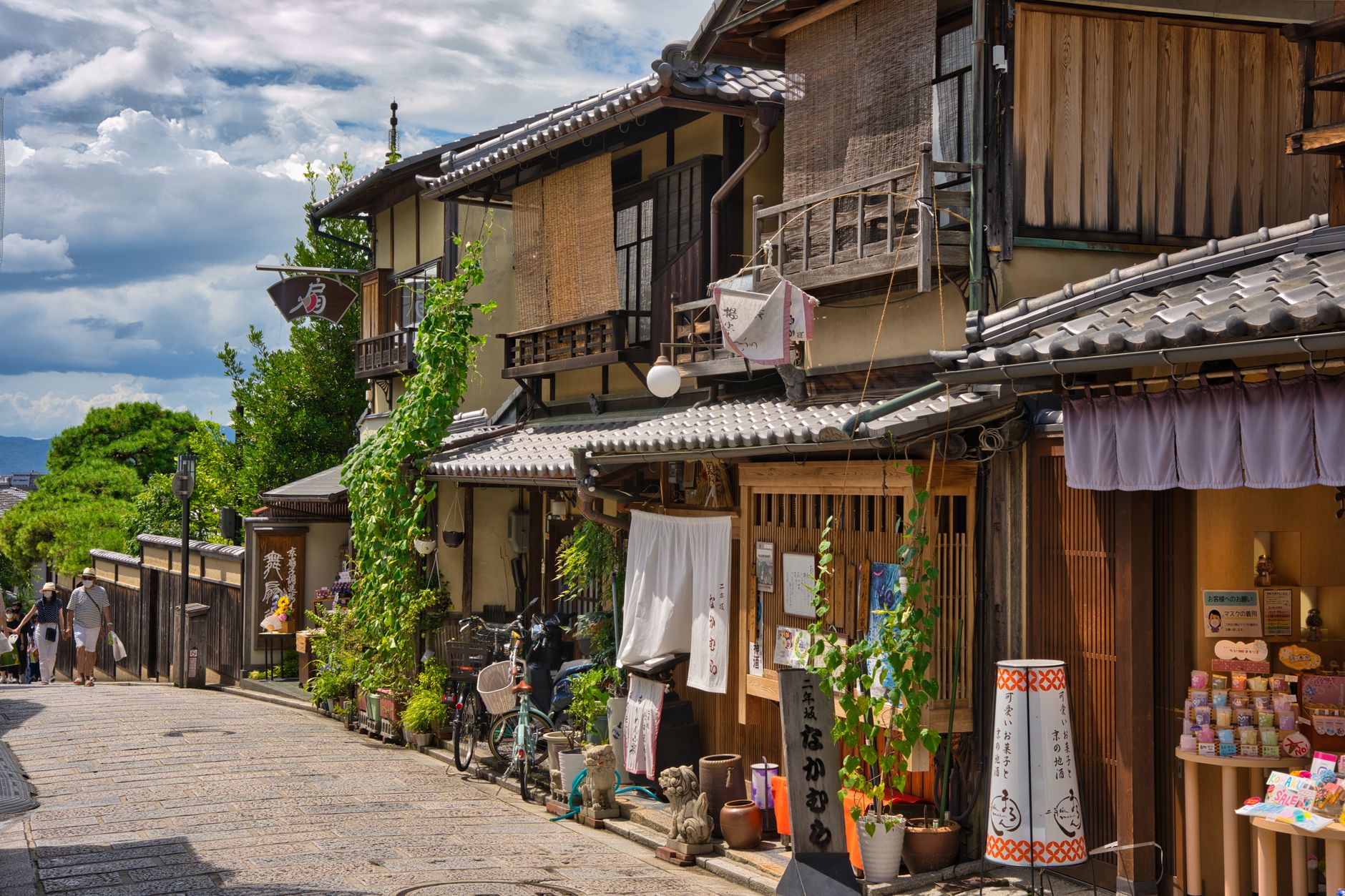
Not every journey warrants a nationwide pass. If your travel philosophy leans towards a slower pace, perhaps focusing on a single region or splitting your time between just two cities with minimal inter-city movement, individual tickets or a regional pass might be a more economical and fitting choice.
Consider a trip where you spend your entire week exploring the Kansai region, based in Kyoto or Osaka. While you might take the Shinkansen from Tokyo to Kyoto upon arrival, subsequent travel might involve only local JR lines (like the Nara Line to visit Todai-ji Temple) or private railways (like the Keihan Line along the Kamo River). In this scenario, purchasing a 50,000 yen national pass for only a portion of its potential value wouldn’t be financially sound.
For focused regional exploration, several regional JR passes exist, such as various JR West passes (e.g., Kansai Area Pass, Kansai Wide Area Pass), which can be a good choice for specific areas. For instance, the Kansai Wide Area Pass might cover several days of unlimited travel around Kyoto, Osaka, Nara, Himeji, and even as far as Okayama on certain Shinkansen and local lines, all for a fraction of the national pass price. This allows you to explore one area deeply without feeling rushed. These passes are tailored to regional travel and are often significantly cheaper than the national pass. They might cover local Shinkansen sections within their region or specific express trains, making them ideal for exploring areas like Kansai, Kyushu, or Hokkaido more thoroughly.
For daily urban transit in cities like Tokyo or Osaka, an IC card like a Suica, Pasmo, or ICOCA is incredibly useful. These rechargeable cards work across nearly all public transport systems (subways, JR lines, private lines, buses) nationwide, making local travel simple and easy. If your itinerary prioritizes exploring a few neighborhoods deeply, walking whenever possible, and making fewer long-distance train journeys, then buying individual Shinkansen tickets for the key long hauls, combined with an IC card for local travel, will likely be the more sensible approach.
Practicalities: Purchasing and Activating Your Pass

Deciding whether to buy the Japan Rail Pass is only the first step; understanding how to buy and activate it is just as important for a calm start to your trip.
The most common way to acquire the JR Pass is by purchasing an Exchange Order before you arrive in Japan. This can be done through authorized vendors online. Once you land in Japan, you’ll take this Exchange Order, along with your passport (which must have a “Temporary Visitor” stamp, indicating you entered on a tourist visa), to a designated JR Pass exchange office. These offices are found at major airports like Narita Airport and Haneda Airport, as well as large stations such as Tokyo Station, Kyoto Station, and Shin-Osaka Station.
When you exchange your voucher, you’ll specify your desired start date for the pass. This date does not have to be the day you exchange it; you can set it a few days into your trip if that aligns better with your itinerary. Once you have the physical pass, you can start using it immediately.
While you don’t always need to reserve seats, especially on local JR lines, it’s highly recommended for Shinkansen services, particularly during peak travel seasons or for popular routes. You can reserve seats at any JR ticket office (Midori-no-Madoguchi) or at designated Shinkansen reservation machines. Having a reserved seat ensures you’ll travel comfortably, especially with luggage. Just remember that the pass itself won’t let you through automatic gates; you’ll typically show it to station staff at the manned gate. One small note on Shinkansen travel: if you plan to move frequently, remember that managing luggage can be easier with less. While there’s space for bags, considering a carry-on only approach, or utilizing Japan’s excellent luggage forwarding services, can make your transitions between cities much smoother and calmer.
If you like to have your plans settled, comparing various rail passes and booking activities for Japan can be quite helpful. Klook
Staying connected during your travels also simplifies everything from checking train schedules to finding local cafes. an Airalo travel eSIM And, of course, a good travel insurance policy provides peace of mind, allowing you to focus on your experiences rather than potential worries. EKTA travel insurance
What This Means for Your Trip

The question of whether the Japan Rail Pass is “worth it” in 2026 isn’t one with a simple yes or no answer. It’s about finding the right fit: matching the pass’s cost and coverage with the pace and purpose of your own journey. For those journeys that involve covering significant ground across regions, moving between major cities every few days, the pass can still offer thoughtful value and wonderful convenience. The Shinkansen’s efficiency, moving you swiftly across the country, is a pleasure to experience.
However, if you imagine Japan with longer stays in fewer places, a closer look at local culture, and perhaps more walking and local buses, then the numbers point to a different approach. Point-to-point tickets for the long hauls, supplemented by an IC card for city exploration and possibly a regional pass for concentrated area travel, will likely serve you better.
Ultimately, the goal is not just to save a few yen, but to travel thoughtfully. I find that when we understand the practicalities and choose the tools that best suit our personal way of seeing the world, our journey becomes richer. It’s about making an informed decision that enhances your experience, leaving you calmer and more curious about the path ahead, wherever it may lead.
Frequently asked questions
How much does the 7-day JR Pass cost in 2026?
As of the 2023 price increase, the 7-day Ordinary Japan Rail Pass costs approximately 50,000 yen. Other durations (14-day, 21-day) and Green Car passes have also seen similar adjustments.
Does a round trip from Tokyo to Kyoto cover the cost of the JR Pass?
No, a single round trip on the Shinkansen between Tokyo and Kyoto costs roughly 28,000 yen. This does not cover the 50,000 yen price of a 7-day JR Pass, meaning you'll need additional long-distance train travel for the pass to be economical.
What trains are not covered by the JR Pass?
The JR Pass covers most Japan Rail lines, including the Shinkansen (bullet trains), but it generally does not cover the Nozomi or Mizuho Shinkansen services without paying a supplemental fee. It also doesn't cover non-JR private railway lines or urban subway systems like the Tokyo Metro.
When is the JR Pass most likely to be worth it?
The JR Pass offers good value for itineraries that involve extensive long-distance travel within a concentrated period, such as a 7-day trip covering Tokyo, Kyoto, and Hiroshima by Shinkansen. It's designed for covering significant ground efficiently.
Can I buy the JR Pass in Japan?
Yes, you can purchase the JR Pass in Japan, though it is often more expensive than buying it online before your trip. It's recommended to purchase an Exchange Order online, then swap it for the actual pass at a major JR station upon arrival.
Keep reading on Gently Yonder
- Tokyo to Kyoto: Shinkansen vs Flight vs Bus Price, time and comfort compared honestly — and when the plane actually wins.
- Are Japan's City Sightseeing Passes Worth It? The Tokyo, Osaka and Kyoto passes run through the arithmetic — when they pay off.
- Japan: A 7-Day First-Timer's Itinerary Three days in Tokyo, a day trip, two days in Kyoto, and a day in Osaka — tied together by the Shinkansen.
- How Much Does a Trip to Japan Cost? A realistic 2026 budget — flights, hotels, rail, food, and where costs surprise people.
- Japan Country Profile Eight-section country deep-dive: history, geography, society, and travel prep.