If Kyoto is Japan’s poised, temple-quiet older sibling, Osaka is the one who talks with its hands, feeds you too much, and makes you laugh. Japan’s second city wears its reputation as the nation’s kitchen and comedy capital proudly: this is a place organised around eating, where the local motto is kuidaore — “eat until you drop.” It is also a superb, low-stress base, sitting at the centre of the Kansai region within easy reach of Kyoto, Nara, Kobe, and Himeji. For a first visit, lean into Osaka’s appetite and its warmth. Pick up an ICOCA transit card to tap through the subway and trains; add a travel eSIM so you have maps and translation from touchdown; and browse Klook or KKday for Universal Studios and Kaiyukan tickets and day-trip passes, which are cheaper and skip lines when booked ahead.
Osaka Castle
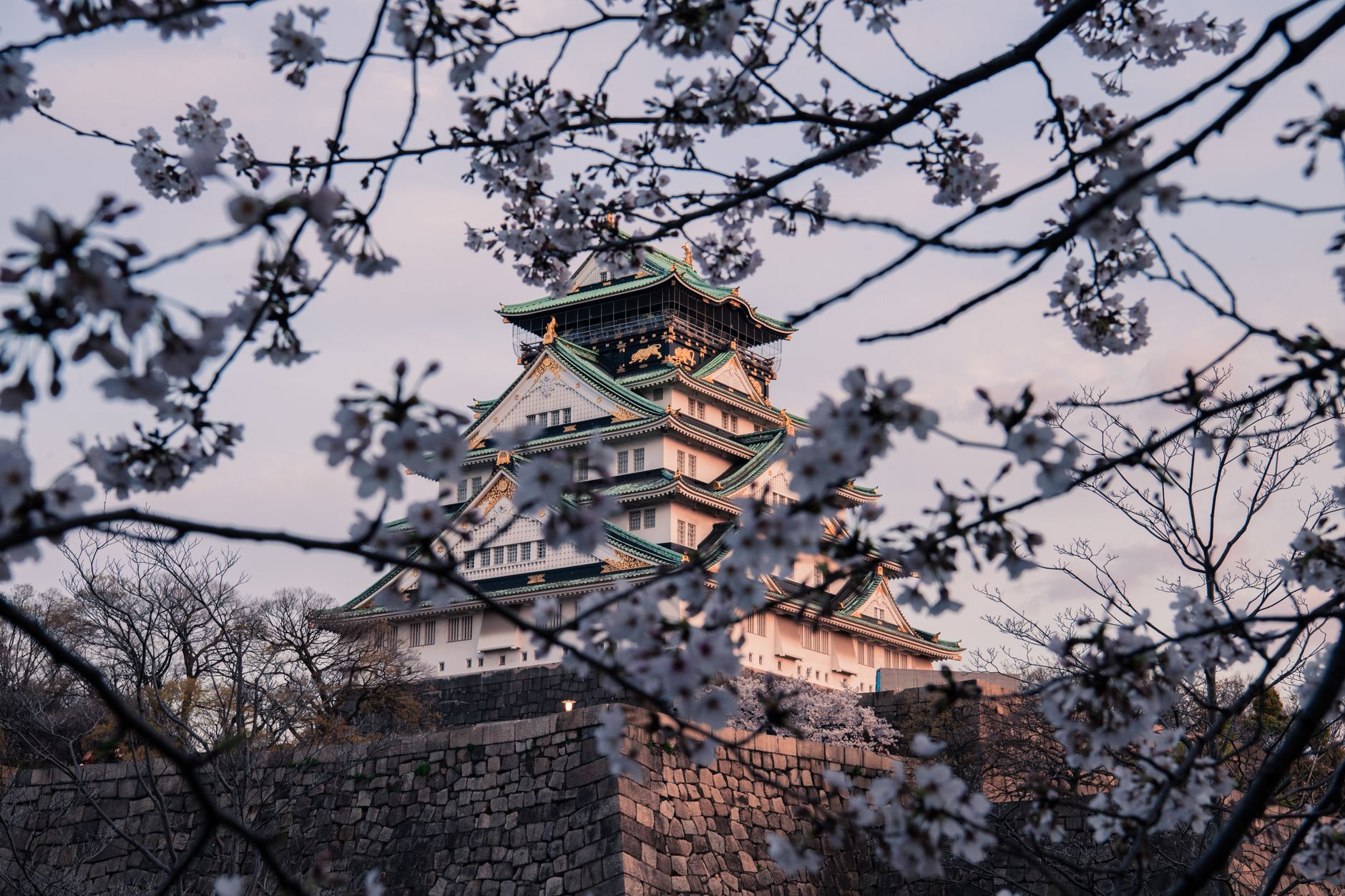
Begin with the city’s landmark. Osaka Castle, first raised by the warlord Toyotomi Hideyoshi in the 1580s, rides above a moat and vast stone ramparts in the middle of a green park. The soaring keep is a reconstruction housing a genuinely good history museum, and the top floor gives a fine panorama over the city. Come in late March or early April and the surrounding Nishinomaru Garden turns into one of Osaka’s great cherry-blossom stages; in autumn the park glows with maples. Allow a slow couple of hours and approach on foot through the outer gardens rather than straight to the tower.
Minami: Dotonbori and Namba
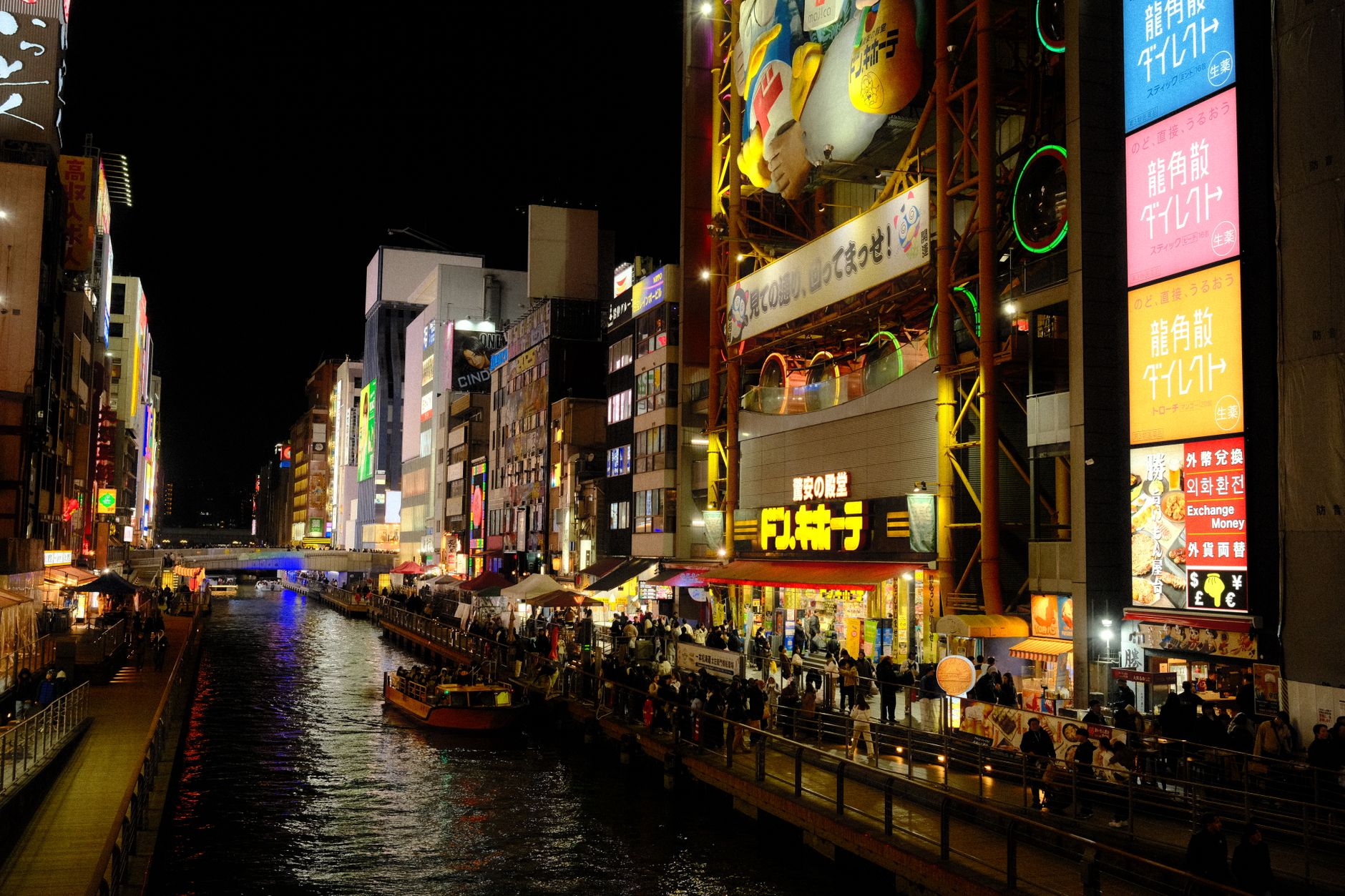
The beating heart of Osaka is Minami (“south”), and its centre is Dotonbori — a canal lined with towering, animated signboards that is loudest and best after dark. Find the famous Glico running man billboard from the Ebisu Bridge, the enormous mechanical crab of Kani Doraku, and a hundred places to eat. Branching off is the covered Shinsaibashi-suji shopping arcade, running half a kilometre north, and the tiny lantern-lit alley of Hozenji Yokocho beside a moss-covered temple statue that worshippers douse with water. A few minutes south, the Kuromon Ichiba Market — “Osaka’s kitchen” — sells sea urchin, wagyu skewers, and grilled scallops to eat as you walk.
Kita, and the view from Umeda
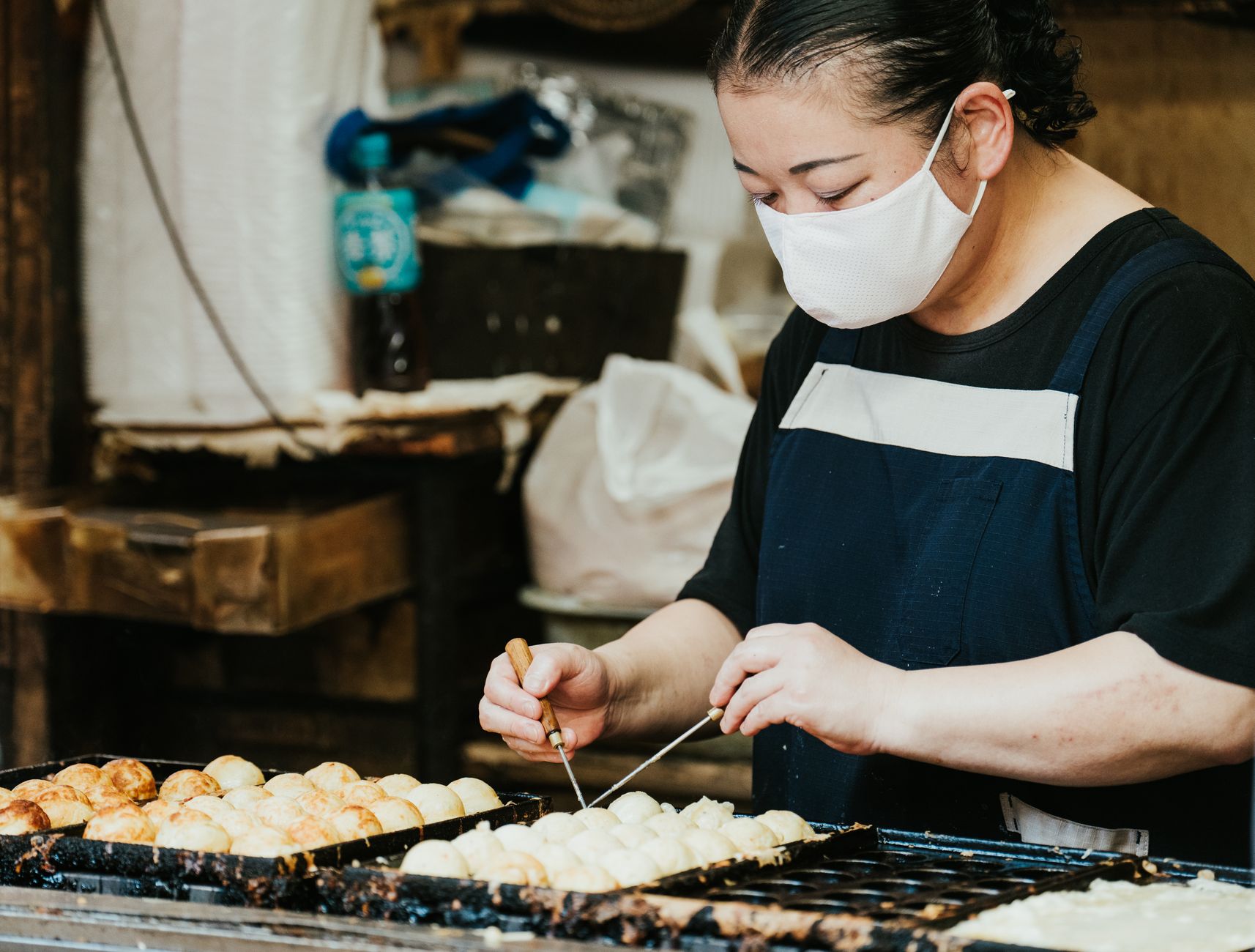
Osaka’s other pole is Kita (“north”), centred on the Umeda district around the huge Osaka Station. Here the striking Umeda Sky Building joins its twin towers with a rooftop Floating Garden Observatory, a 360-degree open-air deck that is thrilling at sunset. Below spread the flagship department stores, the retro-styled basement food halls, and enough underground shopping arcades to lose an afternoon in when it rains. Kita is more polished than raucous Minami — the two make a satisfying pair.
The city of eating
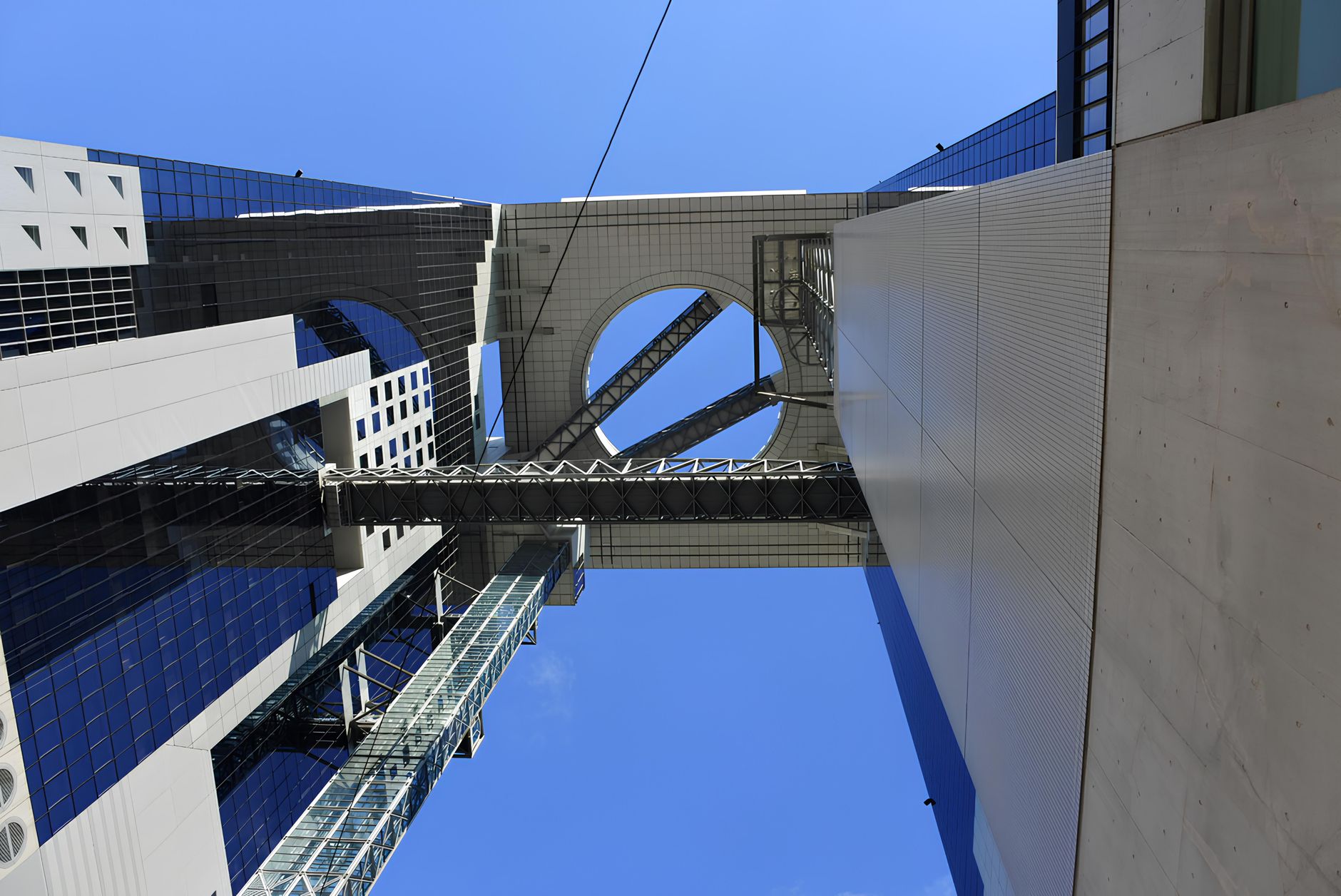
You will remember Osaka in flavours. The essentials: takoyaki, molten spheres of batter and octopus branded with the city; okonomiyaki, the savoury cabbage pancake grilled at your table; and kushikatsu, panko-crumbed skewers deep-fried and dunked in a communal sauce (never double-dip) in the old-Osaka district of Shinsekai, beneath the retro Tsutenkaku tower. Add negiyaki, spring-onion pancakes; 551 Horai pork buns, whose steamers scent every station; and kitsune udon, said to have been born here. Eat standing, eat at counters, eat between sights — it is the correct way to see the city.
Family days and easy escapes
Osaka is a brilliant base for a mix of ages. Universal Studios Japan, home to the Super Nintendo World and Wizarding World areas, is a full, ticket-ahead day. On the bay, the Osaka Aquarium Kaiyukan is among the world’s finest, built around a central tank of whale sharks. For temples, the ancient Shitennoji and the striking, bridge-and-vermilion Sumiyoshi Taisha shrine reward a morning. And because Osaka sits at the heart of Kansai, the best “day trips” are barely trips at all: Nara (bowing deer and the Great Buddha of Todaiji) is 45 minutes away, Kyoto half an hour, and the hilltop white castle of Himeji and the port city of Kobe both within an easy ride.
Getting around, and when to go
Osaka’s subway and the loop-line trains cover the city simply; the north–south Midosuji line links Umeda, Namba, and Tennoji, hitting most of what you want. Tap through with an ICOCA card, which also works across much of Japan, and consider an Osaka Amazing Pass if you plan to pack in paid sights, since it bundles transit with free entry to many. For weather, spring (cherry blossoms, late March to early April) and autumn (comfortable, colourful October–November) are ideal; summers are hot and sticky, winters mild and clear. Give Osaka three days as a base — one for the city, one for its food, and one for Nara or Kyoto — and you will leave planning your return.
Frequently asked questions
How many days do you need in Osaka?
Three days is a good base: one for the city (Osaka Castle, Umeda), one built around Dotonbori and the food, and one for a day trip to Nara or Kyoto, both under an hour away. Add a day if you want Universal Studios Japan, which is a full outing on its own.
Is Osaka a good base for Kyoto and Nara?
Excellent. Osaka sits at the heart of the Kansai region: Kyoto is about 30 minutes by train, Nara around 45 minutes, and Kobe and Himeji Castle both within an easy ride. Many travellers base in Osaka and day-trip out rather than changing hotels.
What food is Osaka famous for?
Osaka is called Japan's kitchen. The essentials are takoyaki (octopus balls), okonomiyaki (savoury pancake), and kushikatsu (deep-fried skewers, best in the retro Shinsekai district). Add 551 Horai pork buns and street-market bites at Kuromon Ichiba — the local motto is kuidaore, 'eat until you drop.'
When is the best time to visit Osaka?
Spring (cherry blossoms in late March to early April) and autumn (comfortable, colourful October to November) are ideal. Summers are hot and humid; winters are mild and clear. Aim for spring or autumn if your dates allow.
Keep reading on Gently Yonder
- Osaka in 3 Days — Food, neighborhoods, and day-one energy — a compact plan for Japan's kitchen.
- Osaka or Kyoto: Choosing Your Kansai Base — Two very different home bases compared — cost, food, day trips, and atmosphere.
- Best eSIM for Japan (2026) — How to choose a Japan travel eSIM — coverage, data plans, and the pick for most trips.
- Where to Store Luggage in Tokyo — Coin lockers, cloakrooms, storage apps, and hotel holds — which to use where.
- Carry-On Packing List for a 10-Day Japan Trip — A 10-item capsule sized for Japan — plugs, cash, IC cards, and the right shoes.
- Seoul: A First-Timer's Guide — The royal palaces, Bukchon Hanok Village, Gwangjang Market, and a DMZ day trip.