For many of us dreaming of Japan’s Kansai region, the gentle question emerges early on: should Osaka or Kyoto be our home base? Both cities offer distinct experiences, rich history, and incredible food, yet their underlying rhythms are quite different. For those of us who prefer to settle in, explore at a gentle pace, and return to a consistent neighbourhood at the end of the day, this decision shapes the entire feel of the trip. Let’s explore what each city offers, helping you find the pace that suits your journey.
No one pays to be recommended here, and we say when a free or cheaper option wins. Our promise →
In this guide8 sections
- The Heartbeat of Kyoto: Tradition and Tranquility
- The Pulse of Osaka: Energy and Culinary Delights
- Navigating Kansai: Day Trips from Both Bases
- A Taste of Place: Dining in Kyoto and Osaka
- Nights and Neighbourhoods: Evening Rhythms
- Finding Your Comfort: Accommodation and Pace
- Choosing Your Rhythm in Kansai
- Frequently asked questions
The Heartbeat of Kyoto: Tradition and Tranquility

Kyoto often feels like stepping into a carefully preserved painting. Its atmosphere is one of serene beauty, deeply rooted in history and tradition. Here, ancient temples and shrines are tucked away behind mossy walls, and the Kamo River flows quietly through the city, inviting thoughtful strolls. I find that mornings in Kyoto have a particular hush, especially in areas like Gion or Higashiyama, where the narrow lanes, lined with traditional machiya houses, slowly come to life. The city encourages a slower pace; I often find myself losing track of time wandering through Zen gardens or simply observing the soft light on a temple gate.
This is a city that rewards quiet contemplation and a deep appreciation for its cultural beauty. You might spend an entire afternoon sipping tea in a quiet garden café or browsing traditional craft shops. The beauty here is in the details: the intricate patterns on a kimono, the precise arrangement of a rock garden, or the quiet rustle of bamboo in Arashiyama. For travelers who seek a sense of history woven into their everyday experience, and who appreciate a more subdued rhythm, Kyoto can be a profoundly grounding place to return to each evening.
The Pulse of Osaka: Energy and Culinary Delights
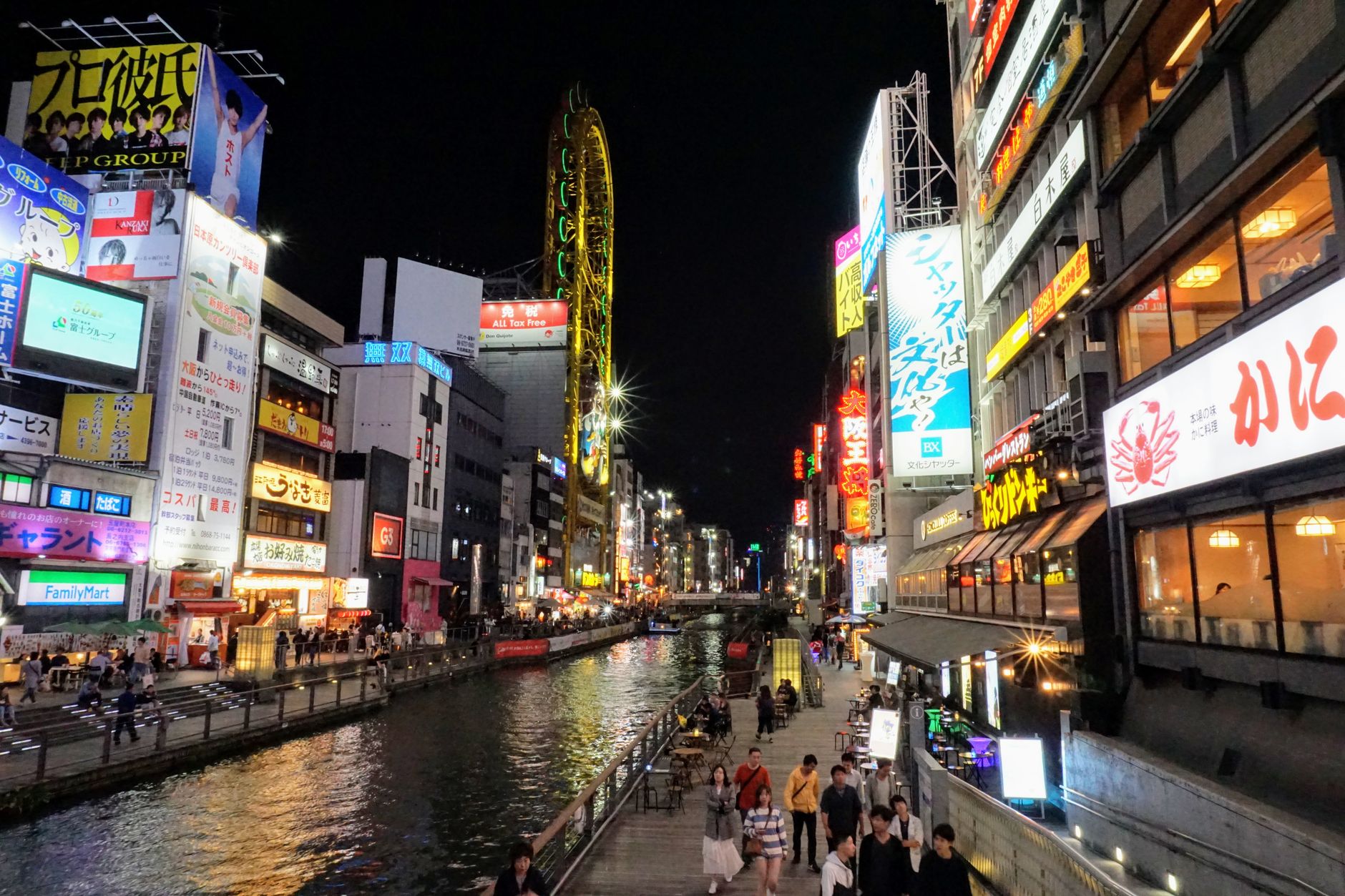
In contrast to Kyoto’s calm, Osaka pulses with a vibrant, modern energy. It’s a city of bright lights, bold flavours, and an unmistakable sense of humour. Known as “Japan’s Kitchen,” Osaka’s culinary scene is a major draw, celebrated for its street food, lively izakayas, and friendly, unpretentious atmosphere. Walking through Dotonbori, past its giant crab signs and colourful neon, is an experience in itself – a vibrant, sensory embrace. The city feels more immediate, more dynamic, and perhaps a little louder than Kyoto.
Osaka’s charm lies in its everyday bustle, its down-to-earth character, and the genuine warmth of its people. It’s a place where you can easily strike up a conversation with a shop owner or enjoy a laugh with fellow diners at a local counter. For those who thrive on urban exploration, who enjoy the buzz of a city that feels alive around the clock, and whose travel philosophy leans towards discovering a place through its food and its contemporary life, Osaka offers an invigorating base. The city feels lived-in and authentic, a hub of commerce and culture without the reverent quiet of its historical neighbour.
Navigating Kansai: Day Trips from Both Bases

Naturally, when choosing your base, you’ll wonder how easily you can explore the wider Kansai region. Both Osaka and Kyoto are excellent hubs for day trips, connected by efficient and frequent train services. Whether your destination is the deer-filled parks of Nara, the majestic Himeji Castle, or the port city of Kobe, you’ll find direct routes from either city.
From Kyoto, you can reach Osaka in about 15-30 minutes, depending on the train type. Nara is also a direct, relatively short ride. From Osaka, you have equally convenient access to Kyoto and Nara, often with multiple train lines offering different routes and travel times. This means that if you choose one city as your base, the other is still very much within reach for day visits. My own preference is always to unpack once and explore outwards, letting the train journeys become part of the day’s gentle rhythm.
To ensure smooth navigation and connection while moving between cities and exploring, having reliable mobile data is incredibly helpful. I’ve found that using an eSIM is a straightforward way to stay connected, allowing you to check train schedules or map out a walking route without searching for Wi-Fi. an Airalo travel eSIM This simplifies the practicalities, leaving more mental space for enjoying the journey itself.
A Taste of Place: Dining in Kyoto and Osaka

The dining experiences in Osaka and Kyoto perfectly reflect their distinct personalities, offering a wonderfully varied culinary journey across Kansai. In Kyoto, the food often mirrors the city’s refined aesthetic. You’ll find exquisite kaiseki meals, elegant tea houses offering wagashi (traditional sweets), and quiet restaurants serving delicate tofu dishes. Many dining experiences here lean towards subtlety and presentation, with a focus on seasonal ingredients and traditional techniques. I often seek out small, unassuming soba or udon shops tucked away on side streets, where a simple, perfectly crafted meal can be a quiet revelation.
Osaka, on the other hand, is known for its bold, hearty, and often street-side fare. Think sizzling takoyaki (octopus balls), savoury okonomiyaki (griddle-fried pancakes), and kushikatsu (deep-fried skewers). Dining in Osaka is a lively, social affair. You might stand elbow-to-elbow with locals at a ramen counter or share small plates in a bustling izakaya. There’s a palpable energy to eating out in Osaka, a joy in discovery that feels wonderfully immediate. For me, both offer distinct pleasures; Kyoto for moments of culinary quietude, Osaka for the cheerful buzz of communal feasting.
Nights and Neighbourhoods: Evening Rhythms
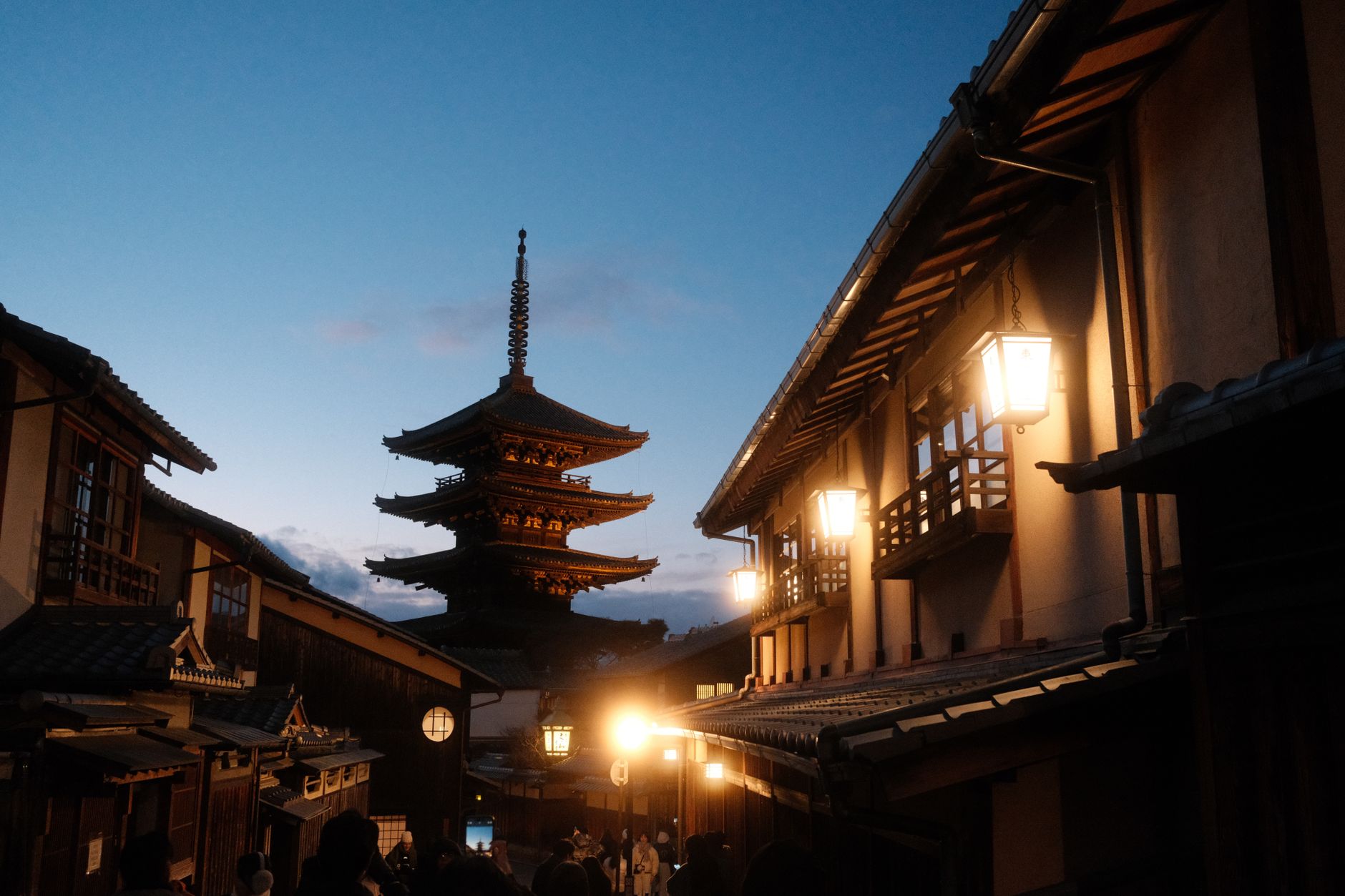
When evening descends, Osaka and Kyoto unveil their distinct characters even more clearly. Kyoto tends to quiet down. After the day’s visitors depart, areas like Gion take on a different, more atmospheric charm, with lanterns casting soft glows and the occasional glimpse of a geiko or maiko. Evening strolls by the river or through a tranquil temple ground can be a truly reflective experience. While there are certainly vibrant dining and drinking spots, the overall pace of Kyoto after dark encourages a sense of calm and gentle exploration.
Osaka’s evenings, however, often burst into full, technicolor life. Dotonbori is iconic for its dazzling neon lights and energetic atmosphere that continues long into the night. Neighbourhoods like Umeda offer modern entertainment complexes and a wide array of bars and restaurants that cater to a later crowd. If you enjoy the buzz of an urban night out, with endless options for food, drink, and people-watching, Osaka will keep you thoroughly engaged. For travelers who appreciate a quiet evening with a good book after a day of exploration, Kyoto’s gentle cadence often feels more restful.
Finding Your Comfort: Accommodation and Pace

Your choice of accommodation and budget will, of course, play a significant role in your comfort and experience. Kyoto offers a wide range of traditional ryokan (Japanese inns) and charming guesthouses, many of which provide a very authentic and serene experience, though they can sometimes be a little pricier. There are also modern hotels, of course, but the allure of a machiya stay is strong for many. In Osaka, you’ll find a vast selection of modern hotels, from luxury to budget-friendly, and a greater prevalence of business hotels or capsule hotels, which can offer good value.
Once you’ve chosen: Where to stay in Osaka and Where to stay in Kyoto compare the areas and name the hotels.
Generally, Osaka tends to be slightly more affordable for accommodation, especially if you’re looking for modern conveniences and don’t mind being in a bustling area. Kyoto’s traditional charm can come with a premium, particularly during peak seasons. Regardless of which city calls to you, finding a comfortable place that aligns with your preferred pace and budget is key to a gentle trip. I often use platforms that allow filtering by neighbourhood and reviews to ensure a quiet stay near a station, making sure I have a peaceful sanctuary to return to each evening. Booking in advance, especially in Kyoto, can also secure better rates and a wider selection.
Choosing Your Rhythm in Kansai

Ultimately, choosing between Osaka and Kyoto really comes down to the rhythm you seek for your journey. If your heart is drawn to quiet contemplation, ancient traditions, and a more serene pace, Kyoto will likely feel like a natural home. You’ll be able to immerse yourself in its history and refined culture, returning to peaceful evenings. If, however, you thrive on urban energy, a vibrant culinary scene, and the friendly bustle of a modern Japanese city, Osaka offers an exhilarating base. It’s a place where discovery happens spontaneously, and the city’s pulse is invigorating.
Neither choice is wrong, and with the excellent train connections, you can certainly experience the best of both worlds with day trips. But by choosing one city as your primary base, you allow yourself the space to truly settle in, find your local cafe, walk the same paths, and let the unique character of that city unfold around you. This gentle approach to travel, choosing a single home, often leaves us not just with memories of sights seen, but with a deeper, calmer understanding of a place and its people.
Frequently asked questions
Is it easy to travel between Osaka and Kyoto?
Yes, excellent train connections mean you can reach either city from the other in under an hour, making day trips very feasible from either base.
Which city is better for a first-time visitor to Japan?
It truly depends on your travel style. Kyoto offers a traditional introduction to Japan's history and culture, while Osaka provides a vibrant, modern urban experience focused on food and energy.
Can I do day trips to Nara from both Osaka and Kyoto?
Absolutely. Both cities have direct and frequent train lines to Nara, making it an easy and popular day trip destination from either location.
Which city is more budget-friendly for accommodation?
Generally, Osaka tends to offer a slightly wider range of accommodation options that can be more budget-friendly than Kyoto, especially for longer stays.
Is it better to stay in one city and do day trips, or split my time?
For a gentler, less rushed trip, basing yourself in one city and taking day trips often proves less stressful. It allows you to unpack once and settle into a local rhythm, deepening your experience of your chosen home.
What is the best way to stay connected while travelling between cities?
An eSIM is a convenient choice for reliable data across Japan, allowing you to check train schedules or navigate without needing to swap physical SIM cards.
Keep reading on Gently Yonder
- Osaka in 3 Days Food, neighborhoods, and day-one energy — a compact plan for Japan's kitchen.
- Three Slow Days in Kyoto A gentle, unhurried first-timer's itinerary — Fushimi Inari at dawn to Arashiyama's bamboo.
- Gion, Kyoto: A Neighbourhood Guide The geisha district beyond the postcard — lanes, tea houses, etiquette, and timing.
- Is the JR Pass Worth It in 2026? An honest calculation after the price rise — break-even itineraries and the alternatives.
- Where to Stay in Kyoto Five areas, 14 hotels and ryokan, and the accommodation tax that changed in March 2026.