Penang is where Malaysia’s many cultures sit down at the same table — quite literally, because this small island off the northwest coast is one of the great eating destinations on earth. Its capital, George Town, is a UNESCO-listed maze of faded Straits-Chinese shophouses, clan temples, mosques, and colonial verandahs, threaded with street art and the smell of a hundred woks. It is walkable, warm, unpretentious, and endlessly photogenic. For a first visit, base yourself in the George Town heritage core and let the days drift between temples, murals, and hawker stalls. Getting around is easy with Grab (ride-hailing) and, in the old town, your own two feet; add a travel eSIM so maps and Grab work on arrival, and a browse of Klook or KKday for the Penang Hill funicular, food tours, and island trips.
No one pays to be recommended here, and we say when a free or cheaper option wins. Our promise →
In this guide7 sections
George Town’s heritage streets

The joy of George Town is simply walking it. The old core is a grid of two-storey shophouses in peeling pastels, and it is an open-air gallery: the Lithuanian artist Ernest Zacharevic‘s murals — above all “Children on a Bicycle” on Armenian Street — kicked off a citywide treasure hunt of paintings and wry wrought-iron cartoons. Anchor your wanders on the grand Cheong Fatt Tze Mansion (the “Blue Mansion”), the jewel-box Pinang Peranakan Mansion stuffed with Straits-Chinese antiques, and the intricate Khoo Kongsi, the most splendid of the island’s Chinese clan houses. Down at the water, the Chew Jetty — a village of stilt houses built out over the sea by one clan — is the most atmospheric of the old clan jetties.
Temples, mosques, and the Street of Harmony
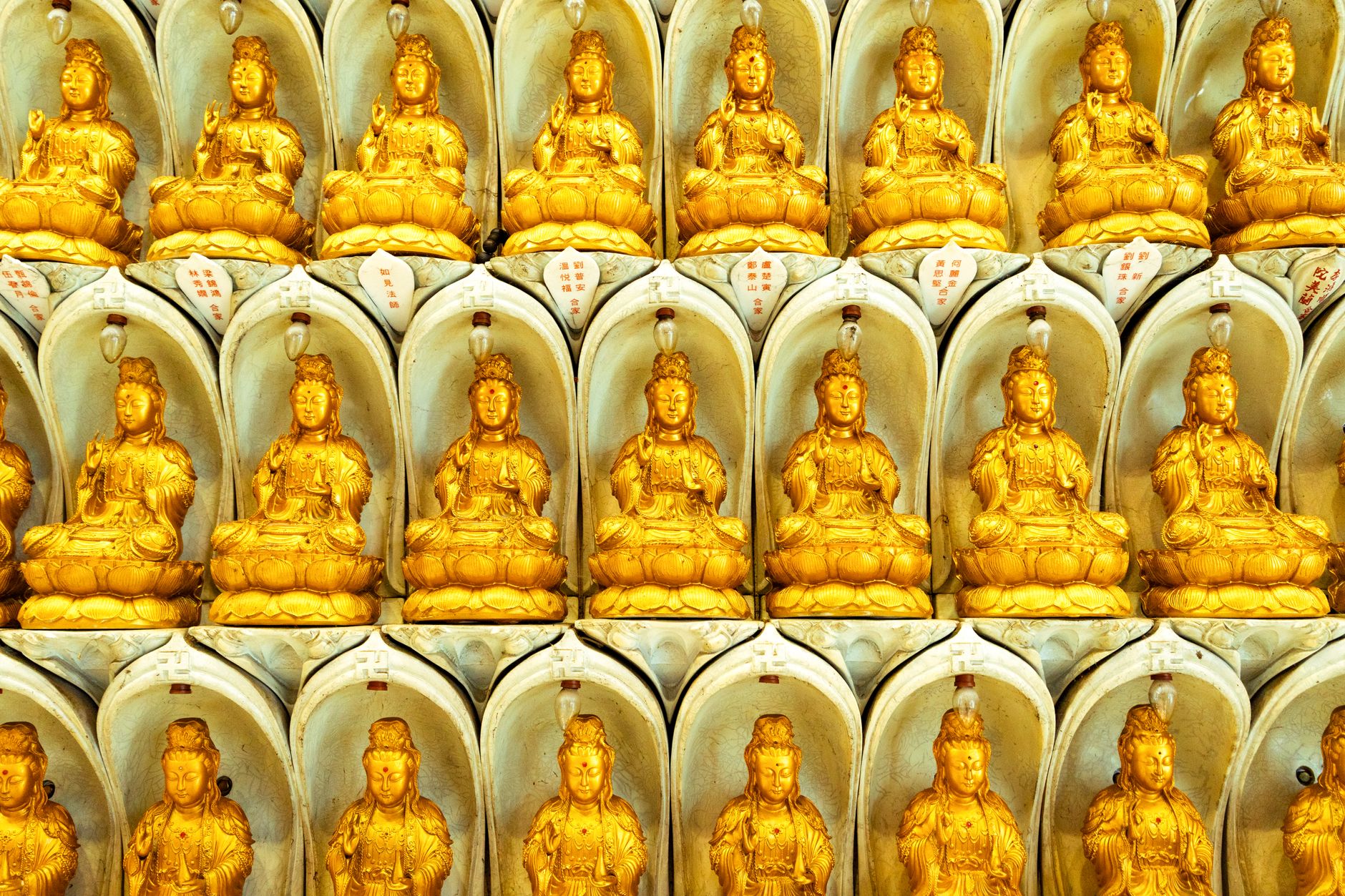
Penang’s cultures stand shoulder to shoulder, nowhere more visibly than along Pitt Street, nicknamed the Street of Harmony, where a Chinese temple, an Indian Hindu temple, a mosque, and an Anglican church sit within a few hundred metres. Seek out the incense-hazed Kuan Yin Temple, the colourful Sri Mahamariamman (Penang’s oldest Hindu temple), and the Kapitan Keling Mosque with its Mughal domes. Just outside the city in Air Itam rises Kek Lok Si, the largest Buddhist temple in Malaysia — a hillside of shrines, a seven-storey pagoda blending Chinese, Thai, and Burmese styles, and a towering bronze statue of the Goddess of Mercy.
Penang Hill and a breath of green
When the heat and the crowds ask for a break, ride the Penang Hill funicular railway up to cooler air and long views back over George Town to the mainland bridges. At the top, The Habitat is a well-made rainforest walk with a canopy bridge and a curved viewing platform. Back down at sea level, the colonial-era Penang Botanic Gardens make an easy green stroll, and to the north the beach strip of Batu Ferringhi offers resorts, night-market shopping, and the excellent Tropical Spice Garden along the coast road.
The main event: Penang’s food

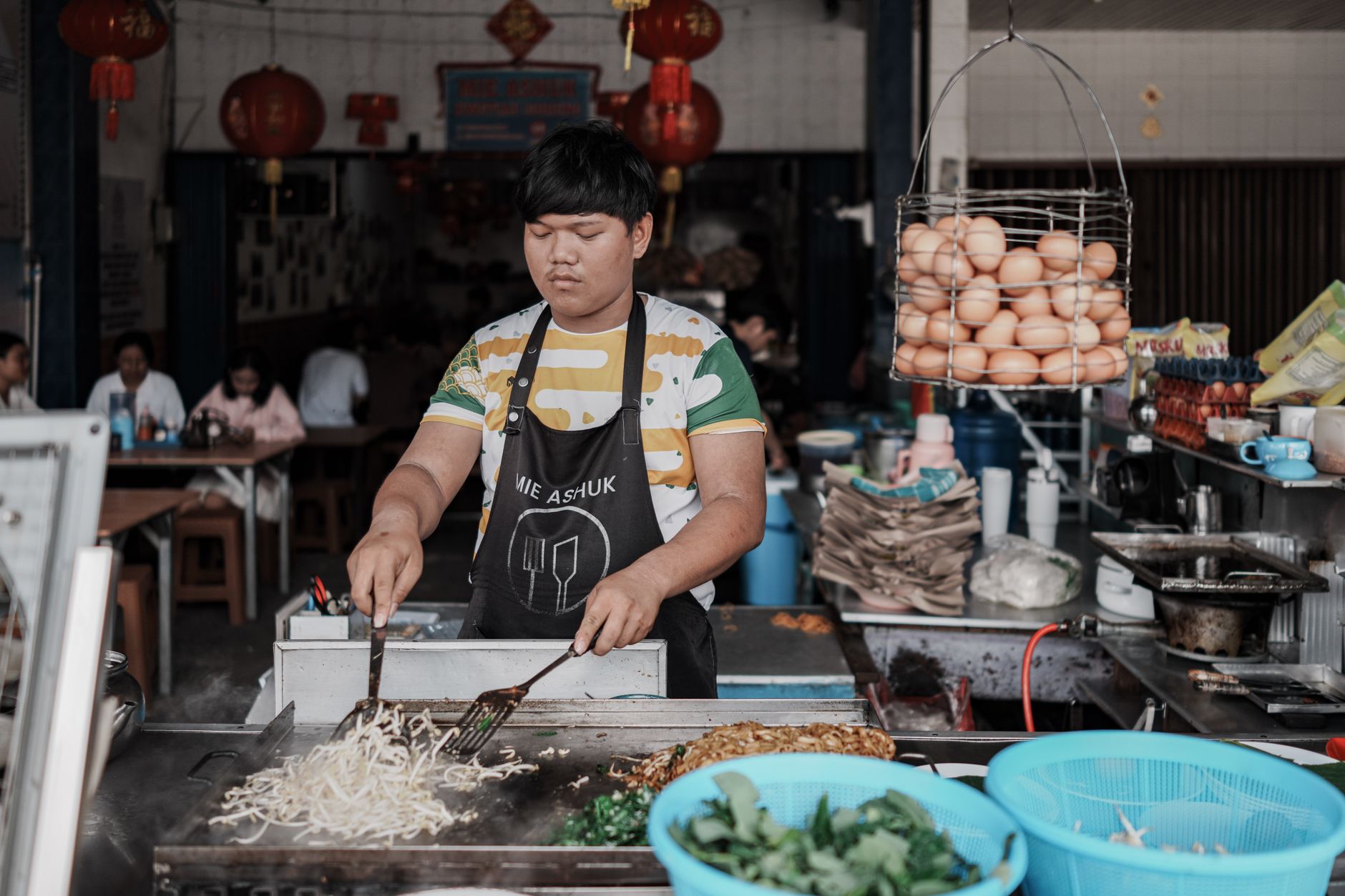
You do not so much dine in Penang as graze it, stall by stall. The island’s signature dish is char kway teow — smoky flat rice noodles wok-fried with prawns and cockles — but the canon runs deep: sour, fishy assam laksa (the version at the Air Itam market stall is legendary), Hokkien mee (a dark prawn-broth noodle soup), nasi kandar (rice with a riot of curries, best at the round-the-clock Line Clear), and cendol, the shaved-ice-and-coconut dessert from the famous cart on Penang Road. Graze the hawker centres — Gurney Drive, New Lane, the Chulia Street night stalls — and simply follow the longest local queues. A guided food walk is one of the best first-evening investments you can make here.
Beyond George Town
Give the island a wider look and it keeps giving. Kek Lok Si and Penang Hill fill a half-day in the west; the interactive Entopia butterfly farm and the spice garden suit families; and a drive around the quieter northern and western coasts reveals fishing villages and the forested Penang National Park, where a trail leads to the sands of Monkey Beach and a curious meromictic lake. It is a small island — you can loop much of it in a day — but the pull is always back to the shophouse streets and the next plate of noodles.
Getting around, and when to go
Within George Town, walking is best; the free CAT shuttle and the cheap Rapid Penang buses cover longer hops, and Grab fills every gap affordably. Ferries and the two long bridges connect to the mainland and the transport hub of Butterworth, where trains run north to Thailand and south to Kuala Lumpur. Penang is warm and humid year-round; the drier, easier months are roughly December to April, while the tail of the year can bring heavier rain. If you can, time a visit to a festival — Chinese New Year, Thaipusam, or the George Town Festival of arts each year — when the old town’s many communities fill the streets at once. Two or three unhurried days is enough to fall for the place; most people leave already planning the meals they missed.
Frequently asked questions
How many days do you need in Penang?
Two to three days is plenty for a first visit: a day or two walking George Town's heritage streets, murals and temples, a half-day up Penang Hill and out to Kek Lok Si, and as many meals as you can fit in. Add a day if you want the northern beaches at Batu Ferringhi or Penang National Park.
What food is Penang known for?
Penang is one of Asia's great street-food cities. The signature dish is char kway teow (smoky wok-fried noodles), alongside assam laksa, Hokkien mee, nasi kandar and cendol. Graze the hawker centres at Gurney Drive, New Lane and Chulia Street, and follow the longest local queues.
Is George Town walkable?
Very. The UNESCO heritage core is compact and flat, best explored on foot, with a free CAT shuttle bus, cheap Rapid Penang buses and Grab for longer hops. Basing yourself in or near the old town lets you walk to most of the temples, mansions and street art.
When is the best time to visit Penang?
The drier, more comfortable months are roughly December to April; the end of the year can bring heavier rain. Penang is warm and humid year-round. If you can, time a visit to a festival such as Chinese New Year, Thaipusam or the George Town Festival.
Keep reading on Gently Yonder
- What Counts as Rude in 12 Cultures Goffman, Hofstede, and twelve country case studies for international travellers.
- Airalo vs Holafly vs Saily The three big travel eSIM providers compared — coverage, pricing, and who each suits.
- Klook vs Viator vs GetYourGuide Which tours-and-activities platform to use where — Asia, Europe, and global.
- Kuala Lumpur: A First-Timer's Guide The Petronas Towers, Batu Caves, street food and easy day trips.
- Singapore: A First-Timer's Guide Marina Bay, the hawker centres, Sentosa and the MRT — a calm first orientation to Singapore.