Phuket is Thailand’s largest island and its most polarising — a place that is either a neon package-holiday cliché or one of the loveliest coastlines in Asia, depending entirely on where you point yourself. The trick for a first visit is knowing that Phuket is really two islands: the busy west-coast beach strip, and the quiet, characterful Old Town with its Sino-Portuguese streets. Get the balance right and it’s superb. Two small things make arrival painless — a travel eSIM so maps and Grab work from the airport, and a browse of Klook or KKday for the island day trips, which are far cheaper and calmer booked ahead than haggled at a beach kiosk.
No one pays to be recommended here, and we say when a free or cheaper option wins. Our promise →
In this guide7 sections
Choosing your beach

The west coast is a ladder of beaches, and picking your base shapes the whole trip. Patong is the loud one — Bangla Road nightlife, jet-skis, crowds; fun for one night, exhausting as a base. Just south, Kata and Karon are the family-friendly middle ground: proper beaches with an easy, low-key strip behind them. For something calmer and prettier, look to Kamala, Surin, and the long sweep of Bang Tao in the north, or Nai Harn in the quiet south. Tiny Freedom Beach, reached by longtail or a steep path, is the postcard everyone hunts for. Match the beach to the holiday you actually want, not to whichever hotel is cheapest.
Phuket Old Town
The island’s soul is inland, in Phuket Old Town, where tin-mining wealth built a district of pastel Sino-Portuguese shophouses. Wander Thalang Road and the photogenic little Soi Romanee, once the red-light lane and now all cafes and murals. It’s a place for slow mornings — specialty coffee, Peranakan (Baba) heritage museums, and street art — and it comes alive at the Lard Yai Sunday Walking Street, when the whole strip fills with food and craft stalls. Many travellers who “don’t like Phuket” simply never left the beach; the Old Town is the fix.
The big sights

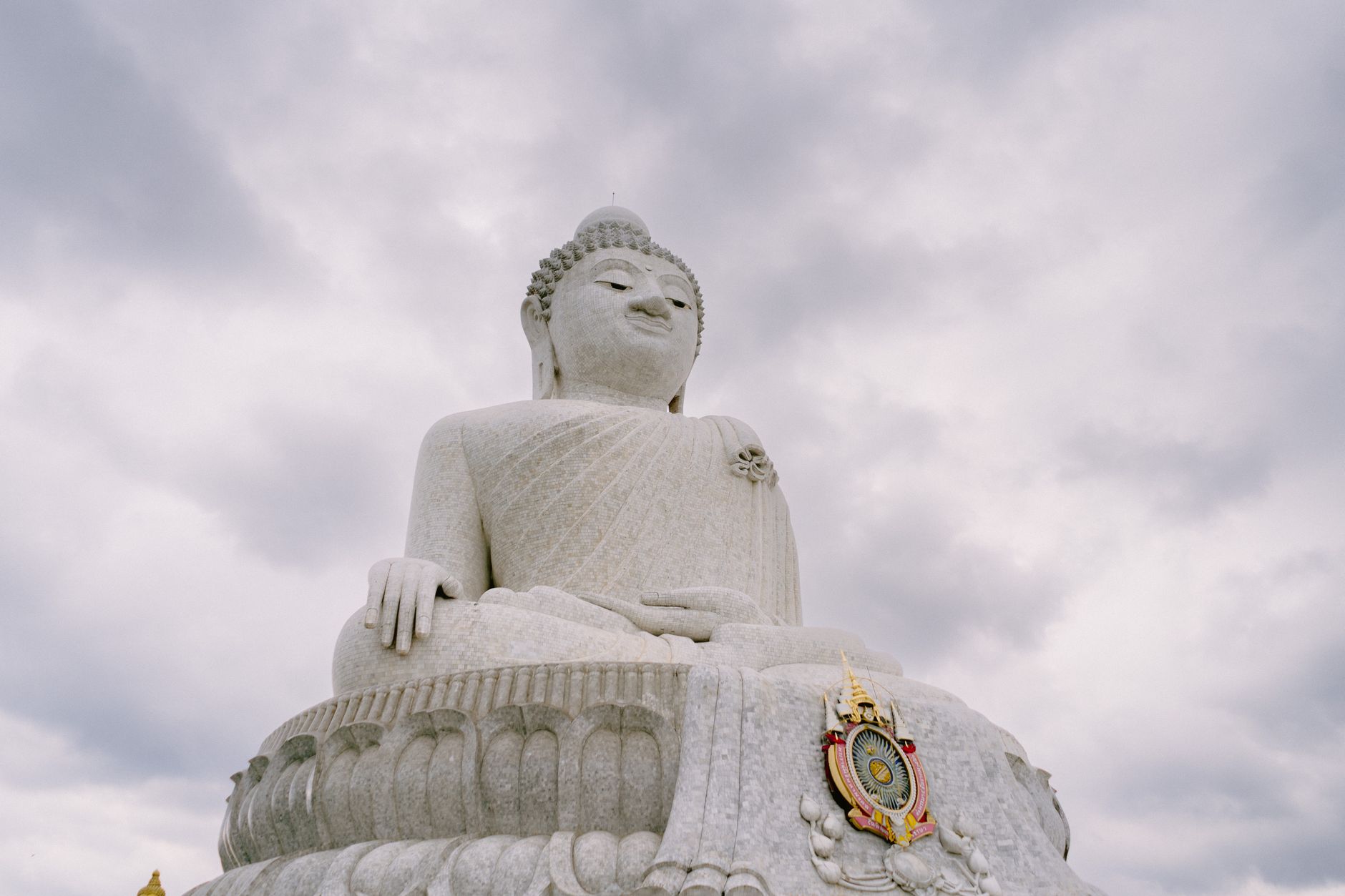
Two landmarks anchor most first visits. The Big Buddha, a 45-metre white-marble figure on the Nakkerd Hills, is visible for miles and offers a sweeping viewpoint over the south of the island. Nearby, Wat Chalong is Phuket’s most important and most visited temple, richly decorated and worth an unhurried hour. For sunset, the classic spot is Promthep Cape at the island’s southern tip, where crowds gather for the view out to the Andaman; the Karon Viewpoint (Three Beaches) is the other great panorama.
Island-hopping — the real reason to come
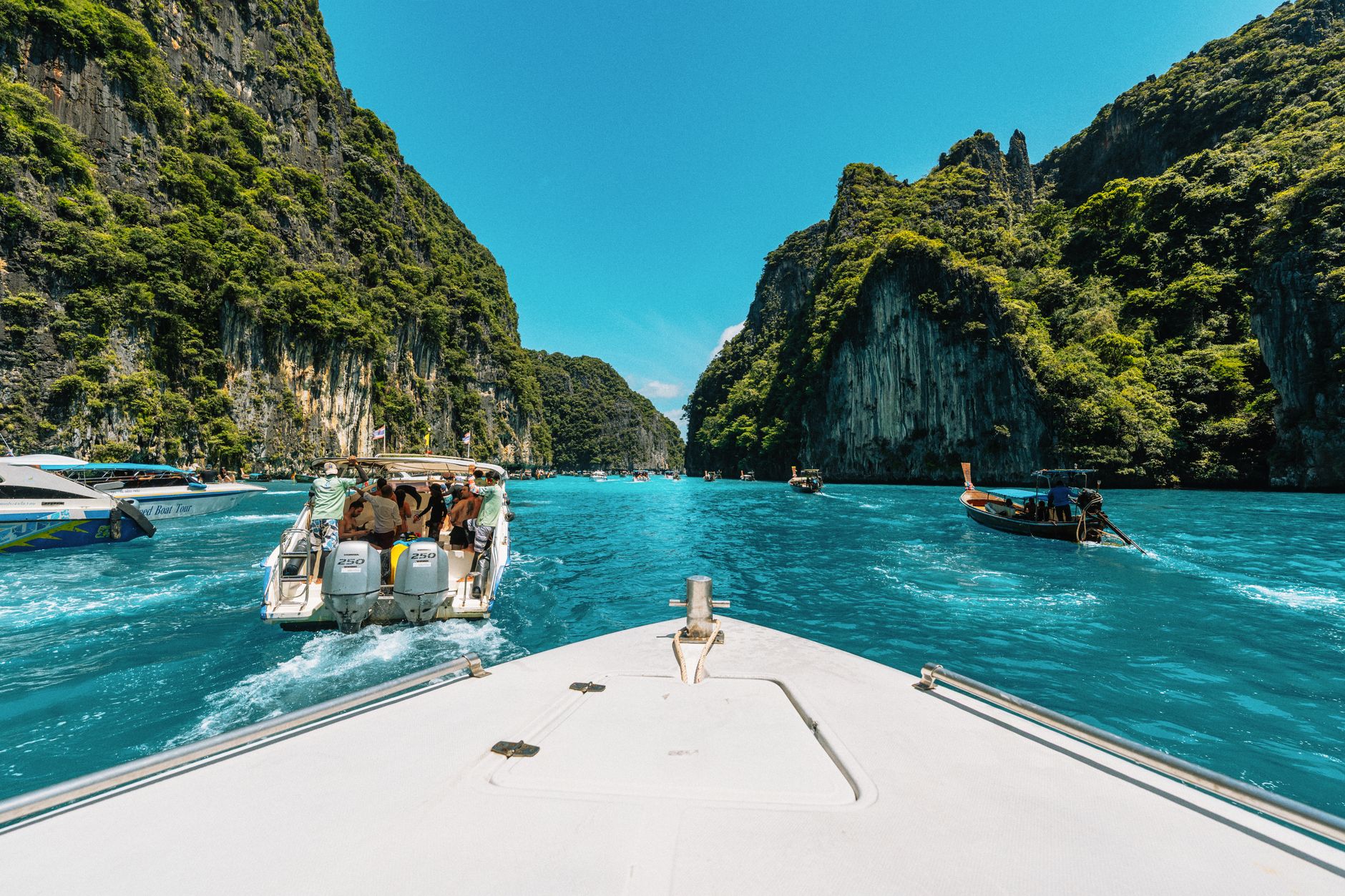
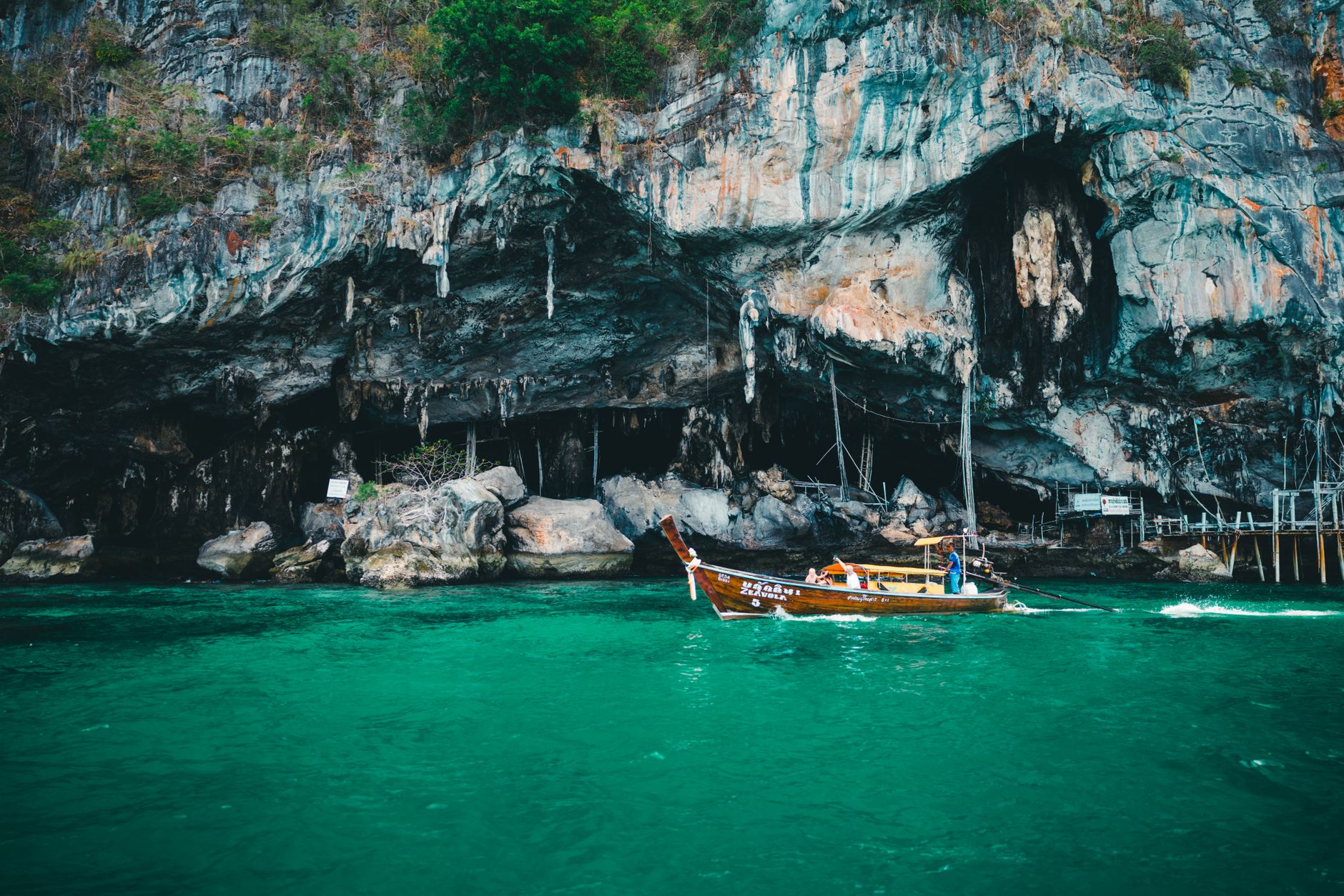
Phuket’s finest asset is what lies offshore. Day boats run to the famous Phi Phi Islands, whose Maya Bay — the beach from the Leonardo DiCaprio film — has reopened under strict visitor limits after years of closure to let the reef recover. Further out, the Similan Islands offer some of the best diving and snorkelling in the country (seasonal, roughly October to May). To the east, Phang Nga Bay is a dreamscape of limestone karsts rising from calm green water, including the sea stack nicknamed James Bond Island, best explored by kayak. These trips are the heart of a Phuket holiday — book a reputable operator and go early to beat both the heat and the crowds.
Food, Phuket-style
Phuket has its own distinct Peranakan cuisine, a legacy of its Hokkien-Chinese and Malay roots, and it’s a genuine food city — enough that UNESCO named it a City of Gastronomy. Seek out moo hong (slow-braised pork belly), o-tao (a crispy oyster-and-taro fry), and the local Hokkien mee noodles. The Lock Tien food court in the Old Town is a friendly place to try several at once, and the island has a serious fine-dining scene too, from Tu Kab Khao to the long-loved Raya. Don’t leave without a morning roti and a sweet Thai tea.
Getting around and when to go
This is the one honest headache: Phuket’s public transport is thin, and taxis and tuk-tuks are notoriously expensive, so budget generously for moving around. Grab works but can be patchy at the beaches; many confident travellers rent a scooter, though the roads demand respect and a proper licence. Cluster your days by area to avoid criss-crossing the island. The best weather is the dry season, roughly November to April, with calm seas ideal for boat trips; the May-to-October monsoon brings a greener, cheaper, quieter island but rougher water and some beaches unsafe to swim — watch for red flags and never ignore them.
Take Phuket on its own terms — a couple of beach days, a slow morning in the Old Town, and one unforgettable day out on the Andaman — and it earns every bit of its fame.
Frequently asked questions
Which part of Phuket should a first-timer stay in?
It depends on the holiday you want. Patong is the loud nightlife hub; Kata and Karon are the family-friendly middle ground; Kamala, Surin, Bang Tao and Nai Harn are calmer and prettier. Many travellers split their time, adding a night or two in the characterful Old Town inland.
Is Maya Bay open again?
Yes. Maya Bay on the Phi Phi Islands — the beach from the Leonardo DiCaprio film — reopened under strict daily visitor limits and swimming restrictions after a multi-year closure that let the reef and beach recover. Most Phi Phi day tours include a stop.
How do you get around Phuket?
It is the island's one real headache: public transport is thin and taxis and tuk-tuks are expensive. Grab works but can be patchy at the beaches, and many confident visitors rent a scooter (with a proper licence). Cluster your days by area to avoid criss-crossing the island.
When is the best time to visit Phuket?
The dry season from roughly November to April brings calm seas ideal for island-hopping. The May-to-October monsoon makes the island greener, cheaper and quieter but the water rougher, with some beaches unsafe to swim — always heed the red flags.
Keep reading on Gently Yonder
- 14 Untranslatable Words Saudade, komorebi, sisu — words that resist English and what they teach travellers.
- Best eSIM for Thailand (2026) Coverage across Bangkok, Chiang Mai, and the islands, and how much data you'll need.
- Rent a Boat Without a License Where you can legally rent a boat with no license, country by country, and how to find one.
- Bangkok: A First-Timer's Guide The Grand Palace and Wat Arun, the markets, street food and the river — how to take on Bangkok.
- Chiang Mai: A First-Timer's Guide Old City temples, Doi Suthep, ethical elephant sanctuaries, and khao soi.