Seoul is a city of layers held in easy balance — six-century-old palaces beneath glass towers, Joseon-era hanok lanes a subway stop from the neon of Gangnam, monks’ temples and all-night barbecue joints and the world’s most confident pop culture, all wired together by a metro that shames most of the planet’s. It is large, but it is astonishingly easy: clean, safe at any hour, English-signed on transit, and cheap to cross. A first visit is really about rhythm — palace mornings, market afternoons, and long, sizzling dinners. Buy a rechargeable T-money card at any convenience store to tap through the subway and buses; add a travel eSIM so navigation and translation apps work from the airport train onward; and browse Klook or KKday for the DMZ tours and attraction passes, which sell out and are simplest arranged ahead.
No one pays to be recommended here, and we say when a free or cheaper option wins. Our promise →
In this guide9 sections
The grand palaces

Start where the city began. Gyeongbokgung, the largest of the five royal palaces, spreads beneath the mountains at the head of the old city; time your visit to the changing of the royal guard at the main gate, and note that anyone wearing traditional hanbok (rented from shops nearby) enters free. A short walk east, Changdeokgung is the loveliest, its Huwon “Secret Garden” a masterpiece of landscaped restraint that earned it UNESCO status. Between and around them sits Bukchon Hanok Village, a hillside of preserved tile-roofed houses on lanes framing the palace roofs and city beyond — beautiful, and residential, so tread quietly. Cap the district at the wide plaza of Gwanghwamun, guarded by the statues of Admiral Yi Sun-sin and King Sejong.
Neighbourhoods, each with a mood
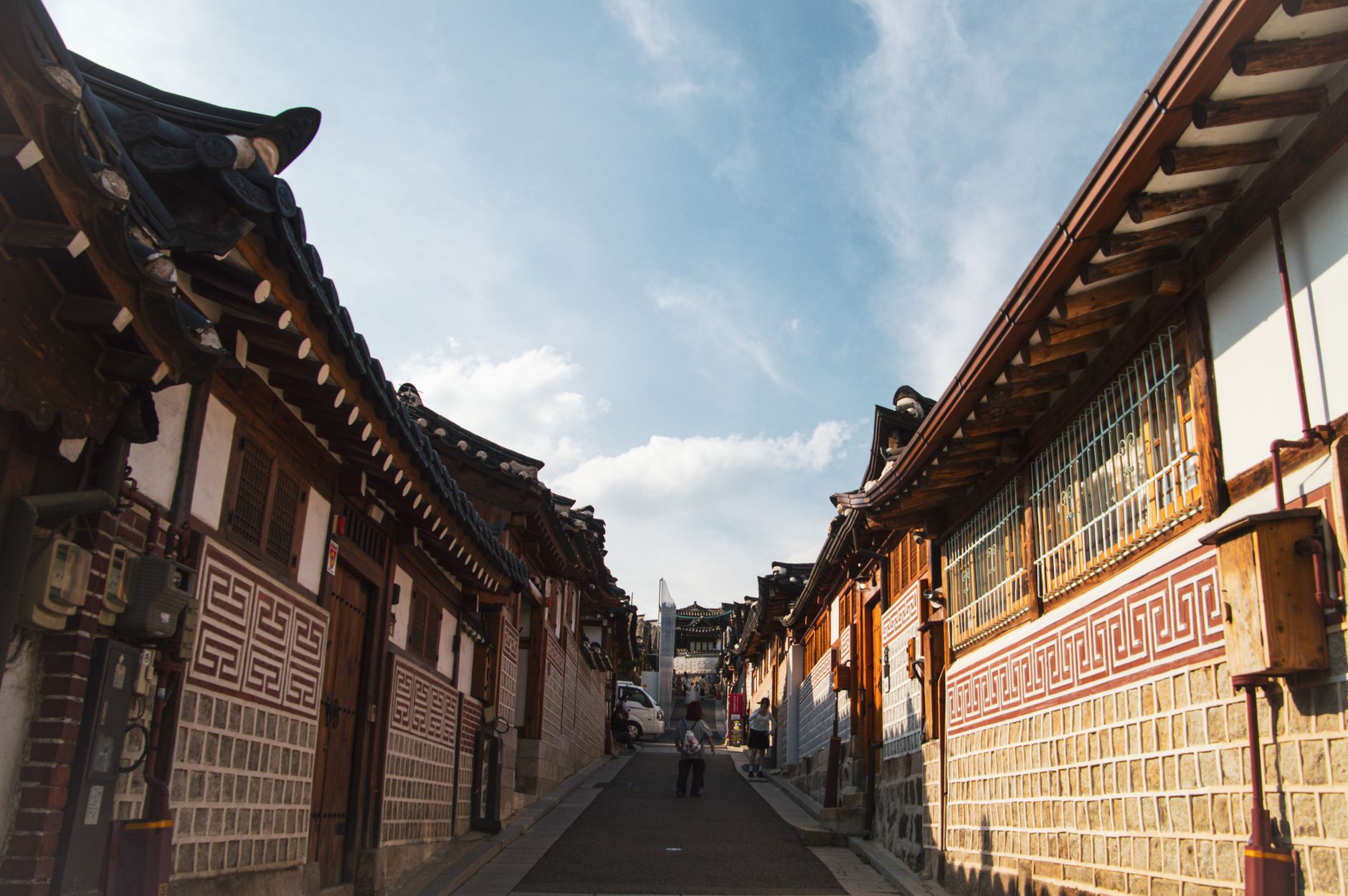
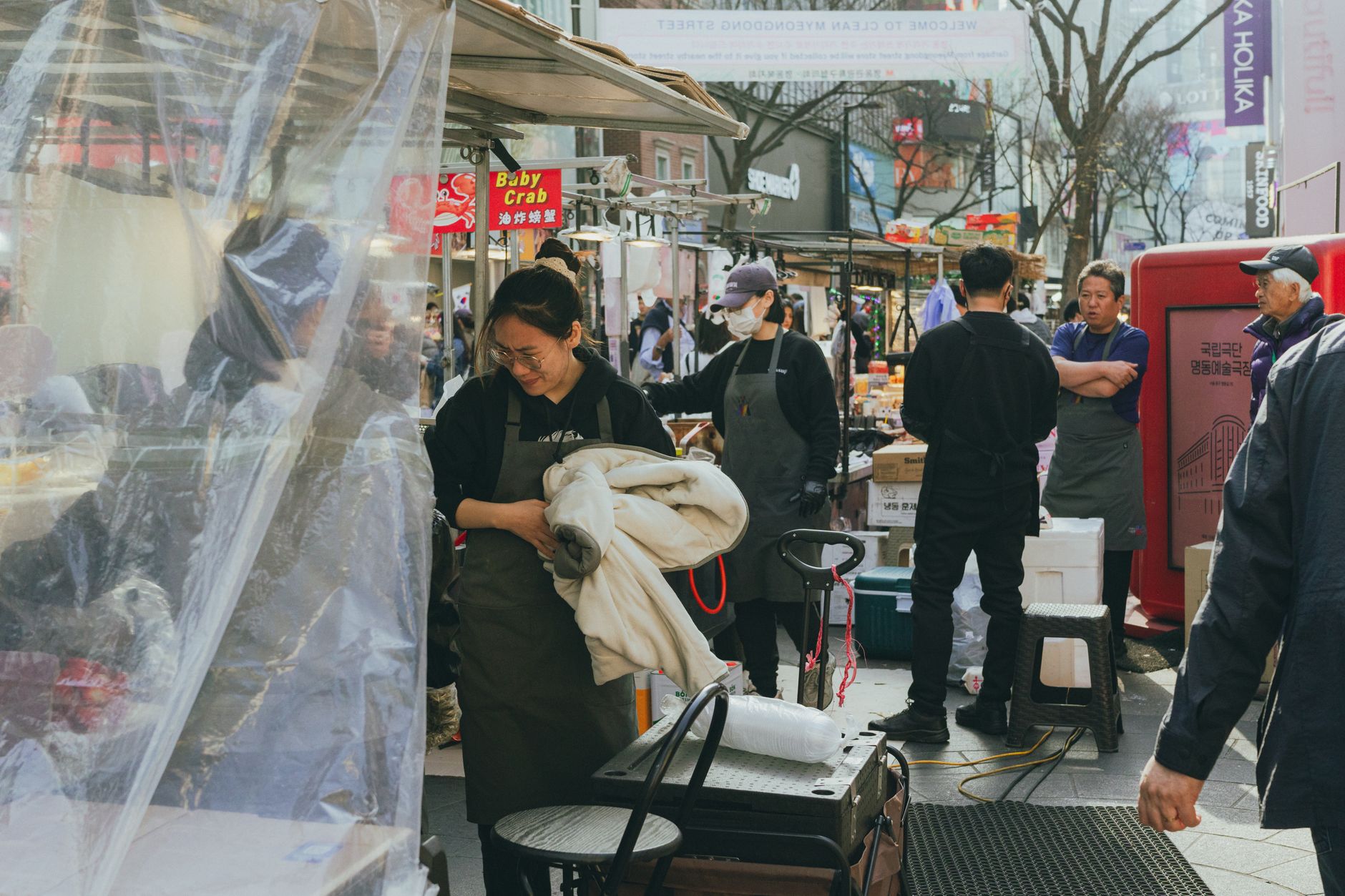
Seoul is best understood one district at a time. Myeongdong is the shopping and street-food hurricane — skincare shops and stalls of tornado potatoes and grilled cheese lobster. Insadong trades in tea houses, calligraphy brushes, and galleries, with the spiralling Ssamziegil complex at its heart. Student-loud Hongdae, around Hongik University, is the place for buskers, indie clubs, and late food. Glossy Gangnam — yes, that one — is department stores, the COEX Mall with its photogenic Starfield Library, and the serene Bongeunsa Temple hidden among the towers. For history with a heavier heart, Itaewon and the nearby War Memorial of Korea give context to the peninsula’s divided century.
Choosing where to sleep? Where to stay in Seoul compares five areas, from Myeongdong to Gangnam, and names 12 hotels.
Towers, gates, and design
For the whole-city view, ride to N Seoul Tower atop Namsan — by cable car, or on the leafy walking path — and find the fence of “love locks” below the observation deck. Downtown, restored stretches of the old city fortress wall thread the ridgelines, and the daylighted Cheonggyecheon stream offers a cool, sunken walk through the centre. To the east, the vast silver curves of Zaha Hadid’s Dongdaemun Design Plaza (DDP) anchor a district that never quite sleeps, its wholesale malls and night market running into the small hours.
Markets and the art of eating

Korean food is a headline reason to come, and Seoul serves it at every register. Graze the century-old Gwangjang Market for bindaetteok (mung-bean pancakes), mayak gimbap (moreish “narcotic” rice rolls), and live-octopus dares. Book an evening for Korean barbecue — you grill marbled pork belly (samgyeopsal) or beef at your own table, wrapping each bite in lettuce with garlic and ssamjang. Learn the everyday staples: bubbling kimchi jjigae, cold buckwheat naengmyeon, chewy tteokbokki rice cakes from a street cart, and fried chicken with beer (chimaek). Seoul’s café culture is its own sport, from themed rooftops to the bakery-lined lanes of Ikseon-dong, an old hanok quarter reborn.
Day trips: the DMZ and beyond
The most sobering half-day is the DMZ, the Demilitarized Zone dividing the two Koreas — a guided tour takes in the Third Infiltration Tunnel and the Dora Observatory looking across the border, and (subject to conditions) the Joint Security Area at Panmunjom. It is history you can feel. For lighter days, the tree-lined paths of Nami Island and the Petite France and garden parks nearby make an easy escape, and the Everland theme park draws families. Each is comfortably reachable on a day tour from the city.
If you only have three days
Three days is enough for a first meeting if you give each day one anchor in the morning, one neighbourhood in the afternoon and an unplanned evening.
- Day one, the old heart. Gyeongbokgung when it opens, timed around the changing of the guard (check the current schedule; it pauses one day a week). Climb the lanes of Bukchon quietly, drift down to Insadong for a tea house, and end over bindaetteok at Gwangjang Market. Carry some cash.
- Day two, the view and the new city. Namsan in the morning, on foot or by cable car, for the N Seoul Tower view. Spend the afternoon in Myeongdong for the full-volume version of the city, or Seongsu for its cafés and design shops, and the evening in Hongdae.
- Day three, your choice. The war memorial and museum quarter for history, Samcheong-dong for galleries, or one market eaten end to end. Keep the last evening simple: a walk along the Cheonggyecheon stream as the lights come on.
The Han River, and Seoul at dusk
When the density asks for space, the Han River parks are where Seoul exhales. Rent a bike, bring a picnic, and on a summer evening watch the Banpo Bridge Rainbow Fountain light up; check current show times before you plan around it.
Dusk is also the best hour for N Seoul Tower on Namsan, the classic Seoul panorama, as the endless grid below begins to glitter.
On the Myeongdong street-food run, add egg bread to the tornado potatoes and grilled cheese lobster.
Getting around, and when to go
Seoul’s subway is the key to everything — vast, punctual, cheap, and signed in English, with your T-money card also covering buses and taxis. The AREX train links Incheon Airport to the centre in around an hour. For beyond the city, the KTX high-speed rail puts Busan and Gyeongju within easy reach. On timing, the two golden windows are spring (cherry blossoms, roughly early April) and autumn (crisp air and blazing foliage in October), both gorgeous and popular. Summer is hot and brings the July monsoon rains; winter is genuinely cold and dry but lit up for the season. Give Seoul four or five days and it reveals itself as few big cities do — ancient and hyper-modern in the same glance, and unfailingly easy to be in.
Frequently asked questions
How many days do you need in Seoul?
Four to five days is a comfortable first visit: a day for the grand palaces and Bukchon, a day or two working through neighbourhoods like Myeongdong, Insadong, Hongdae and Gangnam, a half-day at N Seoul Tower or the DDP, plenty of time to eat, and one day trip such as the DMZ or Nami Island.
Should I book a DMZ tour in advance?
Yes. The Demilitarized Zone can only be visited on an organised tour, and the popular ones — especially any including the Joint Security Area at Panmunjom — sell out and are subject to conditions. Booking ahead through a reputable operator secures your spot and your passport paperwork.
Do I need a T-money card in Seoul?
It is by far the easiest way to get around. Buy the rechargeable T-money card at any convenience store or station, top it up, and tap through the subway, buses and taxis. Seoul's subway is vast, cheap, punctual and signed in English.
When is the best time to visit Seoul?
Spring (cherry blossoms around early April) and autumn (crisp air and foliage in October) are the two ideal windows, both beautiful and busy. Summer is hot with a July monsoon; winter is cold and dry but festive. Pick spring or autumn if your dates are flexible.
Keep reading on Gently Yonder
- Do You Need a K-ETA for South Korea? (2026) 22 countries are K-ETA-exempt through 31 Dec 2026 — but you still need an arrival card. What changed, and how to prepare.
- Staying Connected in South Korea eSIM vs local SIM vs pocket WiFi in Korea — which to choose, and how to get online on arrival.
- How Much Does a South Korea Trip Cost? A realistic 2026 budget — flights, stays, food, T-money, the KTX, and where costs surprise you.
- Travel Insurance for South Korea Whether you need it, what Korean medical care costs a visitor, and honest picks by traveller type.
- Best eSIM for South Korea (2026) How to choose a Korea travel eSIM — coverage, data plans, and the pick for most trips.
- South Korea Country Profile Layered history and society, plus practical preparation for Seoul-bound travellers.