Shinjuku is where a lot of people’s idea of Tokyo comes from — the wall of screens, the rivers of people, the towers stacked with restaurants and bars. It can feel overwhelming on a first visit, so it helps to understand that Shinjuku is really several districts fanned out around one enormous station, and that once you know which way each side leans, the noise resolves into something you can navigate.
No one pays to be recommended here, and we say when a free or cheaper option wins. Our promise →
In this guide7 sections
The station at the centre of it

Everything in Shinjuku orbits the station, which is regularly described as the busiest in the world by passenger numbers. That statistic is easy to feel: dozens of platforms, many exits, and lines from several companies threaded together underground. The practical advice is simple but worth taking seriously — pick your exit before you start walking, because “Shinjuku Station” is less a building than a small city, and the correct exit can save you a long detour. The broad split is useful to hold in mind: business and government towers to the west, department stores and transport to the south and east, and entertainment to the north-east.
Sleeping in Shinjuku? Where to stay in Shinjuku compares the quieter south and west sides of the station with Kabukichō and names three hotels, with the catch for each.
West side: skyscrapers and a free view
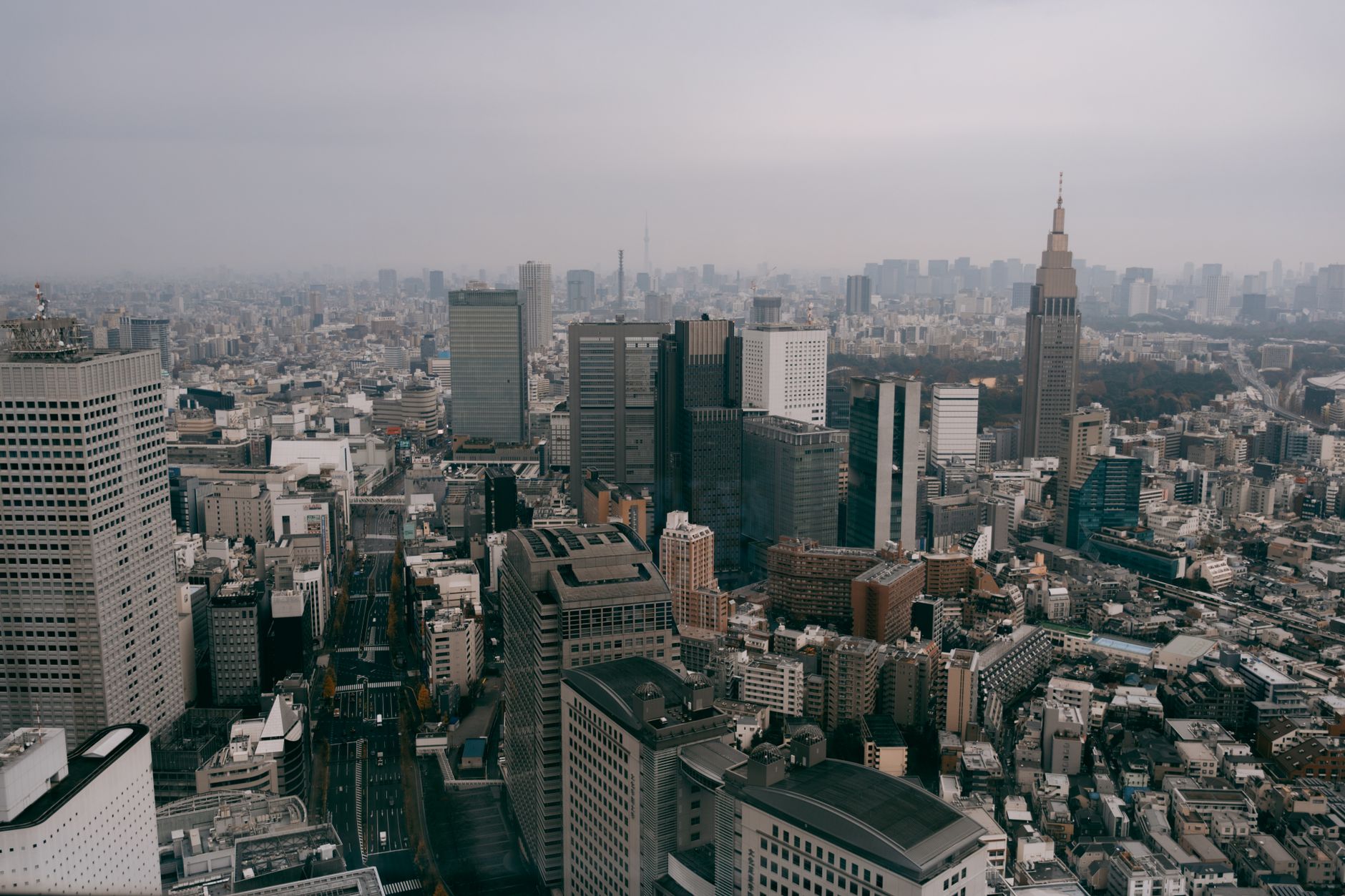
The west side is Tokyo’s original high-rise cluster, and it hides one of the best free things to do in the city. The Tokyo Metropolitan Government Building — a twin-towered complex designed by Kenzō Tange — has observation decks around two hundred metres up that are open to the public at no charge. On a clear day the view stretches across the city, and towards Mount Fuji at the right time of year. It is an easy, un-touristy way to get your bearings on a first afternoon.
Kabukichō and Golden Gai: after dark, with care
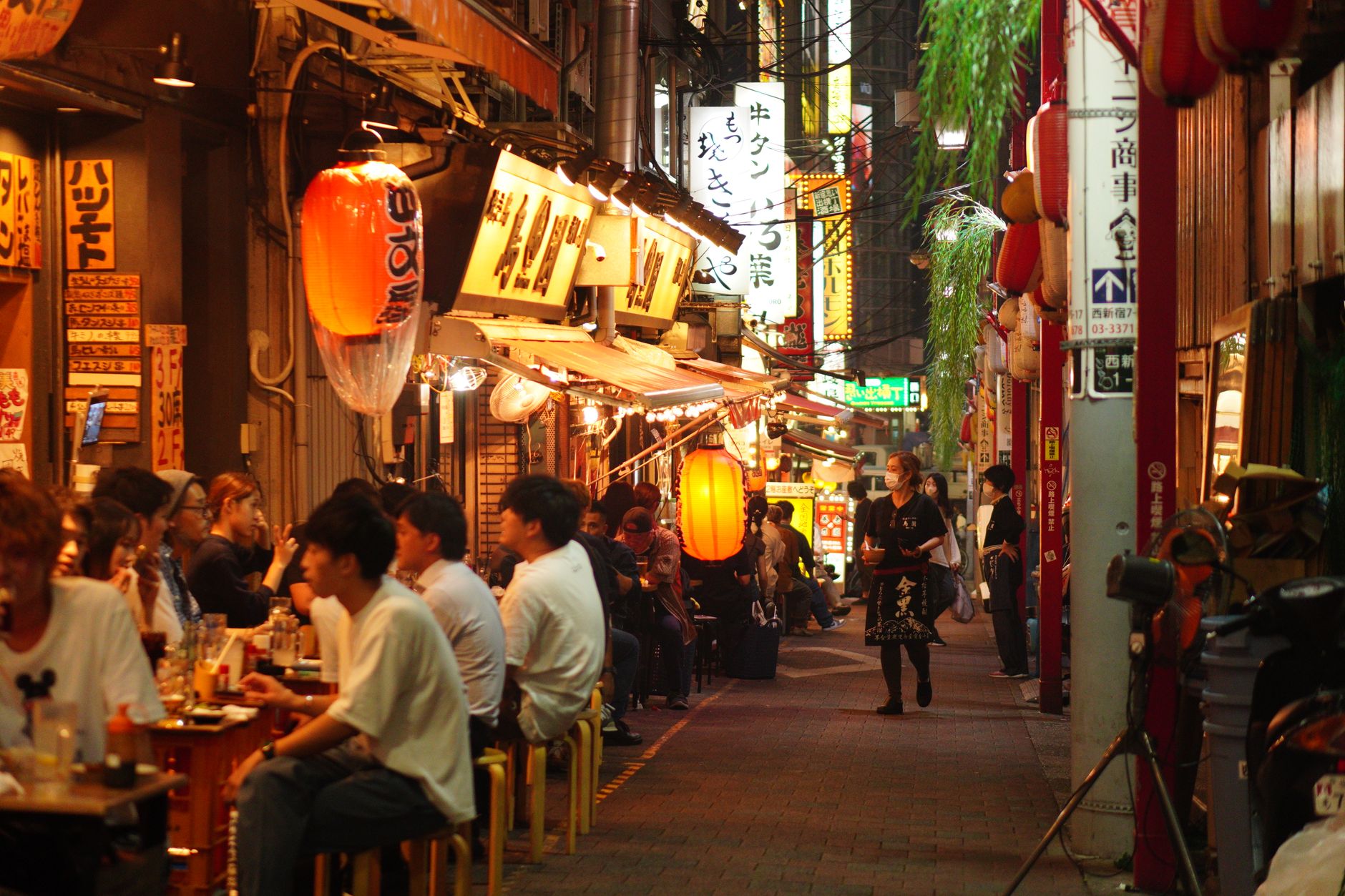
North-east of the station is Kabukichō, Tokyo’s best-known entertainment district — bright, busy, and fine to walk through, though it is also where the usual advice about avoiding touts and street-side “guides” applies. Tucked at its edge is Golden Gai, a small grid of narrow lanes packed with a few hundred tiny bars, many seating only a handful of people. Some welcome visitors warmly; some are members’ places or charge a seat fee, so it is polite to check the sign or ask before sitting down. It is atmospheric rather than convenient, and that is the appeal.
Nearby, Omoide Yokocho — a cramped alley of small eateries and yakitori counters near the west side of the tracks — offers a similar squeeze of smoke, lanterns, and elbow-to-elbow eating that feels a world away from the towers overhead.
A garden to reset in
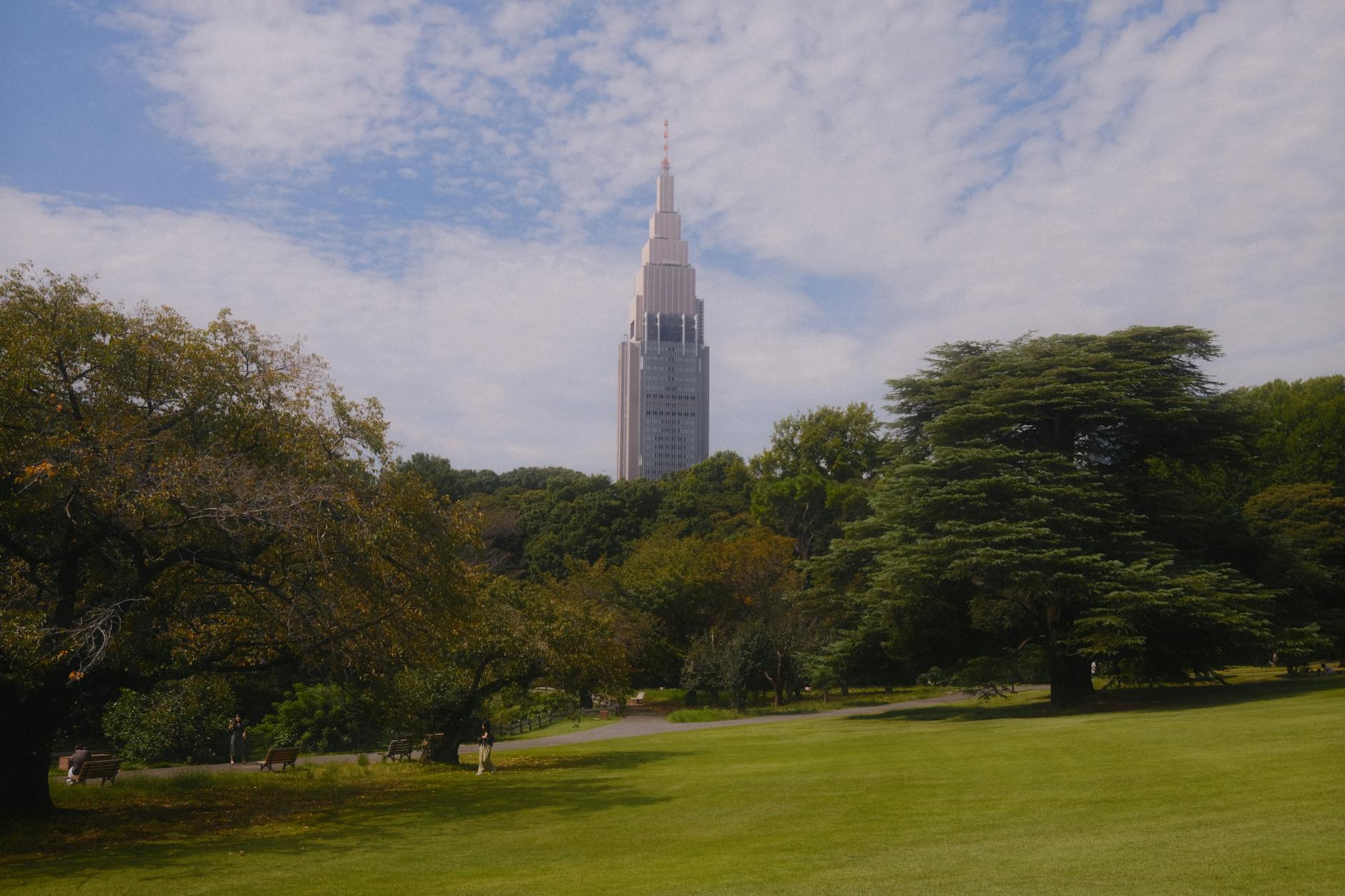
For all its intensity, Shinjuku holds one of Tokyo’s finest green spaces. Shinjuku Gyoen, a short walk south-east of the station, is a large garden blending Japanese, English, and French landscape styles, with a modest entry fee and generous lawns. It is where I would send anyone who has hit their limit on crowds — an hour here genuinely resets the day, and in cherry-blossom season it is one of the calmer places to see them.
Shopping and the ordinary pleasures
The south and east sides are department-store territory — long-established names like Isetan among them — along with electronics, bookshops, and endless places to eat. You do not need a plan here so much as an appetite and a willingness to go up: in Shinjuku the good restaurants are often several floors above the street, and the lift directory is the real menu.
How to take Shinjuku
The trick with Shinjuku is not to try to “do” it but to use it. Come up the right exit, take the free view to orient yourself, eat well, and dip into one of the older alleys after dark if that appeals. Then step into the garden when the density gets to be too much. As with any busy district, specifics — opening hours, which bars welcome newcomers, entry fees — change over time, so confirm anything that matters close to your visit. What stays constant is the character: Shinjuku is Tokyo at full volume, and it is a remarkable thing to stand in the middle of. Two things that make a Shinjuku day easier: left-luggage near the station for the hours before check-in, and pre-booked tickets for anything with a queue — or a self-guided walk if you would rather set your own pace.
Frequently asked questions
Is there a free view in Shinjuku?
Yes. The Tokyo Metropolitan Government Building has public observation decks around two hundred metres up, open at no charge. On a clear day you can see across the city and towards Mount Fuji at the right time of year — an easy way to get your bearings.
What is Golden Gai and can tourists visit?
Golden Gai is a small grid of narrow lanes packed with a few hundred tiny bars, many seating only a handful of people. Some welcome visitors warmly; others are members' bars or charge a seat fee, so it is polite to check the sign or ask before sitting down.
Which exit should I use at Shinjuku Station?
Decide before you start walking — Shinjuku is regularly described as the world's busiest station and is more like a small city than a single building. Broadly: towers and government to the west, department stores and transport to the south and east, entertainment to the north-east.
Where can I escape the crowds in Shinjuku?
Shinjuku Gyoen, a short walk south-east of the station, is a large garden blending Japanese, English, and French styles with a modest entry fee. It is one of the calmer places in the area and a good reset, including in cherry-blossom season.
Keep reading on Gently Yonder
- Airalo vs Holafly vs Saily — The three big travel eSIM providers compared — coverage, pricing, and who each suits.
- Best eSIM for Japan, Korea & Vietnam — Destination-by-destination eSIM picks for three popular Asian countries.
- Pocket WiFi vs eSIM — Which connectivity option wins — solo vs group, cost, battery, and setup compared.
- Hotel Booking Sites Compared — Hotels.com, Booking.com, Trip.com, Agoda — what each is genuinely good for.
- Travel Insurance Compared — SafetyWing vs World Nomads vs Genki — coverage, exclusions, and how to choose.
- Japan Country Profile — Eight-section country deep-dive: history, geography, society, and travel prep.