No one pays to be recommended here, and we say when a free or cheaper option wins. Our promise →
In this guide13 sections
- The short answer
- First, choose the station
- Shinjuku: the all-hours hub
- Shibuya: young, walkable, a little louder
- Tokyo Station and Marunouchi: polished and central
- Ginza and Hibiya: refined, and priced accordingly
- Asakusa: old Tokyo, gentler and better value
- Ueno and Yanaka: museums, markets and a quiet old quarter
- All 17 at a glance
- What kind of hotel? The types you will meet
- Before you book: five checks
- If you are still undecided
- Frequently asked questions
Tokyo asks you to make two decisions about where you sleep, and most advice only helps with one. The first is the neighbourhood, or really the station, you will start and end every day in. The second is the hotel inside it. Get the first right and a merely decent room is fine. Get it wrong and even a beautiful room costs you an extra transfer every morning and every tired night.
Splitting the trip between cities? Where to stay in Japan on a first trip covers how many nights to give Tokyo, Kyoto and Osaka, and moving day in between. Coming for the cherry blossom? Our cherry-blossom guide has the dates and the tax change on 1 April 2027; for late November, our autumn-leaves guide has the 2026 garden openings.
So this guide goes in that order. Six areas first, with what each is like at eight in the morning and at eleven at night. Then seventeen specific hotels across them, at every budget, with the one reason I would pick each, and the thing that might make you not.
A word on how these were chosen, because it matters: they are researched, not reviewed. Each hotel is here for its location, what the property itself publishes, and consistent guest feedback, and each was checked as open in September 2026. When we write up a stay first-hand, the guide will say so at the top. No hotel pays to appear on this page.
The short answer
| If you… | Stay in | Why |
|---|---|---|
| are on a first trip and want everything easy | Shinjuku (south or west side) or Shibuya | Direct trains almost everywhere; food and life on the doorstep |
| are taking the Shinkansen, or want calm evenings | Tokyo Station / Marunouchi | The Tokaido Shinkansen and the Narita Express leave from here |
| want refinement and a walkable centre | Ginza / Hibiya | Polished, central, Tokyo Station and Tsukiji within walking distance |
| want old-Tokyo character and better value | Asakusa | Senso-ji before the crowds, slower evenings, lower prices |
| love museums, or are arriving on the Skyliner from Narita | Ueno / Yanaka | Ueno Park’s museums, the Skyliner next door, a quiet old quarter up the hill |
First, choose the station
Tokyo’s trains are so good that “far” rarely means much. But you will walk to and from your home station at least twice a day, often with tired legs and sometimes with a suitcase, and that makes two things matter more than any sight on your list.
- Which lines stop there. A station on the JR Yamanote loop with two or three subway lines turns most journeys into a single ride.
- The walk from the platform to your door. Five minutes is worth holding out for. Tokyo’s big stations are vast, and “near the station” can mean fifteen minutes of corridors if you use the wrong exit.
Every hotel listing names its nearest exit. Write it down, with the line, before you book. It is the most useful sentence on the page.
Shinjuku: the all-hours hub

Shinjuku is built around one of the busiest railway stations in the world, and that density is exactly what you are buying: direct trains to almost everywhere, highway buses to Mount Fuji from Busta Shinjuku above the south exit (more on that day trip here), department stores, late food, and the calm lawns of Shinjuku Gyoen a short walk from the neon. It suits a first trip where you want everything on tap.
The trade-off is that it never really lets up. East of the station, Kabukicho is Tokyo’s biggest entertainment district: fine to walk through, loud enough that some people would rather sleep a few blocks away. The south and west sides give you the same connections with quieter nights. Our Shinjuku guide goes block by block.
Where to stay in Shinjuku
How the hotel links work: a hotel’s name goes to its own website. “Check rates” opens it on Booking.com through our partner Stay22, which pays us a commission if you book, at no extra cost to you.
- Park Hyatt Tokyo, splurge. It fills the top fourteen floors of the 52-storey Shinjuku Park Tower and reopened on 9 December 2025 after a 19-month renovation. Choose it for the views and the stillness high above the city. Watch out: it is a 12-minute walk from the south exit; the hotel runs a free shuttle from the west side of the station. Check rates on Booking.com →
- JR Kyushu Hotel Blossom Shinjuku, comfortable. Three minutes from JR Shinjuku’s South Exit and from Busta Shinjuku, which makes it the easiest base here for an early highway bus. Rooms lean towards twins and rooms for three. Watch out: you are on the busy side of the station; ask for a higher floor. Check rates on Booking.com →
- Hotel Gracery Shinjuku, good value, and fun. The hotel with Godzilla’s head looming over its eighth-floor terrace, in the middle of Kabukicho and under ten minutes from the East Exit. Choose it if the neon is part of the trip for you. Watch out: this is the loud side of Shinjuku, by design. Check rates on Booking.com →
Shibuya: young, walkable, a little louder

Shibuya is where Tokyo feels youngest: the scramble crossing, a decade of towers and walkways around the station, Miyashita Park’s rooftop, and an easy walk to Harajuku, Omotesando, Daikanyama and Ebisu. It is superbly connected south and west, and it is the better base of the two big hubs if you would rather wander than tick things off.
The crowd at the crossing is the price. Half a step out, up towards Jingumae and Cat Street or west towards Tomigaya, buys you calm without losing the station.
Where to stay in Shibuya
- TRUNK(HOTEL) CAT STREET, splurge, boutique. Fifteen rooms on Cat Street in Jingumae, between Shibuya and Harajuku, designed around reclaimed materials and local makers. Choose it for character over chandeliers. Watch out: fifteen rooms go quickly, and you walk to Shibuya or Meiji-jingumae rather than sleeping on top of a station. Check rates on Booking.com →
- SHIBUYA STREAM HOTEL, comfortable. 177 rooms inside the Shibuya Stream tower, reached from the JR station’s New South Exit; it was the Shibuya Stream Excel Hotel Tokyu until it was renamed in January 2024. Choose it when easy luggage matters. Watch out: it is a tower in a business block, not a neighbourhood street. Check rates on Booking.com →
- sequence MIYASHITA PARK, good value, design. Built into Miyashita Park, a seven-minute walk from the station, with a rooftop bar, SOAK, on the eighteenth floor. Choose it for a stylish mid-price base in the middle of things. Watch out: you are in the thick of Shibuya; light sleepers should ask for a high floor. Check rates on Booking.com →
Tokyo Station and Marunouchi: polished and central

If you want composure, the Marunouchi side of Tokyo Station is hard to fault. The Tokaido Shinkansen to Kyoto and Osaka leaves from here (see Tokyo to Kyoto, compared), the Narita Express stops here, the Imperial Palace gardens are a short walk west, and Ginza is about fifteen minutes on foot. Evenings are quiet, because this is Tokyo’s business district, which is either the point or the problem.
Where to stay near Tokyo Station
- The Tokyo Station Hotel, splurge, heritage. 150 rooms inside the red-brick station building itself, restored and reopened in 2012, with rooms that look into the domes over the Marunouchi concourse. Choose it to sleep inside a landmark with the Shinkansen gates downstairs. Check rates on Booking.com →
- HOSHINOYA Tokyo, splurge, ryokan. A seventeen-storey ryokan in Otemachi: shoes off at the door, tatami corridors, six rooms per floor sharing a lounge, and a bath on the top floor fed by a hot spring drawn from 1,500 metres below the city. Choose it for a proper ryokan night without leaving the centre. Watch out: ryokan customs apply, from the shoes to the bath.
- Hotel Ryumeikan Tokyo, comfortable, Japanese in feel. Three minutes from the Yaesu North Exit, descended from a ryokan founded more than 120 years ago; some rooms have a tatami area, and the kaiseki restaurant is on the fifteenth floor. Choose it for a gentler, Japanese-feeling base that still puts you at the Shinkansen. Check rates on Booking.com →
Ginza and Hibiya: refined, and priced accordingly
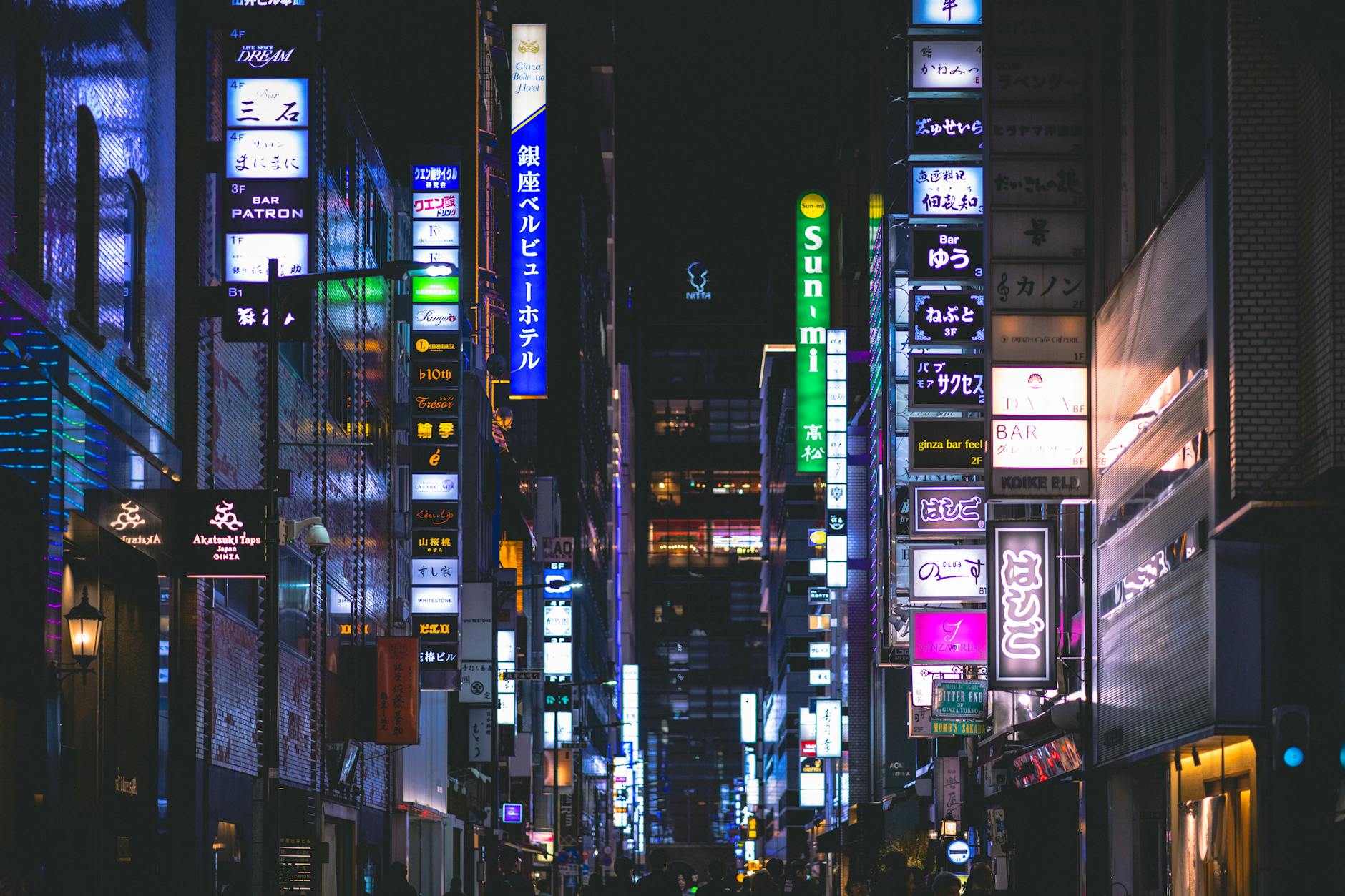
Ginza is Tokyo’s classic upmarket quarter: flagship stores, old department stores, galleries, and a grown-up pace. On Saturday, Sunday and public-holiday afternoons, Chuo-dori closes to cars and becomes Ginza’s “pedestrian paradise”, as it has since 1970. Tsukiji’s outer market is a walk away, and so are the old coffee houses in our kissaten guide. It suits travellers who want refinement and do not mind paying for it.
Where to stay in Ginza and Hibiya
- The Peninsula Tokyo, splurge. Opened in 2007 opposite Hibiya Park and the Imperial Palace, with 302 rooms and a direct underground link to Hibiya Station; Ginza is on one side and Marunouchi on the other. Choose it for the grand-hotel version of Tokyo. Check rates on Booking.com →
- MUJI HOTEL GINZA, comfortable, design. 79 rooms on the sixth to tenth floors of MUJI’s global flagship on Namiki-dori, open since April 2019. The look is exactly what you would hope: wood, linen, no clutter. Choose it for calm in the middle of the busiest shopping street. Check rates on Booking.com →
- Mitsui Garden Hotel Ginza Premier, comfortable, views. A high-rise at the Shimbashi end of Ginza, five minutes from Higashi-Ginza Station and ten from Ginza Station, with rooms on high floors looking out over the city. Choose it for a view without a luxury price. Check rates on Booking.com →
Asakusa: old Tokyo, gentler and better value

Asakusa, around Senso-ji in the north-east, keeps more of the low-rise Shitamachi feel than the western hubs. Rooms tend to be better value, evenings are slower, and at seven in the morning the temple precinct is close to empty; I would happily build a whole trip around those mornings. Our Asakusa guide has the streets worth wandering.
The trade-off is connections. Asakusa is on the Ginza, Asakusa and Tobu lines but not on the JR loop, so western Tokyo usually means a change. For a gentler trip, it is worth it.
Where to stay in Asakusa
- The Gate Hotel Kaminarimon by Hulic, comfortable. Steps from Kaminarimon, with a guests-only rooftop terrace on the fourteenth floor that looks at Senso-ji one way and Tokyo Skytree the other. Choose it for the best view in the neighbourhood. Check rates on Booking.com →
- OMO3 Asakusa by Hoshino Resorts, good value. Opened in July 2023, a minute’s walk from Senso-ji and four from Asakusa Station, with a thirteenth-floor lounge over the temple grounds and staff who lead walks around the neighbourhood. Choose it for a friendly, well-run base with a strong sense of place. Check rates on Booking.com →
- Nui. HOSTEL & BAR LOUNGE, budget. In Kuramae, one stop south of Asakusa and two minutes from Kuramae Station, in a converted toy-company warehouse by the Sumida River; downstairs is a café by day and a bar by night. Choose it for a bunk or a simple room with a real social life below. Check rates on Booking.com →
Ueno and Yanaka: museums, markets and a quiet old quarter

Ueno pairs Ueno Park and its museums with a major station: JR lines, the Shinkansen heading north, and the Keisei Skyliner from Narita, which arrives at Keisei Ueno next door (you can book Skyliner tickets ahead on Klook). The Ameyoko market runs beside the tracks south of the station. A short walk up the hill, Yanaka is one of the few Tokyo neighbourhoods that came through the 1923 earthquake and the 1945 air raids largely intact: temples, wooden houses, small shops, cats.
Where to stay in Ueno and Yanaka
- NOHGA HOTEL UENO TOKYO, comfortable. 130 rooms three minutes from Ueno Station, filled with work by local makers, with a bistro downstairs. Choose it for a design hotel near the Skyliner at a sensible price. Check rates on Booking.com →
- Ryokan Sawanoya, budget, ryokan. A small inn in Yanaka, family-run for more than seventy years: futons, tatami, and the old quarter outside the door. Choose it for the simplest honest ryokan night in the city. Watch out: it is a traditional inn, so check the room type and the bath arrangements when you book.
All 17 at a glance
Price tiers are relative to Tokyo, from ¥ (budget) to ¥¥¥¥ (luxury). Rates swing hugely with dates, so compare the same night rather than the “from” price.
| Hotel | Area | Tier | Best for | Watch out for |
|---|---|---|---|---|
| Park Hyatt Tokyo | Nishi-Shinjuku | ¥¥¥¥ | Views and quiet above the city | 12-minute walk (or shuttle) to the station |
| JR Kyushu Hotel Blossom Shinjuku | Shinjuku South | ¥¥¥ | Early buses, rooms for three | The busy side of the station |
| Hotel Gracery Shinjuku | Kabukicho | ¥¥ | Neon, Godzilla, energy | Noise, by design |
| TRUNK(HOTEL) CAT STREET | Jingumae | ¥¥¥¥ | Boutique character | 15 rooms; a walk to the station |
| SHIBUYA STREAM HOTEL | Shibuya | ¥¥¥ | Easy luggage from the station | Business-block setting |
| sequence MIYASHITA PARK | Shibuya | ¥¥ | Design at a mid price | Busy surroundings |
| The Tokyo Station Hotel | Marunouchi | ¥¥¥¥ | Sleeping inside a landmark | Quiet evenings |
| HOSHINOYA Tokyo | Otemachi | ¥¥¥¥ | A ryokan in the city centre | Ryokan customs |
| Hotel Ryumeikan Tokyo | Yaesu | ¥¥¥ | Japanese feel beside the Shinkansen | Quiet evenings |
| The Peninsula Tokyo | Hibiya | ¥¥¥¥ | Grand-hotel Tokyo | Price |
| MUJI HOTEL GINZA | Ginza | ¥¥¥ | Calm, minimal design | Busy street below |
| Mitsui Garden Hotel Ginza Premier | Ginza (Shimbashi end) | ¥¥¥ | Views for less | Ten minutes to Ginza Station |
| The Gate Hotel Kaminarimon by Hulic | Asakusa | ¥¥¥ | The rooftop view | Not on the JR loop |
| OMO3 Asakusa by Hoshino Resorts | Asakusa | ¥¥ | A friendly, local-feeling base | Not on the JR loop |
| Nui. HOSTEL & BAR LOUNGE | Kuramae | ¥ | Budget, with a social café-bar | Shared spaces |
| NOHGA HOTEL UENO TOKYO | Ueno | ¥¥ | Design near the Skyliner | Busy station area |
| Ryokan Sawanoya | Yanaka | ¥ | A simple family ryokan | Check the bath arrangements |
What kind of hotel? The types you will meet
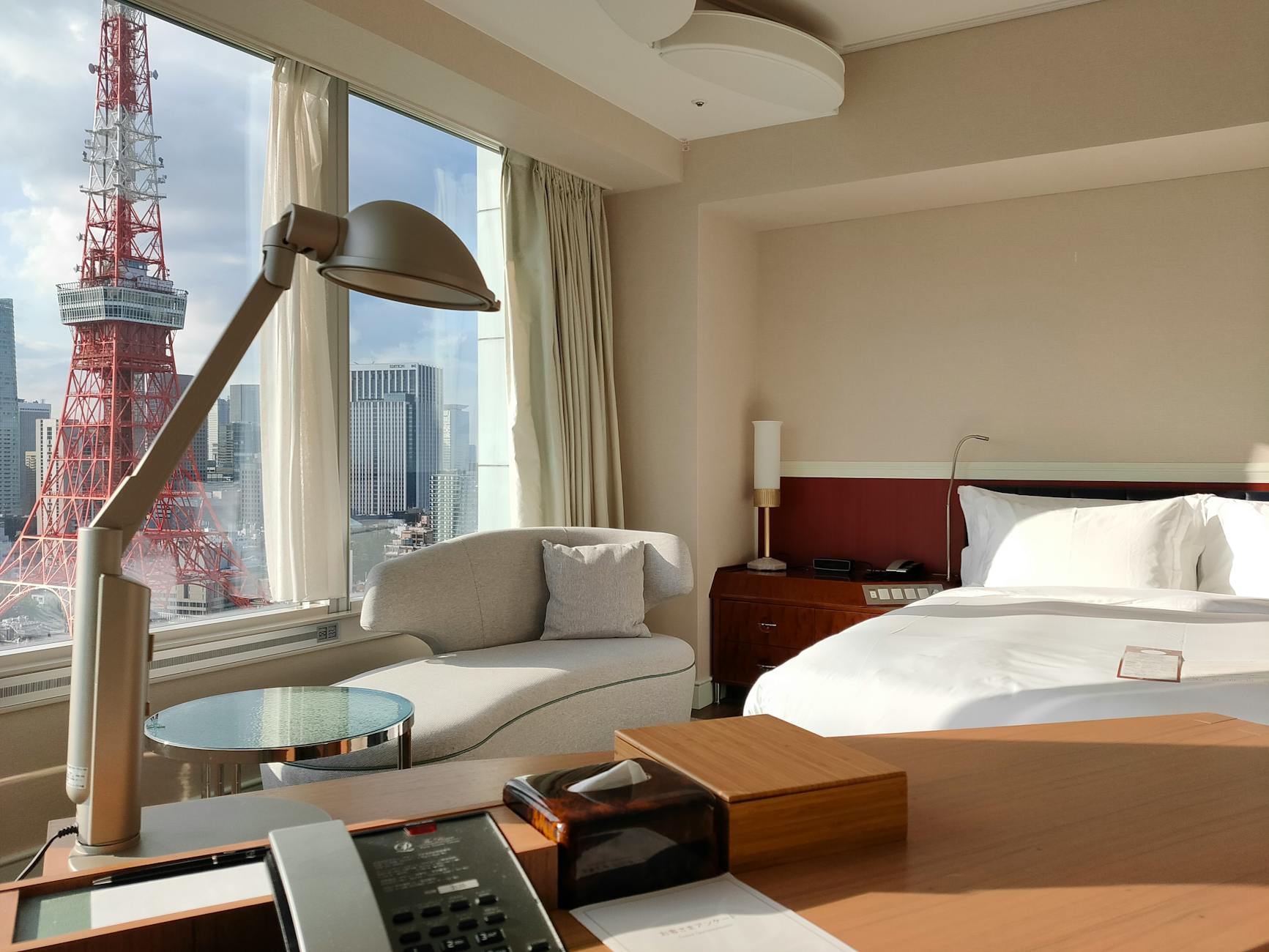
- Business hotels (Dormy Inn, APA, Toyoko Inn, Sotetsu Fresa Inn and many more) are the backbone of Tokyo: clean, efficient, close to stations and compact. Check the room size in square metres before booking for two people with suitcases.
- City and luxury hotels buy you space, service and views, at the price you would expect.
- Ryokan in the city are rare but real: HOSHINOYA Tokyo and Sawanoya above, at opposite ends of the budget. For the full hot-spring-town version, Hakone is about ninety minutes away.
- Capsule hotels give you a bed-sized pod and shared baths. They are brilliant for a night and rarely for a week, and most separate floors for men and women.
- Hostels offer dorms and simple private rooms, often with the best café in the neighbourhood downstairs (Nui. above is a good example).
- Serviced apartments add a kitchen and a washing machine for longer stays.
Before you book: five checks
- The exit and the walk. Find the named exit and the minutes on foot in the listing, not just “near the station”.
- Room size. Rooms in Tokyo can be small; the listing gives square metres, so compare that, not the photos.
- Check-in time. Mid-afternoon check-in is common. If you land in the morning, store your bags or send them ahead: our luggage guide has the options, from station lockers to Radical Storage.
- The accommodation tax. Tokyo adds ¥100 per person per night to rooms from ¥10,000 to ¥14,999, and ¥200 from ¥15,000. From stays on 1 April 2027 it becomes 3% of the rate, with rooms under ¥13,000 exempt. It is often collected separately at check-in.
- Cancellation terms. Tokyo rates move a lot with dates. A free-cancellation rate lets you rebook if a better night appears, and our comparison of hotel booking sites shows where to check the same room.
Arriving late with heavy bags? A pre-booked car with Welcome Pickups is the least stressful way to your door, and our airport guide compares every train and bus into the city.
If you are still undecided
Choose the station you will use most. For most first trips that is Shinjuku or Shibuya; for Shinkansen-heavy itineraries it is Tokyo Station; for a gentler trip, Asakusa or Ueno. Then choose a hotel within five minutes of the exit you will use. In a city this large, those last minutes at the end of a long day are the ones you will feel most. Once you are settled, our list of things to do in Tokyo and the best food tours to book take it from there.
Frequently asked questions
What is the best area to stay in Tokyo for first-timers?
Shinjuku (the south or west side of the station) or Shibuya. Both are major hubs with direct trains to almost everywhere and food and life on the doorstep. If you are taking the Shinkansen or want calm evenings, stay on the Marunouchi side of Tokyo Station instead.
Is it better to stay in Shinjuku or Shibuya?
Shinjuku has more train lines, highway buses (including to Mount Fuji from Busta Shinjuku) and a wider range of hotels. Shibuya is more walkable and suits wandering, with Harajuku, Omotesando, Daikanyama and Ebisu close by. For a first trip either works; pick Shinjuku for day trips and Shibuya for neighbourhoods.
Where should I stay in Tokyo if I am taking the Shinkansen?
Near Tokyo Station, where the Tokaido Shinkansen to Kyoto and Osaka departs and the Narita Express stops. The Tokyo Station Hotel is inside the station building and Hotel Ryumeikan Tokyo is three minutes from the Yaesu North Exit. For Shinkansen heading north, Ueno is also a stop.
Is Asakusa a good area to stay in Tokyo?
Yes, if you value character and better prices over speed. Asakusa keeps more of old Tokyo's low-rise feel and Senso-ji is nearly empty early in the morning. The trade-off is that it is not on the JR Yamanote line, so trips to western Tokyo usually need a change.
How much is the hotel tax in Tokyo?
In 2026 Tokyo's accommodation tax is ¥100 per person per night for rooms priced ¥10,000 to ¥14,999, and ¥200 for ¥15,000 and above; cheaper rooms are exempt. From stays on 1 April 2027 it becomes 3% of the room rate, with rooms under ¥13,000 per person exempt. It is often collected separately at check-in.
Can I stay in a ryokan in central Tokyo?
Yes, though there are few. HOSHINOYA Tokyo in Otemachi is a luxury ryokan tower with a hot-spring bath on its top floor, and Ryokan Sawanoya in Yanaka is a small family-run inn at the budget end. For a full hot-spring ryokan stay, Hakone is about ninety minutes from Shinjuku.
Are the hotels in this guide reviewed first-hand?
No. They are researched picks, chosen for location, what each property publishes and consistent guest feedback, and each was checked as open in September 2026. First-hand stays will be labelled as such, and no hotel pays to be included.
Sources & further reading
- Hyatt Newsroom: Park Hyatt Tokyo reopens following 19-month renovation (December 2025)
- Tokyo Metropolitan Government Bureau of Taxation: accommodation tax
- Nikkei: Tokyo introduces a 3% accommodation tax
- GINZA OFFICIAL: pedestrian paradise
- Tokyu Hotels: SHIBUYA STREAM HOTEL
- Hoshino Resorts press centre: OMO3 Asakusa property details
- The Tokyo Station Hotel: rooms and suites
- Official websites of each hotel named above, checked in September 2026
Hotels open, close, rename and reprice. Every detail here was checked in September 2026. Confirm location, room size and rates on the hotel’s own site before booking. This article contains affiliate links: hotel rates on Booking.com and other booking sites through Stay22, and a few services we use (Klook, Radical Storage, Welcome Pickups); if you book through them we may earn a commission at no extra cost to you. None of the hotels named here pays us or supplied a stay.
Keep reading on Gently Yonder
- Where to Stay in Tokyo for Autumn Leaves The weeks to aim for, Rikugien's 2026 evening opening, Shinjuku Gyoen's hours, the ginkgo avenue, four areas and 11 hotels.
- Where to Stay in Tokyo for Cherry Blossom The dates to aim for, five areas matched to the parks and rivers, 14 hotels, and the tax change on 1 April 2027.
- Where to Stay in Japan on a First Trip Two bases beat four: how many nights in Tokyo, Kyoto and Osaka, and moving day in between.
- Narita & Haneda to Central Tokyo Every route compared — Narita Express, Skyliner, limousine bus, and late-night options.
- Where to Store Luggage in Tokyo Coin lockers, cloakrooms, storage apps, and hotel holds — which to use where.
- Asakusa, Tokyo Sensoji and Edo streets, with practical visit tips and nearby districts to combine.
- Tokyo in 5 Days An unhurried first-timer's itinerary — neighbourhoods grouped so you ride trains less.
- Kissaten in Tokyo Nine old coffee houses still going in 2026, and how to behave in one.
- Where to Book a Tokyo Food Tour Viator has the choice, Klook often the price: Shinjuku nights, Tsukiji mornings and Asakusa snacks compared.