Yogyakarta — “Jogja” to everyone who loves it — is the soul of Java and the cultural heart of Indonesia. Still governed by a sultan, it is a city of batik workshops and shadow-puppet theatre, of student cafés and becak drivers, and, above all, the gateway to two of the greatest monuments in Asia: the Buddhist colossus of Borobudur and the soaring Hindu spires of Prambanan. It is warm, affordable, artistic, and refreshingly unhurried after the crush of Jakarta or the beach-bars of Bali. For a first visit, give yourself the temples, the old royal city, and the volcano-and-cave country around it. Get around with Gojek and Grab (the ride-hailing apps that summon cars and motorbikes cheaply); add a travel eSIM so those apps and maps work from the airport; and browse Klook or KKday for the Borobudur sunrise and Merapi tours, which are far smoother arranged ahead.
No one pays to be recommended here, and we say when a free or cheaper option wins. Our promise →
In this guide7 sections
Borobudur
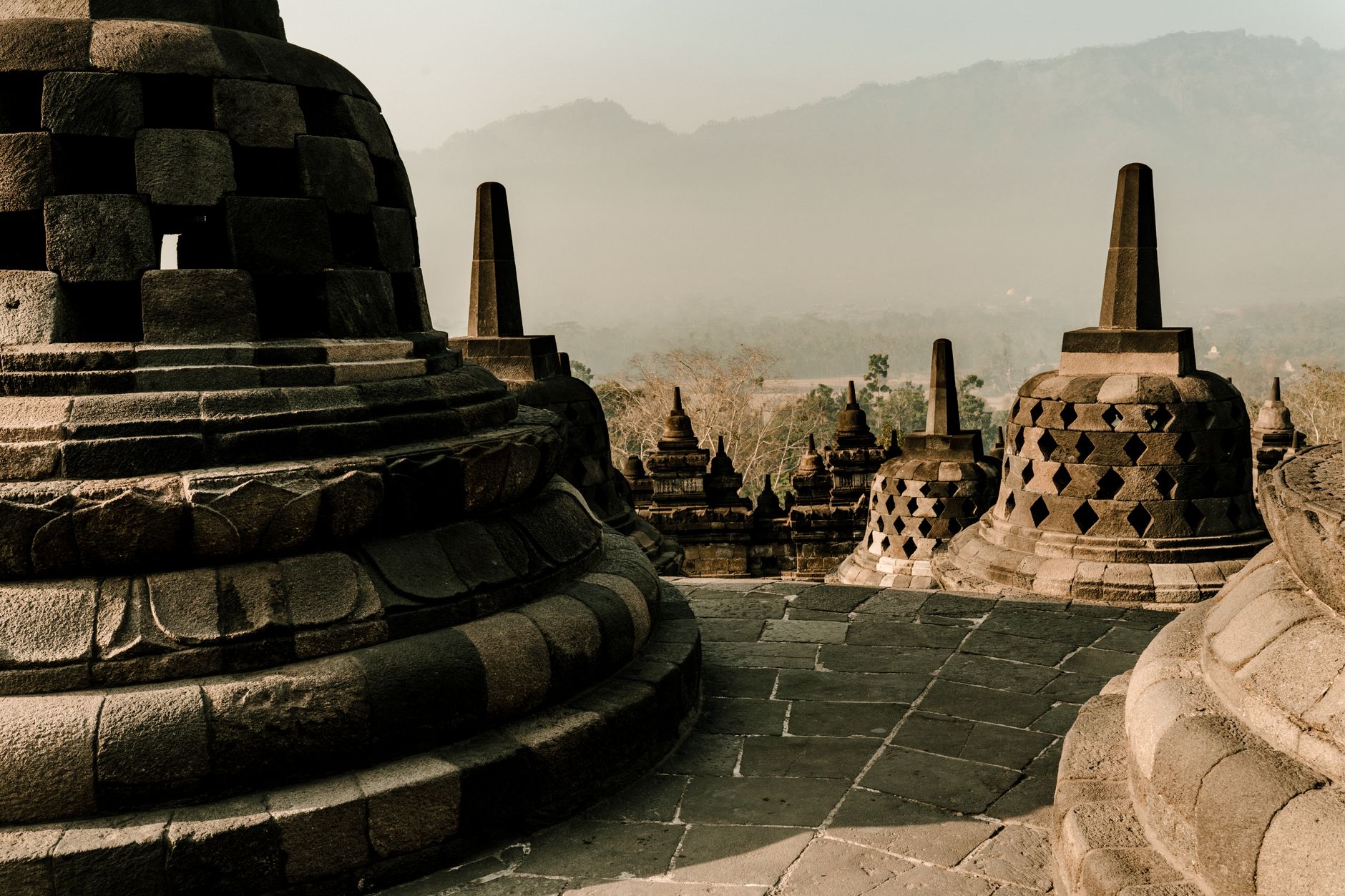
Some places live up to the photographs; Borobudur exceeds them. Built around 800 AD and later abandoned to jungle and ash, this vast stepped pyramid is the largest Buddhist monument on earth — nine stacked terraces carved with over two thousand relief panels, crowned by dozens of bell-shaped stupas each sheltering a seated Buddha. Pilgrims still circle it clockwise, climbing from the world of desire to enlightenment at the summit. Come at dawn: whether from the temple’s own sunrise access or the nearby Punthuk Setumbu hill, watching the sun lift over the Kedu Plain with Mount Merapi smoking on the horizon is the memory you will carry home. Note that climbing onto the terraces is now limited and ticketed to protect the stone, so book ahead.
Prambanan
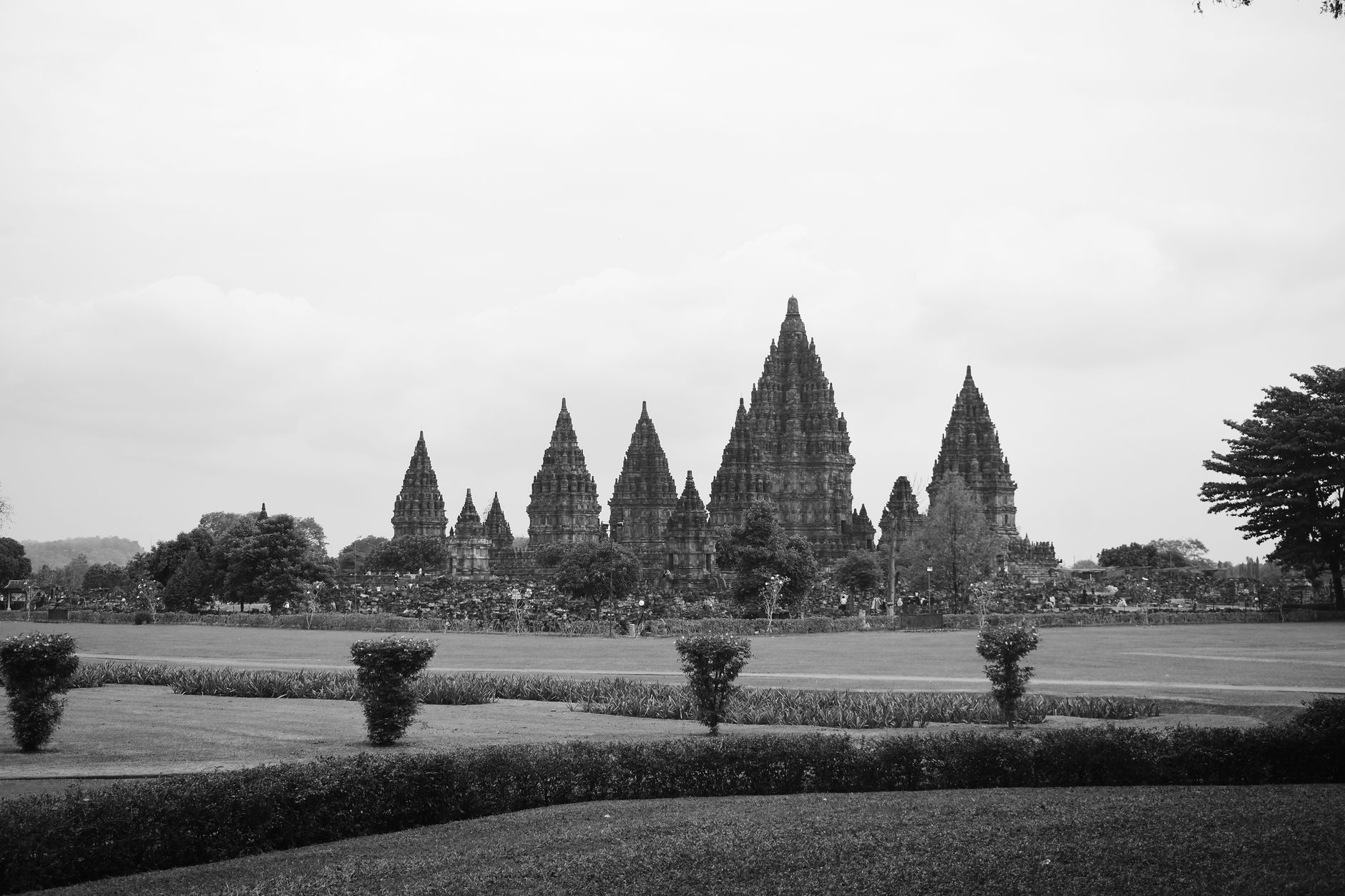
Forty minutes east of the city stands its Hindu counterpoint. Prambanan, built in the ninth century, is a forest of steep, tapering temple towers — the tallest soaring 47 metres to the shrine of Shiva — decorated with reliefs telling the Ramayana. Damaged by earthquakes and lovingly reassembled, the complex is most magical in late afternoon light, and on many evenings the open-air Ramayana Ballet stages the epic against the floodlit spires, with gamelan music and firelight. Borobudur and Prambanan can be paired in a single long day, but each rewards its own unhurried visit.
The royal city: Kraton, Taman Sari, Malioboro
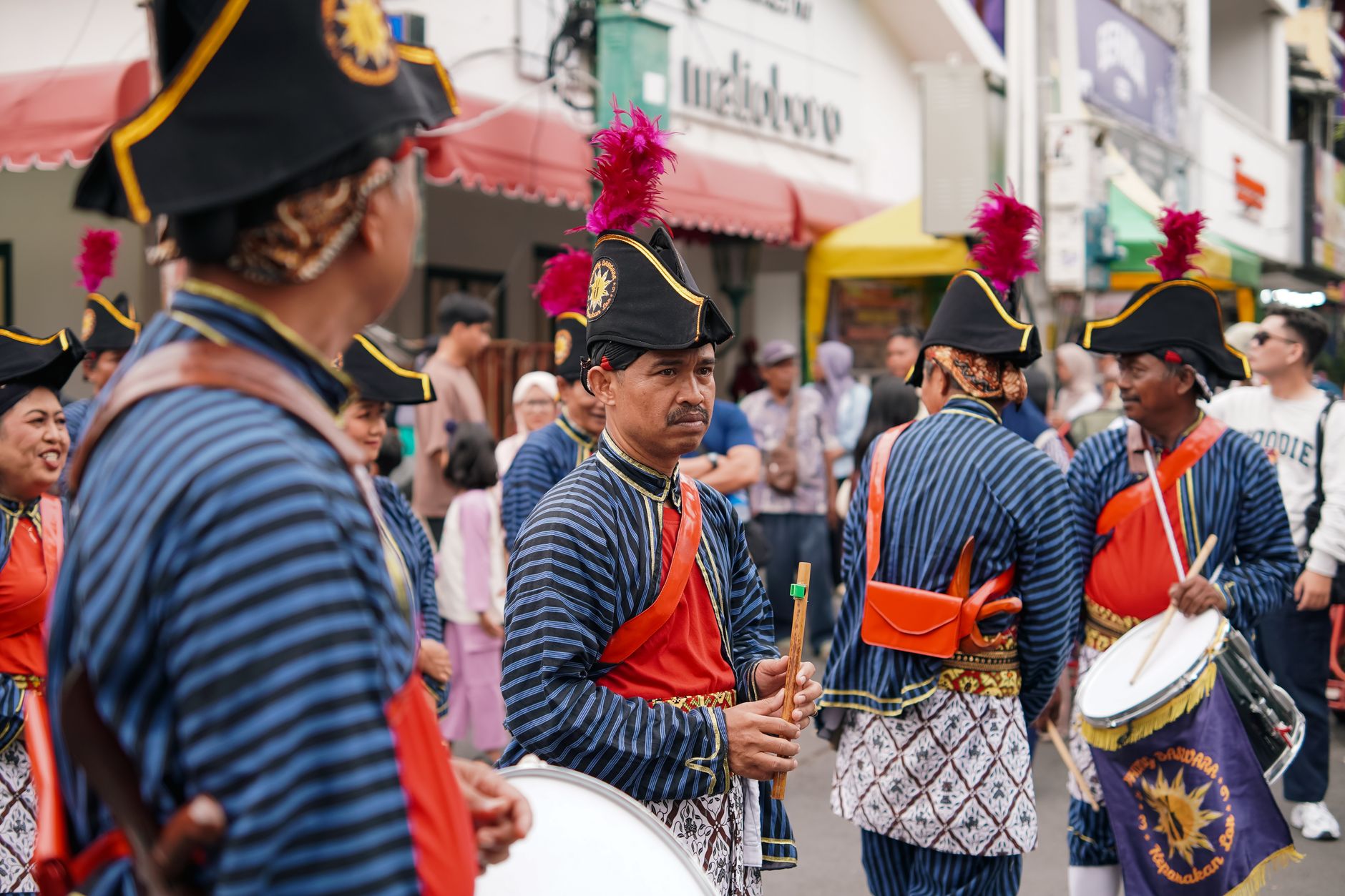
Jogja’s old heart still turns around its Kraton, the walled palace of the sultan, a living court of pavilions, gamelan, and elaborately uniformed guards where daily cultural performances take place. A short walk away, the ruined Taman Sari “Water Castle” — once the sultans’ bathing complex — is a photogenic tangle of pools, tunnels, and an underground mosque. The city’s spine is Malioboro Street, a hive of stalls, batik and souvenir shops, and buskers that runs down toward the colonial fort; off it sprawls the labyrinthine Beringharjo Market, the place to buy batik and breathe in the everyday city. For craft, the silversmiths of the Kotagede quarter still work as they have for generations.
Food, coffee, and culture after dark
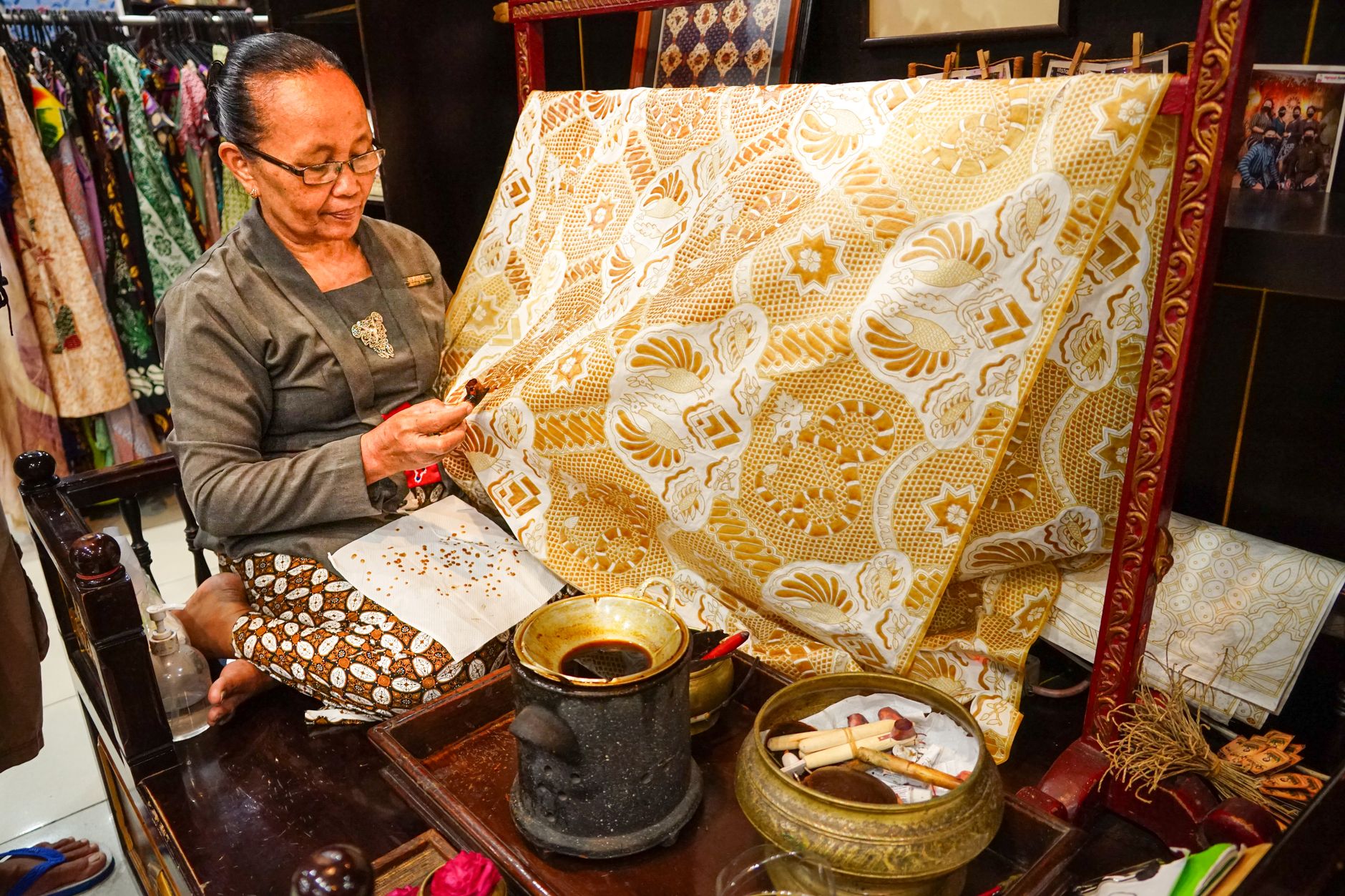
Jogja eats gently and sweetly. Its signature dish is gudeg, young jackfruit slow-simmered in palm sugar and coconut milk until caramel-brown, served with rice, egg, and chicken. Snack on bakpia (mung-bean pastries) to take home, and eat cheaply at an angkringan — the humble street carts and mat-seating stalls where students gather over nasi kucing (“cat rice,” tiny portions) and kopi joss, a coffee dramatically quenched with a lump of glowing charcoal. In the evenings, seek out a performance of wayang kulit, the intricate leather-puppet shadow theatre that is one of Java’s defining arts, or a hands-on batik workshop to try the wax-and-dye craft yourself.
Volcanoes, caves, and southern beaches
The landscape around Jogja is as dramatic as its temples. Mount Merapi, one of the world’s most active volcanoes, looms to the north; a dawn jeep “lava tour” rumbles through the villages and ash fields scarred by its eruptions. To the southeast, the karst hills hide the Jomblang Cave, where a shaft of “heavenly light” pours down into an ancient sinkhole forest at midday, and the wild Timang Beach, where a rickety wooden gondola swings thrill-seekers across the surf to a lobster-fishing islet. The long southern coast at Parangtritis draws locals for its brooding, spiritually charged black-sand sunsets.
Getting around, and when to go
Within the city, Gojek and Grab are the cheapest, simplest way to move — cars or motorbike taxis at the tap of a screen — while the tourist-friendly Trans Jogja buses and a slow, charming becak (cycle-rickshaw) ride down Malioboro fill out the picture. For the temples and volcano, a driver or organised tour saves a lot of logistics, especially for a pre-dawn start. The best time to visit is the dry season, roughly May to September, when sunrise skies are clearest; the wetter months later in the year can cloud the dawn views. Give Jogja three or four days — two great temples, a royal city, and a volcano at sunrise — and you will understand why Indonesians send you here to see where their culture keeps its heart.
Frequently asked questions
How many days do you need in Yogyakarta?
Three to four days is comfortable: a dawn visit to Borobudur, a separate visit to Prambanan (ideally with the evening Ramayana Ballet), a day for the Kraton, Taman Sari and Malioboro, and a day for a Merapi jeep tour or the caves and southern beaches. The temples reward not rushing.
Should I visit Borobudur at sunrise?
If you can, yes — dawn over the Kedu Plain with Mount Merapi on the horizon is unforgettable, whether from the temple's own sunrise access or the nearby Punthuk Setumbu viewpoint. Access onto the terraces is now limited and ticketed to protect the stone, so book ahead.
How do you get around Yogyakarta?
The Gojek and Grab apps summon cheap cars and motorbike taxis and are the easiest way to move around the city. The Trans Jogja buses and a slow becak (cycle-rickshaw) ride down Malioboro add to the mix, and a hired driver or organised tour is best for the temples and a pre-dawn Merapi start.
When is the best time to visit Yogyakarta?
The dry season, roughly May to September, is best, with the clearest sunrise skies for Borobudur. The wetter months later in the year can cloud the dawn views. The city is warm year-round; check a current forecast close to your dates.
Keep reading on Gently Yonder
- 14 Untranslatable Words Saudade, komorebi, sisu — words that resist English and what they teach travellers.
- Airalo vs Holafly vs Saily The three big travel eSIM providers compared — coverage, pricing, and who each suits.
- Klook vs Viator vs GetYourGuide Which tours-and-activities platform to use where — Asia, Europe, and global.
- Bali: A First-Timer's Guide Ubud's rice terraces, clifftop temples, beaches and warungs — a gentle first orientation to Bali.
- Singapore: A First-Timer's Guide Marina Bay, the hawker centres, Sentosa and the MRT — a calm first orientation to Singapore.