Melbourne is one of the easiest Australian cities to get around, largely because of the trams — the largest network in the world — and one genuinely generous quirk: they’re free in the middle of the city. Before the details, two things smooth a first trip: a travel eSIM so timetables and the PTV app work on arrival, and, if you’d rather your first airport run was handled, a pre-booked private pickup.
No one pays to be recommended here, and we say when a free or cheaper option wins. Our promise →
In this guide7 sections
The Free Tram Zone
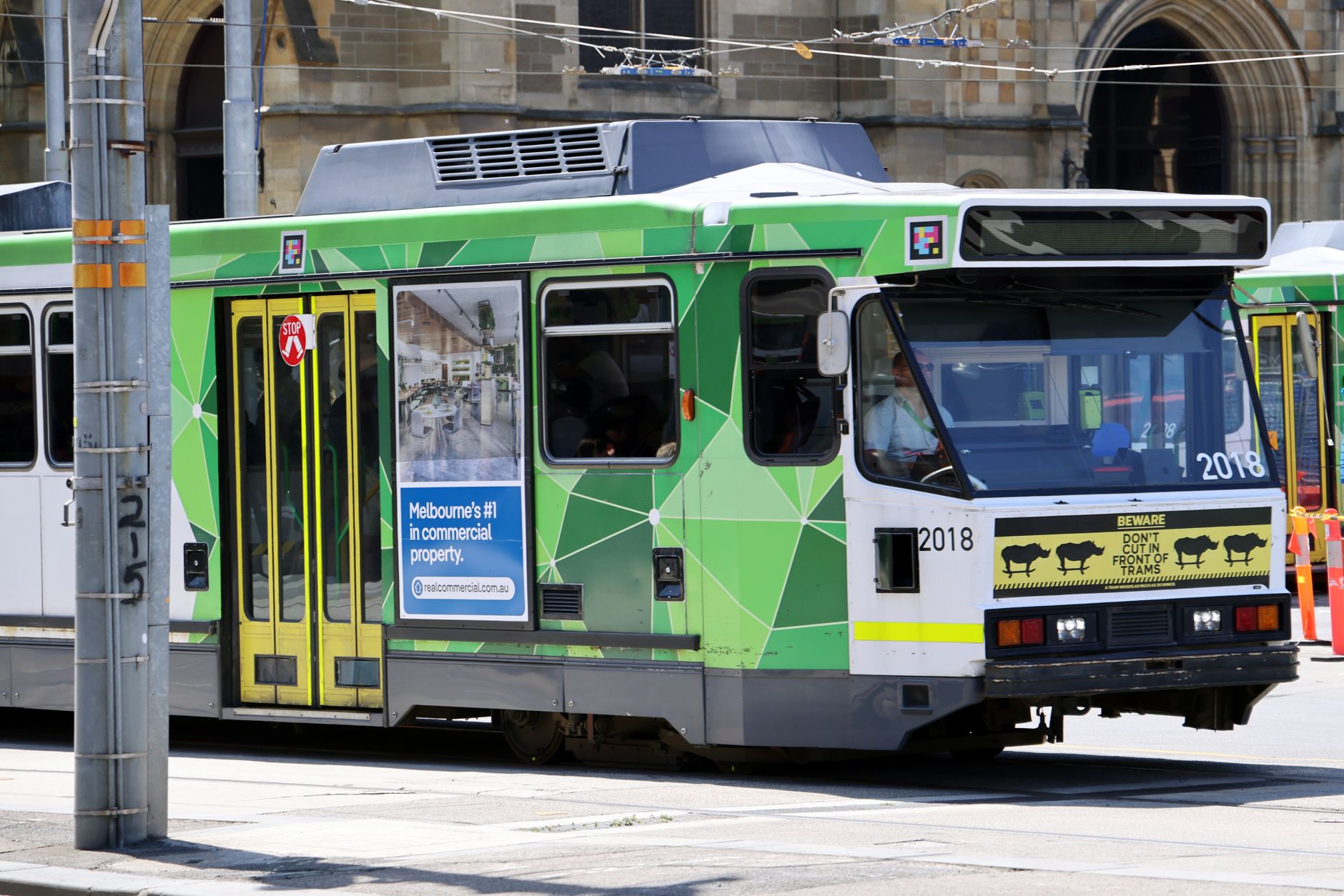
The single best thing to know: the Free Tram Zone covers the central CBD — roughly the grid bounded by Spring Street, Flinders Street, the Docklands, and up past the Queen Victoria Market — and within it every tram is free, no card, no tap, just hop on and off. It loops past most of the city-centre sights and includes the burgundy City Circle tram (route 35), a free heritage service that circles the CBD with commentary. For a lot of a first visit you may barely pay for transport at all — just check the on-board signs to know when you’re leaving the zone.
Where to stay in Melbourne names hotels inside the Free Tram Zone and beyond it.
Myki or a bank card, for everywhere else

Beyond the free zone you pay by tapping, and you now have two ways to do it. On a full fare, tap your contactless Visa or Mastercard, or the same card in your phone or watch wallet, on trams, trains and buses: Transport Victoria says contactless fares are the same as myki fares. The other way is the myki card, a stored-value card you top up; concession card holders must keep using myki, because contactless is full fare only for now. Either way, tap on as you board and tap off with the same card or device so you are charged correctly, and fares stop rising once you reach the daily cap.
What changed for 2026
Three changes since many guides were written make Melbourne cheaper and simpler for visitors.
- Half-price fares until 1 January 2027. From 1 June 2026, public transport across Victoria is half price for everyone. The full-fare daily cap falls from $11.40 to $5.70, and a two-hour Zone 1+2 fare is $2.85. The discount covers trains, trams and buses but not SkyBus. You do nothing to get it: the reader charges the lower fare.
- Bank cards work. Full-fare travellers can tap a contactless Visa or Mastercard, phone or watch instead of buying a myki.
- The Metro Tunnel is open. Five new underground stations opened on 30 November 2025: Arden, Parkville, State Library, Town Hall and Anzac. Underground concourses link State Library to Melbourne Central and Town Hall to Flinders Street, each about a four-minute walk.
| Full fare, myki or contactless | Until 1 Jan 2027 |
|---|---|
| Free Tram Zone | Free |
| Two hours, Zone 1+2 | $2.85 |
| Daily cap, Zone 1+2 | $5.70 |
| Weekend and public holiday daily cap | $4.00 |
Fares are from Transport Victoria's metropolitan fares table, checked 12 October 2026. Check again if you travel after 1 January 2027, when the half-price period ends.
Trains and the City Loop

The train network radiates from the underground City Loop — the handy central stations are Flinders Street (the grand yellow landmark), Southern Cross, Melbourne Central, Parliament, and Flagstaff — out to the suburbs and the bay. It’s the way to reach St Kilda’s neighbouring suburbs, the outer neighbourhoods, and the day-trip jumping-off points. Since November 2025 the Metro Tunnel adds five more stations under the city and inner suburbs, with walkways from State Library to Melbourne Central and from Town Hall to Flinders Street.
From the airport

Melbourne Airport (Tullamarine) still has no train link, so the standard options are the frequent SkyBus express (to Southern Cross Station, roughly 30 minutes depending on traffic), taxis and rideshare from the ranks, or a booked private airport pickup if you’d like a fixed price and a name-board after a long flight. The SkyBus is the value pick solo; a car is often easier with a family or luggage.
A simple mental model
Hold this: free trams in the city centre, a Myki for everything beyond, the SkyBus from the airport, the City Loop trains for distance. Get connected with an eSIM, tap a bank card or a myki for the trips out of the centre, and enjoy how much of Melbourne you can see for free on a tram gliding through the grid. For what those journeys reach, see our guide to the places worth your time in Melbourne. Fares and caps change, so check current pricing close to your trip.
Frequently asked questions
Is the Melbourne tram free?
Within the Free Tram Zone, which covers the central CBD, every tram is free — just hop on and off, no card needed. It includes the free City Circle heritage tram. Beyond the zone you tap a Myki card.
Do I need a Myki card in Melbourne?
Not on a full fare. Beyond the Free Tram Zone you can tap a contactless Visa or Mastercard, phone or watch on trains, trams and buses, at the same fares as myki. Concession card holders still need a myki. Tap on and off with the same card, and the daily cap limits what you pay in a day.
How do I get from Melbourne Airport to the city?
Melbourne Airport has no train link yet. The frequent SkyBus express runs into the city; taxis, rideshare, or a pre-booked private pickup are alternatives. The SkyBus is the value pick solo; a car is often easier with a family or luggage.
Keep reading on Gently Yonder
- Melbourne Airport to the City SkyBus, rideshare or the budget way: time, cost and luggage compared.
- Where to Stay in Melbourne Five areas and 12 hotels, and why the Free Tram Zone should decide your base.
- Melbourne: A First-Timer's Guide The laneways, the neighbourhoods, the free trams and the coffee, in one calm orientation.
- Getting Around Sydney The Opal card and contactless fares, trains as the backbone, the harbour ferries, and the honest airport options.