Bali earns its fame honestly — a single Indonesian island that holds emerald rice terraces, cliff-top temples over a wild ocean, surf beaches, volcano sunrises, and a Hindu culture that colours every doorway with offerings. It is also large and varied enough that “Bali” means very different trips depending on where you point yourself: temple-quiet Ubud in the hills, the surf and cafés of the south, the untouched east. Here are the places worth your time. Two things make it smoother: a travel eSIM so maps and ride apps work on arrival, and a browse of Klook or KKday for the Nusa Penida boat trips, Mount Batur treks, and temple tours, which spare you a lot of haggling with drivers.
Ubud, the cultural heart
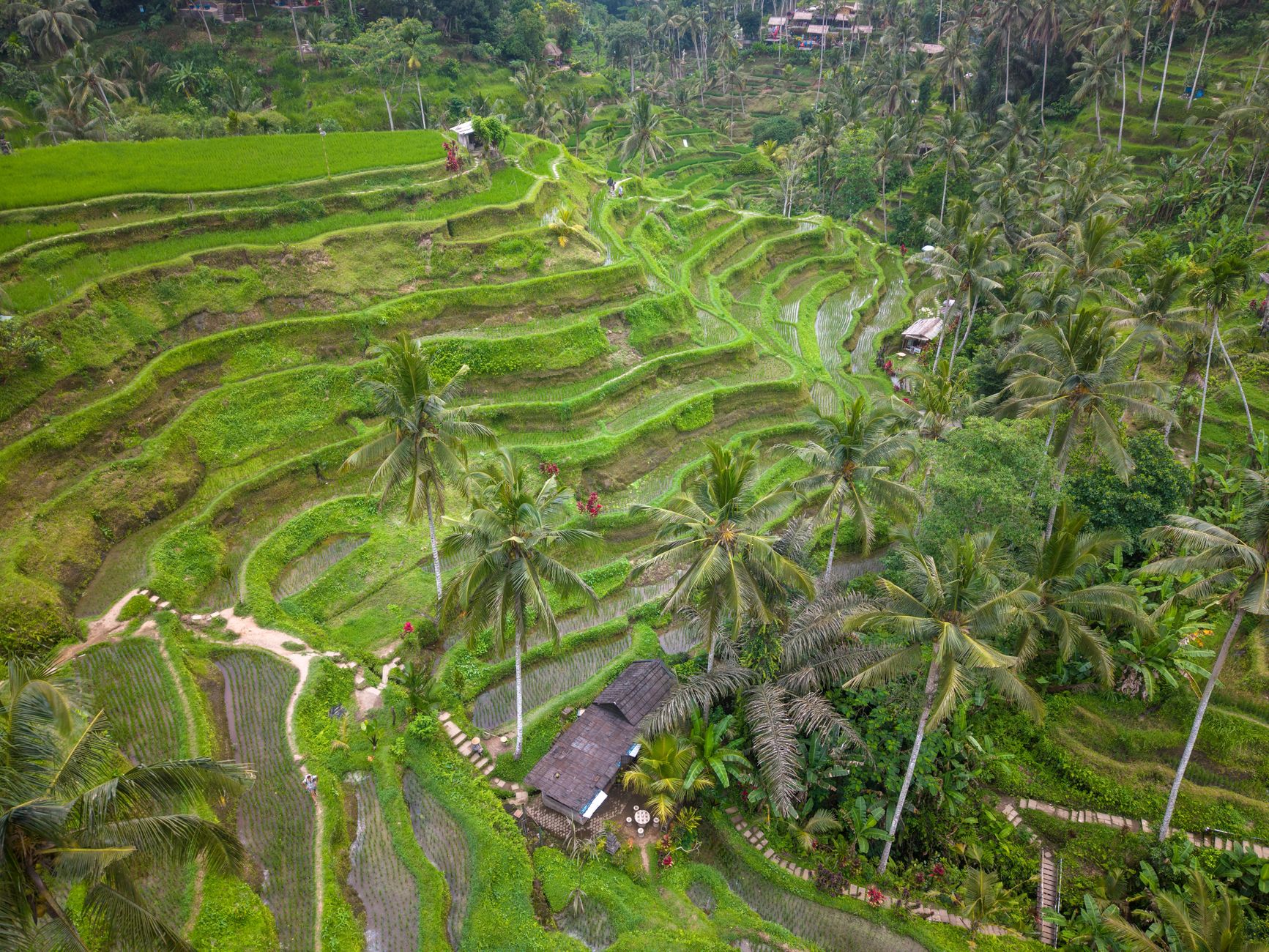
Inland and uphill, Ubud is Bali’s soul. Walk the Campuhan Ridge at dawn, meet the cheeky residents of the Sacred Monkey Forest, and watch a Legong or Barong dance at the Ubud Palace by night. Just north, the emerald staircases of the Tegallalang Rice Terraces are the island’s signature view, carved by the ancient subak irrigation system. Ubud is where you slow down — yoga, warungs, wood-carvers, and rice fields in every direction.
The great temples

Bali is the “island of a thousand temples,” and a few are unmissable. Tanah Lot sits on a sea rock, mirrored at sunset; Uluwatu clings to a 70-metre cliff where a fire-lit Kecak dance is performed each dusk over the Indian Ocean. Inland, Tirta Empul invites visitors to join the ritual purification in its holy springs, and the serene Ulun Danu Beratan seems to float on a mountain lake. Dress respectfully — a sarong is required, and usually available to rent at the gate.
The beaches and the surf south

The south is Bali’s playground. Seminyak brings beach clubs and boutiques; Canggu is the surf-and-café capital of the digital-nomad set; Kuta is the loud, budget classic; and quieter Jimbaran serves grilled seafood on the sand at sunset. Learning to surf on the gentle beach breaks here is one of the island’s great rites of passage — board rental and lessons are everywhere and cheap.
Nusa Penida and the islands

A fast boat from Sanur reaches Nusa Penida, the rugged island whose Kelingking Beach — a limestone headland shaped like a T-Rex above impossibly blue water — has become one of Asia’s most photographed views. Snorkel with manta rays at Manta Point, or slow down on neighbouring Nusa Lembongan. These day trips are worth booking as an organised tour; the roads on Penida are rough and a guide handles the logistics.
A volcano at sunrise
For the island’s most memorable morning, climb Mount Batur — an active volcano whose two-hour pre-dawn hike delivers a sunrise above the clouds and a caldera lake below. It is achievable for most reasonably fit travellers with a guide (required), and many trips end with breakfast eggs cooked in volcanic steam. Further north and east, the towering waterfalls of Sekumpul and the easy Tegenungan reward a cooler, greener day.
Eating Bali
Balinese food is worth seeking beyond the resort menus. The island’s ceremonial dish is babi guling (suckling pig), best at a bustling warung; nasi campur piles rice with a little of everything; and satay lilit wraps minced, spiced seafood on lemongrass skewers. Sit at a roadside warung, order what the locals do, and eat generously and cheaply. A Balinese cooking class, often starting with a market visit, is one of the best half-days you can spend.
When to go, and getting around
Bali’s dry season, roughly April to October, brings the clearest skies and calmest seas; the wetter months later in the year are greener, cheaper, and quieter, with short heavy downpours. Getting around means a hired driver for the day (cheap and the least stressful way to reach temples and terraces), ride-hailing apps in the south, or a scooter if you are experienced and insured — Bali’s traffic and roads demand real respect. Give the island a week, split between Ubud and the coast, and it becomes the trip people quietly return to for years.
Frequently asked questions
How many days do you need in Bali?
About a week is ideal, split between two bases: a few days in Ubud for the culture, rice terraces and inland temples, and a few on the coast for beaches, surf and sunsets. Add a day trip to Nusa Penida and a Mount Batur sunrise, and you have covered the island's essentials without rushing.
Do you need to cover up at Bali's temples?
Yes. A sarong (and often a sash) is required to enter temples such as Tanah Lot, Uluwatu and Tirta Empul, and shoulders should be covered. Sarongs are usually available to rent or borrow at the entrance, but carrying your own is easiest.
Is Nusa Penida worth a day trip?
For many travellers it is the highlight — Kelingking Beach's dinosaur-shaped cliff over turquoise water is one of Asia's most striking views, and Manta Point offers snorkelling with manta rays. Book an organised tour, as the island's roads are rough and a guide handles the logistics.
When is the best time to visit Bali?
The dry season, roughly April to October, brings the clearest skies and calmest seas. The wetter months later in the year are greener, cheaper and quieter, with short heavy downpours. Aim for the dry season for boat trips and volcano hikes.
Keep reading on Gently Yonder
- Bali: A First-Timer's Guide — Ubud's rice terraces, clifftop temples, beaches and warungs — a gentle first orientation to Bali.
- Airalo vs Holafly vs Saily — The three big travel eSIM providers compared — coverage, pricing, and who each suits.
- Singapore: The Places Worth Your Time — Marina Bay, Gardens by the Bay, the cultural quarters, the hawker centres, and Sentosa.
- Travel Insurance Compared — SafetyWing vs World Nomads vs Genki — coverage, exclusions, and how to choose.
- What Counts as Rude in 12 Cultures — Goffman, Hofstede, and twelve country case studies for international travellers.