Bangkok rewards the traveller who leans in. It is hot, loud, and gloriously contradictory — gilded temples beside glass megamalls, monks at dawn and rooftop bars at midnight, a street-food cart every few metres. First-timers sometimes brace against the chaos; the ones who love it simply surrender to it, temple in the morning, boat in the afternoon, night market after dark. Here are the places that make the case. Two things make it easier — a travel eSIM so Grab and maps work the moment you land, and a browse of Klook or KKday for temple-and-canal tours, floating-market trips, and Ayutthaya day tours that spare you the haggling.
The Grand Palace and Wat Phra Kaew

Begin at the dazzling Grand Palace, the former royal seat, and its jewel, Wat Phra Kaew — the Temple of the Emerald Buddha, Thailand’s most sacred image, carved from a single block of jade. It is Bangkok at its most opulent: gilded spires, mosaic-clad guardians, and murals of the Ramakien epic. Dress respectfully (shoulders and knees covered, for everyone) and arrive early, before the heat and the tour groups peak.
Wat Pho and Wat Arun
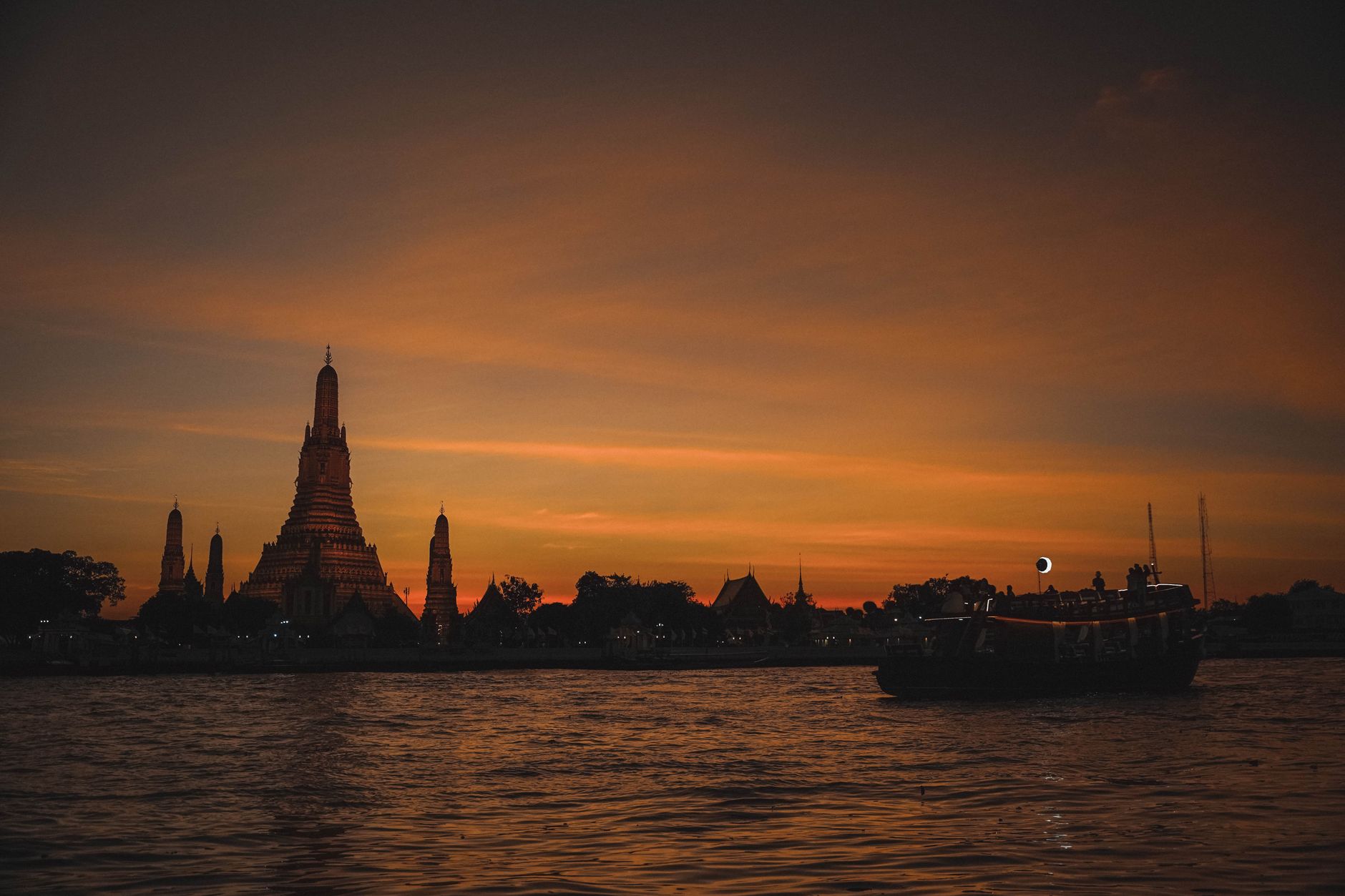
A short walk south, Wat Pho houses the enormous gold Reclining Buddha, 46 metres long, and is the birthplace of traditional Thai massage — you can take one on the spot. Then cross the Chao Phraya River by a two-baht ferry to Wat Arun, the “Temple of Dawn,” whose porcelain-studded spire is loveliest at sunset and from the river bars opposite. These three temples together make the essential first day.
The river and the canals

Bangkok grew along the water, and the river is still its best highway. Ride the Chao Phraya Express Boat between the temples and Chinatown, or hire a longtail boat into the klongs (canals) of Thonburi, where stilt houses, waterside temples, and monitor lizards give a glimpse of the old riverine city. It is cooler, cheaper, and more scenic than fighting the traffic above.
Markets, day and night
Shopping here is a sport. The vast Chatuchak Weekend Market (“JJ”) packs some 15,000 stalls of clothes, crafts, plants, and food into a maze you will happily get lost in. By night, the city glows at markets like Rot Fai (Train Night Market) for vintage and street eats. For a taste of old backpacker Bangkok, wander (or people-watch over a beer on) legendary Khao San Road.
Chinatown and the street food
Bangkok is one of the world’s great street-food cities, and its beating heart is Yaowarat, the neon-drenched Chinatown. After dark the pavements fill with woks and grills — char-kway-style noodles, oyster omelettes, grilled seafood, and stalls that have earned Michelin recognition. Elsewhere, seek out boat noodles, a fiery som tam (papaya salad), and mango sticky rice; follow the longest local queues and eat cheaply and brilliantly.
Old silk and rooftop views
For calm amid the rush, the Jim Thompson House — the teak home of the American who revived Thai silk before mysteriously vanishing in 1967 — is a leafy museum of art and architecture. And because Bangkok invented the skyline sundowner, end a night on a rooftop bar such as the Sky Bar at Lebua, watching the city sprawl to the horizon in a carpet of light.
A day trip to Ayutthaya or the floating markets
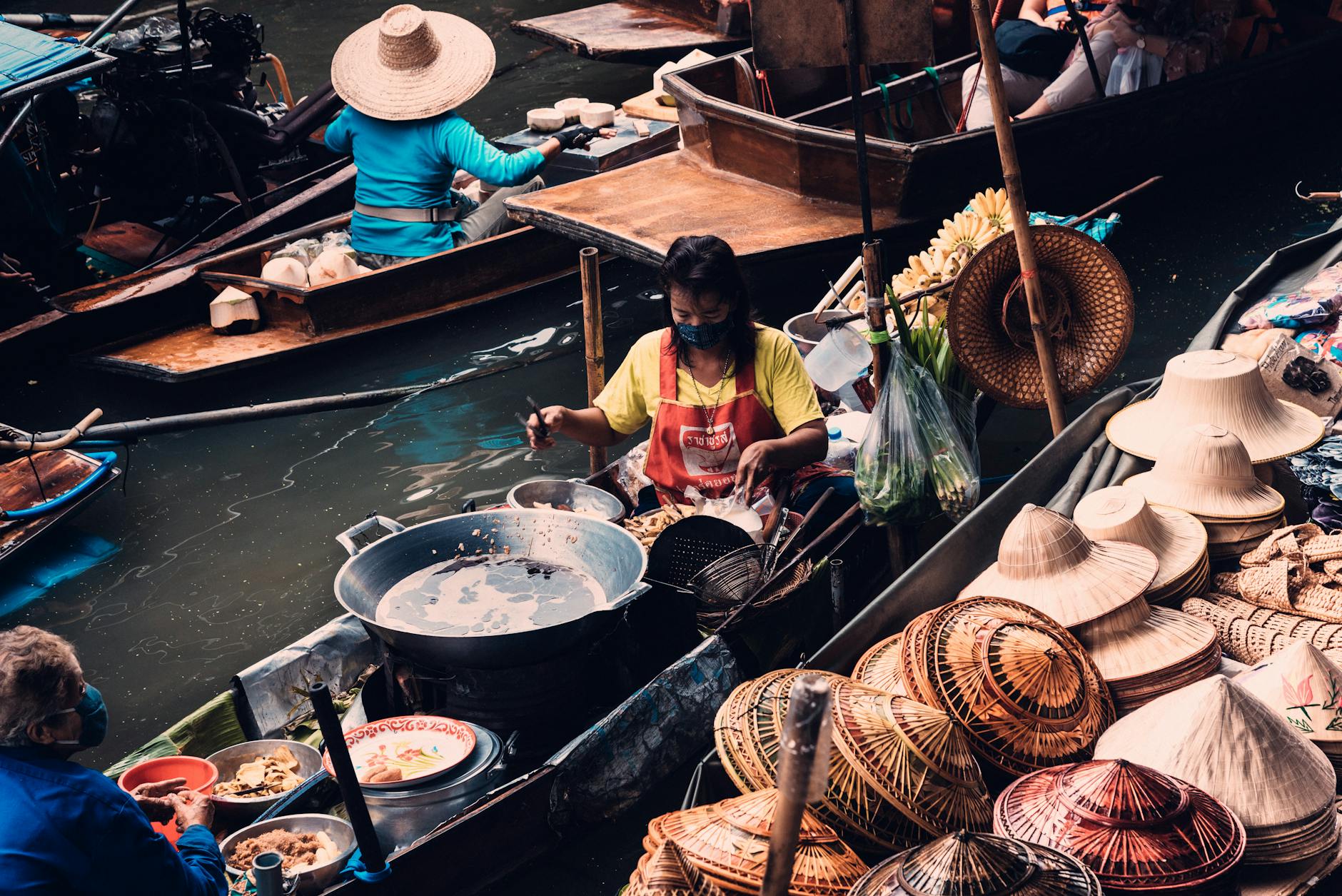
When you have time for one day out, choose between history and water. Ayutthaya, the ruined former capital 80 km north, is a UNESCO field of brick prangs and the famous Buddha head cradled in tree roots — reachable by train, bus, or river cruise. Or rise early for a floating market such as Damnoen Saduak or the calmer Amphawa, often paired with the extraordinary Maeklong Railway Market, where stalls fold away as a train slides through. Booking a guided tour saves a lot of dawn logistics.
Bangkok is not a city to tick off; it is one to give in to. Temple, river, market, rooftop — string those together for a few days and it becomes the trip you tell stories about.
Frequently asked questions
How many days do you need in Bangkok?
Three days is a good first visit: a day for the Grand Palace, Wat Pho and Wat Arun, a day on the river and canals with a market by night, and a day for Chinatown's street food and a day trip to Ayutthaya or a floating market. Add time if you want the malls, spas and rooftop bars.
What is the dress code for Bangkok's temples?
Shoulders and knees must be covered for everyone at the Grand Palace, Wat Pho and other temples, and shoes come off inside shrine buildings. Carry a light scarf or wear long trousers; some sites rent cover-ups but it is easier to arrive dressed appropriately.
How do you get around Bangkok?
The elevated BTS Skytrain and the MRT metro skip the notorious traffic and are cheap and easy; the Chao Phraya Express Boat links the riverside temples; and Grab (ride-hailing) fills the gaps. Cluster your days by area and use the river rather than fighting the roads.
What day trips are worth doing from Bangkok?
Ayutthaya, the ruined former capital 80 km north, is a UNESCO site of temple ruins reachable by train or river cruise. The floating markets such as Damnoen Saduak or the calmer Amphawa — often paired with the Maeklong Railway Market — make an early but memorable half-day.
Keep reading on Gently Yonder
- Bangkok: A First-Timer's Guide — The Grand Palace and Wat Arun, the markets, street food and the river — how to take on Bangkok.
- Best eSIM for Thailand (2026) — Coverage across Bangkok, Chiang Mai, and the islands, and how much data you'll need.
- What Counts as Rude in 12 Cultures — Goffman, Hofstede, and twelve country case studies for international travellers.
- Chiang Mai: A First-Timer's Guide — Old City temples, Doi Suthep, ethical elephant sanctuaries, and khao soi.
- Klook vs Viator vs GetYourGuide — Which tours-and-activities platform to use where — Asia, Europe, and global.