Few cities reward a short visit like Hong Kong. In a couple of days you can ride a tram up a mountain, cross a legendary harbour by ferry, hike to a giant bronze Buddha, lose an afternoon in a market, and eat some of the best food on earth — all within a single electric hour of each other. It is dense and vertical and gloriously alive, yet superbly organised, which makes it one of the great first trips in Asia. Here are the places worth your time. Two things smooth it: a travel eSIM so maps work on arrival, and a browse of Klook or KKday for the Peak Tram, the Ngong Ping cable car, and Disneyland or Ocean Park tickets, which skip the queues when booked ahead.
Victoria Peak

The essential first act is Victoria Peak, the mountain behind Central. Ride the historic Peak Tram — a funicular hauling passengers up a startling gradient since 1888 — to the anvil-shaped Peak Tower and its Sky Terrace 428 deck. Go on a clear day near dusk, when the harbour turns from silver to gold to a carpet of light. For a quieter, free reward, walk the flat Lugard Road loop around the summit: twenty minutes in and the crowds vanish, leaving only the skyline framed by jungle.
The harbour and the Star Ferry
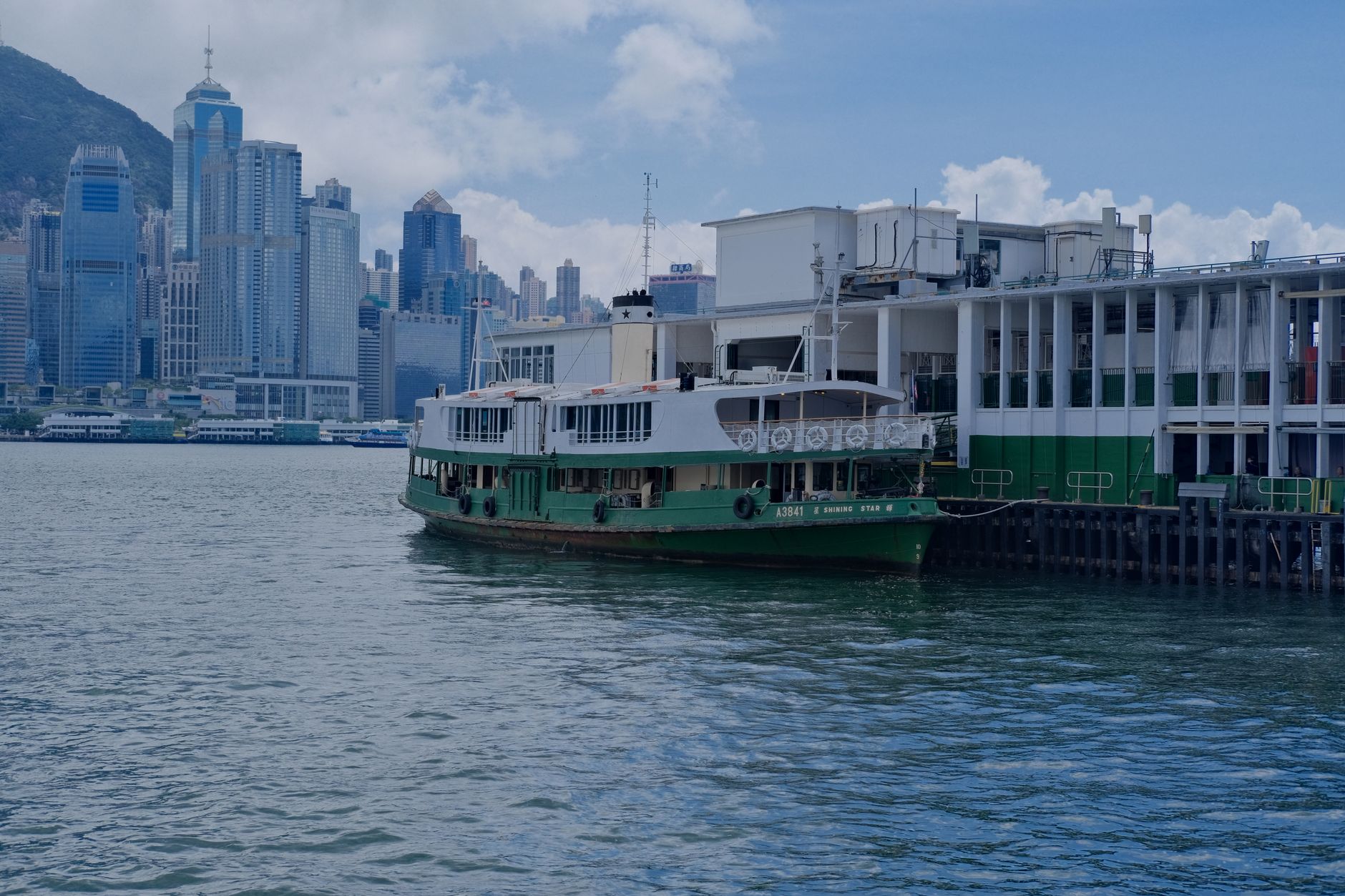
Victoria Harbour is the city’s stage, and its best crossing is the Star Ferry, a green-and-white workhorse running since 1888 — do it at least once after dark, ideally timed to the nightly Symphony of Lights, when towers on both shores pulse in unison. On the Kowloon waterfront, the Tsim Sha Tsui promenade and its Avenue of Stars deliver the postcard view back at Hong Kong Island, with the old Clock Tower as its landmark.
Kowloon’s markets
Kowloon rewards wandering. In Mong Kok, single streets specialise: the Ladies’ Market for souvenirs, the Flower Market, the songbird-filled Yuen Po Street Bird Garden, and the Goldfish Market. After dark, the Temple Street Night Market unrolls its stalls, fortune-tellers, and open-air dai pai dong food stalls — the most atmospheric night in the city, and one of the cheapest.
The Big Buddha and Lantau

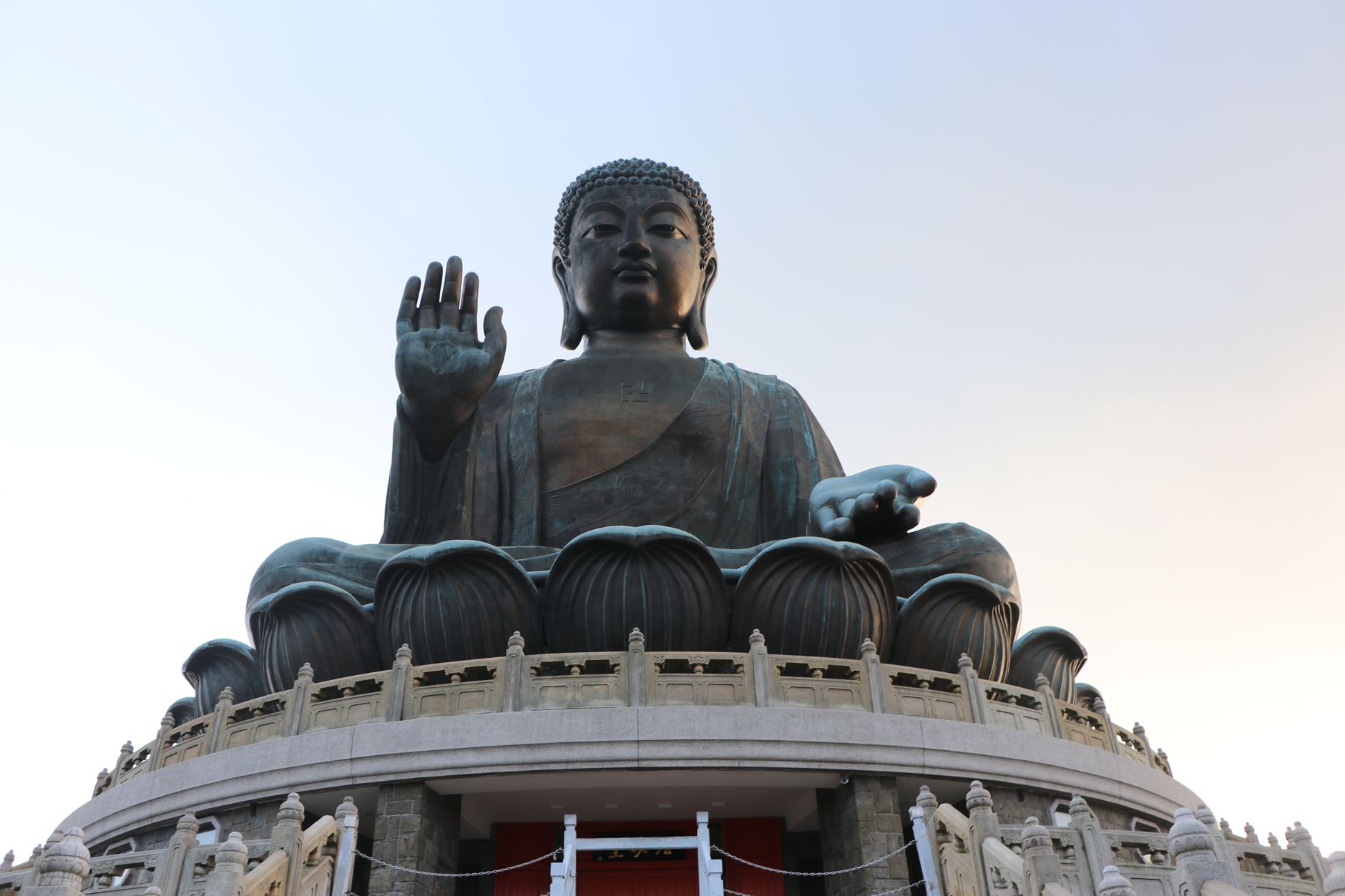
Hong Kong’s biggest surprise is how green it turns. On Lantau Island, the Ngong Ping 360 cable car glides 25 minutes over mountains and sea to the Tian Tan Buddha — the great bronze “Big Buddha” seated atop 268 steps beside the working Po Lin Monastery, where you can take a simple vegetarian lunch. Nearby, the stilt-house fishing village of Tai O trades in dried seafood and pink-dolphin boat trips.
Temples and quiet gardens
For calm amid the density, the Wong Tai Sin Temple hums with worshippers shaking fortune sticks, while the exquisite Chi Lin Nunnery and its Nan Lian Garden — Tang-dynasty-style wooden halls and manicured ponds — feel a world away from the towers pressing in around them. On Hong Kong Island, ride the open-air Central–Mid-Levels Escalator, the world’s longest, up through the bars and galleries of SoHo.
Beaches, islands, and theme parks
There is a whole other Hong Kong beyond the neon. The car-free island of Cheung Chau and laid-back Lamma offer seafood lunches and easy coastal walks, and the market and beaches of Stanley make a breezy afternoon. For families, Hong Kong Disneyland and the clifftop Ocean Park are both a full day out, the latter pairing a serious aquarium with headland views.
Eating Hong Kong
You could come only to eat. Lunch means dim sum, ideally trundled past on trolleys — the Michelin-starred but cheap Tim Ho Wan for its baked barbecue-pork buns. A cha chaan teng (Hong Kong diner) is where locals actually eat: milk tea strong enough to stand a spoon in, a pineapple bun, macaroni soup. Save an evening for roast goose, a bowl of wonton noodles, and an egg tart from a back-street bakery. Eat widely and cheaply and you will understand the city better than any guidebook could teach.
Give Hong Kong three or four days and it delivers skyline, mountain, market, temple, island, and world-class food — all within a single, unforgettable hour of each other.
Frequently asked questions
How many days do you need in Hong Kong?
Three to four days covers it: a day on Hong Kong Island for the Peak and Central, a day in Kowloon for the markets and temples, a day out to Lantau for the Big Buddha and Ngong Ping 360, and time to eat. Add a day for an outlying island like Cheung Chau or a Disneyland visit.
Is the Peak Tram worth it?
Yes — the historic funicular up Victoria Peak is a Hong Kong rite of passage, and the view from the Sky Terrace 428 deck at dusk is the city's best. Book tickets ahead to skip the queue, and walk the free, flat Lugard Road loop at the top to escape the crowds.
How do you get to the Big Buddha?
Take the MTR to Tung Chung on Lantau Island, then the Ngong Ping 360 cable car — a scenic 25-minute glide over mountains and sea to the Tian Tan Buddha and Po Lin Monastery. Book the cable car ahead, and consider pairing it with the Tai O fishing village nearby.
When is the best time to visit Hong Kong?
October to early December is ideal — dry, mild and clear. Spring can be foggy and humid; summer is hot, very humid and the typhoon season, when a T8 signal can shut the city down, so watch the Hong Kong Observatory if you travel then.
Keep reading on Gently Yonder
- Hong Kong: A First-Timer's Guide — Victoria Peak, the Star Ferry, Lantau's Big Buddha, and dim sum.
- Airalo vs Holafly vs Saily — The three big travel eSIM providers compared — coverage, pricing, and who each suits.
- What Counts as Rude in 12 Cultures — Goffman, Hofstede, and twelve country case studies for international travellers.
- Osaka: The Places Worth Your Time — Osaka Castle, Dotonbori, Shinsekai's kushikatsu, Universal Studios, and a Nara day trip.
- Klook vs Viator vs GetYourGuide — Which tours-and-activities platform to use where — Asia, Europe, and global.