Osaka is Japan at its warmest and hungriest — the nation’s kitchen and its comedy capital, a city organised around eating and laughing rather than kneeling in temples. It is louder than Kyoto, friendlier than Tokyo, and one of the great low-stress bases in Asia, with Nara, Kyoto, and Kobe all a short train away. Lean into its appetite. Here are the places worth your time. Two things make it easier: a travel eSIM so maps and train apps work from touchdown, and a browse of Klook or KKday for Universal Studios and Kaiyukan tickets and day tours, which are cheaper and skip the lines booked ahead.
Osaka Castle
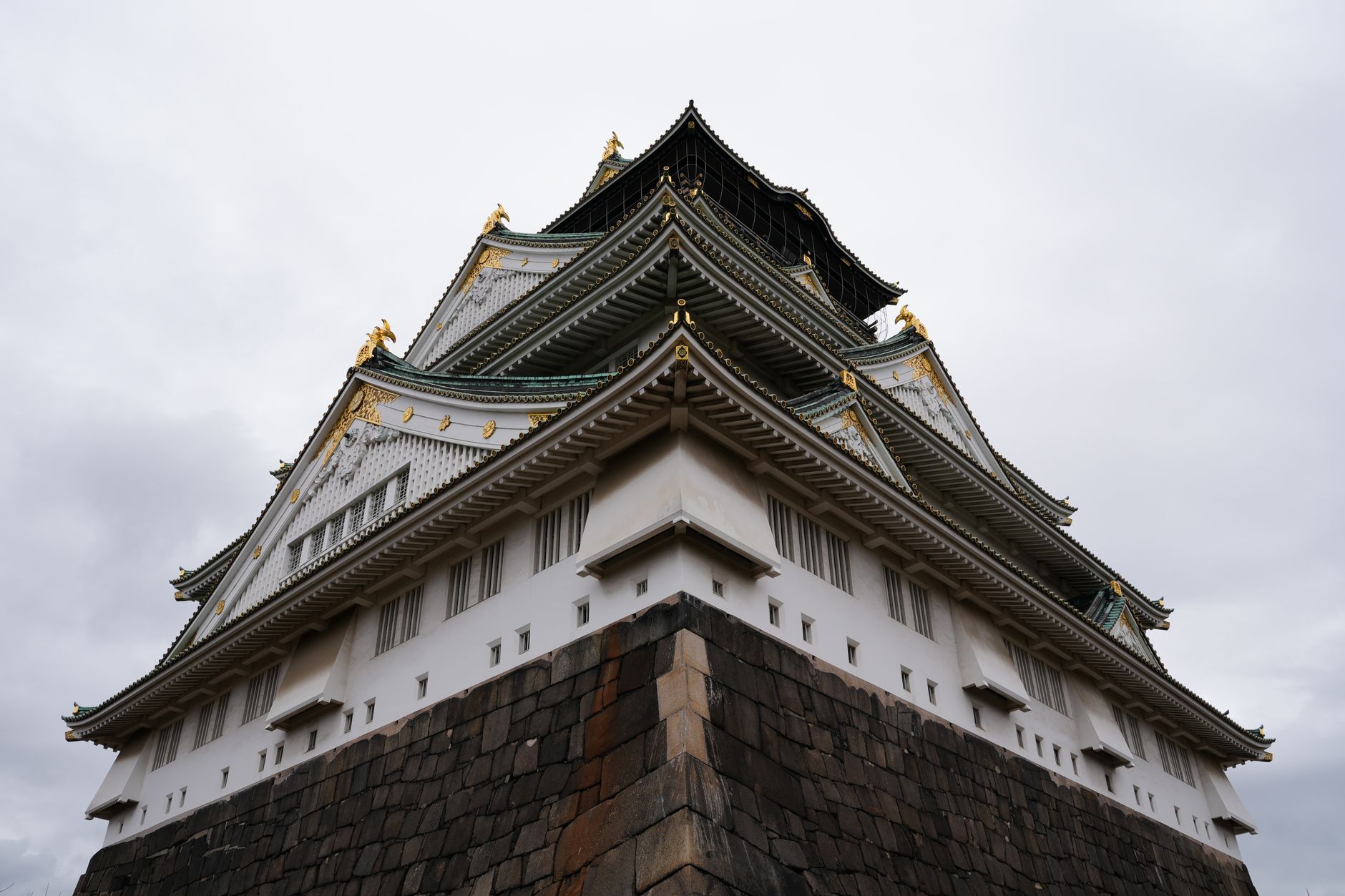
Begin with the landmark. Osaka Castle, raised by the warlord Toyotomi Hideyoshi in the 1580s, rides above a moat and vast stone ramparts in a green park. The reconstructed keep houses a genuinely good history museum, and the top floor gives a fine panorama. Come in late March for the cherry blossoms of the surrounding Nishinomaru Garden, or in autumn for the maples, and approach on foot through the outer gardens rather than straight to the tower.
Dotonbori and Namba
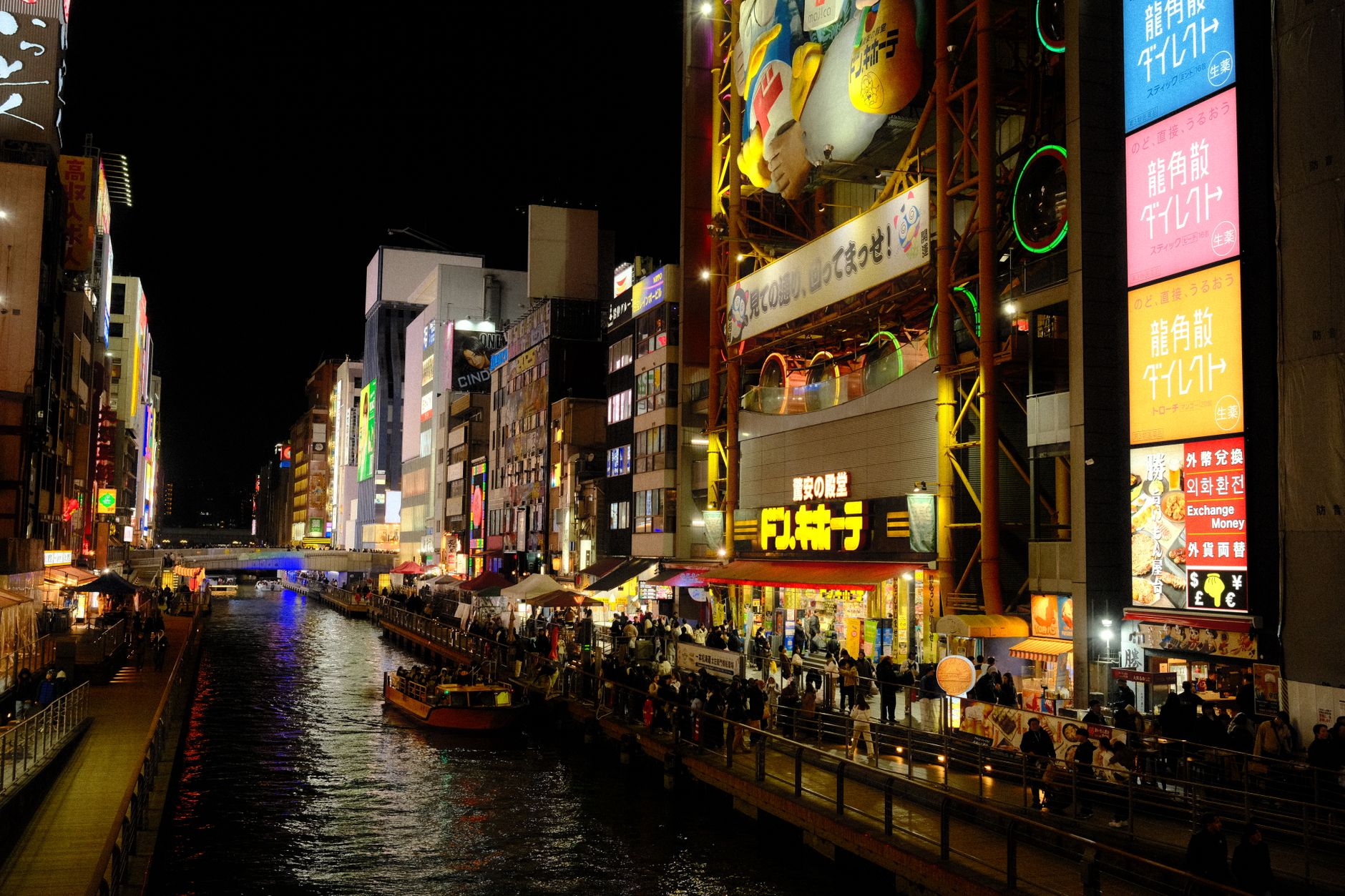
The beating heart of Osaka is Dotonbori, a canal lined with towering animated signboards that is loudest and best after dark. Find the famous Glico running man from the Ebisu Bridge, the giant mechanical crab of Kani Doraku, and a hundred places to eat. Branching off is the half-kilometre covered arcade of Shinsaibashi-suji, and the tiny lantern-lit alley of Hozenji Yokocho beside a moss-covered temple statue that worshippers douse with water. This is the Osaka of the postcards, and it delivers.
Shinsekai and the kushikatsu

For the retro, working-class Osaka of a century ago, head to Shinsekai, beneath the Tsutenkaku tower. This is the birthplace of kushikatsu — panko-crumbed skewers deep-fried and dunked in a communal sauce (the one rule: never double-dip). The neon, the tiger-emblazoned shops, and the smell of frying make it one of the city’s most characterful corners, a little rough and all the better for it.
Kuromon Market and the food
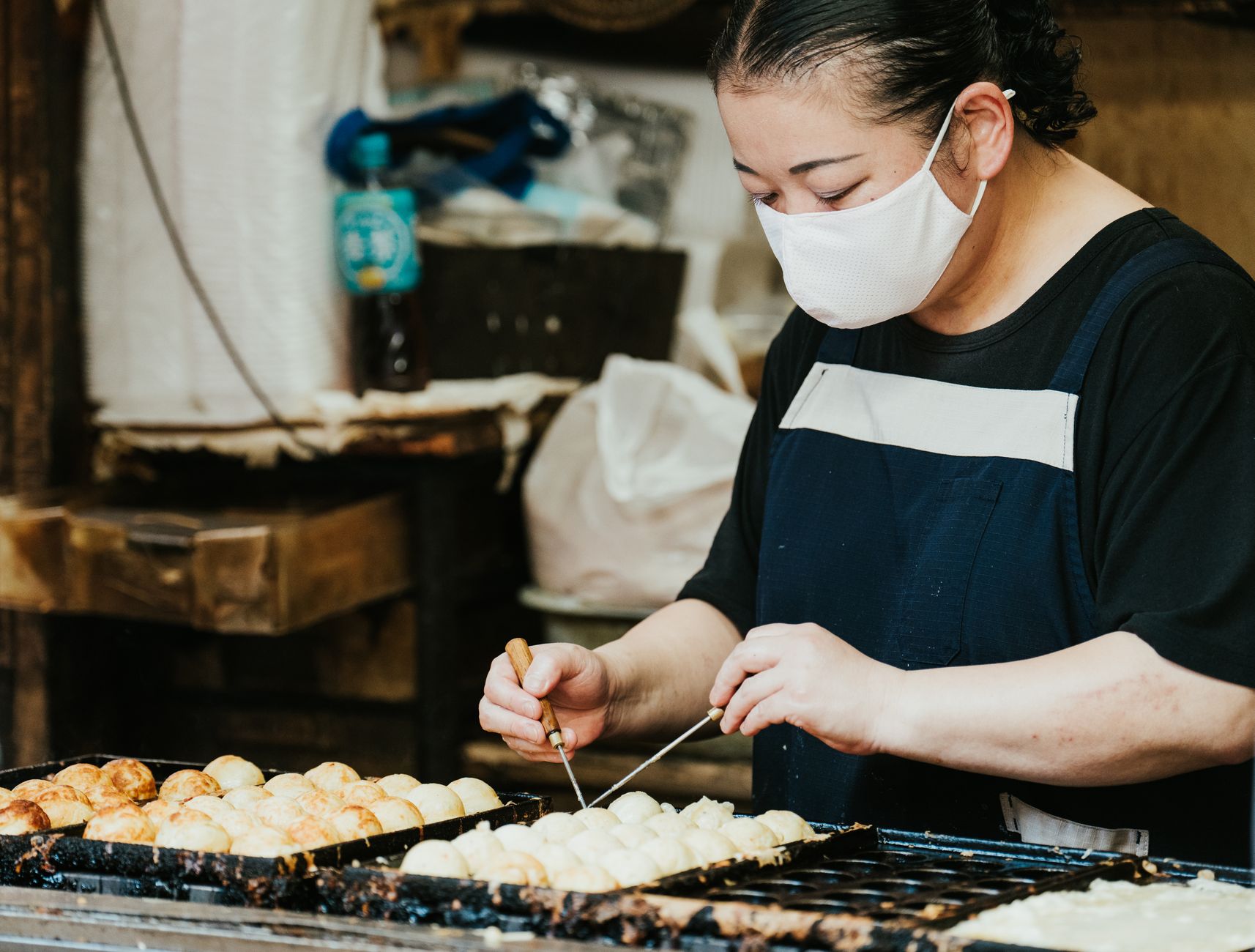
They call Kuromon Ichiba Market “Osaka’s kitchen,” and its covered lanes sell sea urchin, wagyu skewers, grilled scallops, and fresh sashimi to eat as you walk. Beyond it, the city’s essentials await at every corner: takoyaki, molten octopus balls branded with Osaka; okonomiyaki, the savoury cabbage pancake grilled at your table; and 551 Horai pork buns, whose steamers scent every station. Eat standing, eat at counters, eat between sights — the local motto is kuidaore, “eat until you drop.”
Umeda and the Floating Garden
Osaka’s northern pole is Umeda, around the huge Osaka Station. Here the striking Umeda Sky Building joins its twin towers with a rooftop Floating Garden Observatory, a 360-degree open-air deck thrilling at sunset. Below spread the flagship department stores and enough underground shopping arcades to lose a rainy afternoon in. Kita is more polished than raucous Minami — the two make a satisfying pair.
Family days: Universal and the aquarium
Osaka is a brilliant base for a mix of ages. Universal Studios Japan, home to Super Nintendo World and the Wizarding World, is a full, ticket-ahead day out. On the bay, the Osaka Aquarium Kaiyukan is among the world’s finest, built around a central tank swum by whale sharks. For quieter culture, the ancient Shitennoji temple and the bridge-and-vermilion Sumiyoshi Taisha shrine reward a morning.
The easiest day trips in Japan
Because Osaka sits at the heart of Kansai, the best “day trips” are barely trips at all. Nara — with its bowing deer and the Great Buddha of Todaiji — is 45 minutes away; Kyoto‘s temples are half an hour; and the hilltop white castle of Himeji and the port city of Kobe (and its legendary beef) are both within an easy ride. Base in Osaka and let the whole region open up.
Give Osaka three days — one for the city, one for its food, one for Nara or Kyoto — and you will leave already planning your return.
Frequently asked questions
How many days do you need in Osaka?
Three days is a good base: one for the city (Osaka Castle, Umeda), one built around Dotonbori and the food, and one for a day trip to Nara or Kyoto, both under an hour away. Add a day if you want Universal Studios Japan, which is a full outing on its own.
What food is Osaka famous for?
Osaka is called Japan's kitchen. The essentials are takoyaki (octopus balls), okonomiyaki (savoury pancake), and kushikatsu (deep-fried skewers, best in the retro Shinsekai district). Add 551 Horai pork buns and market bites at Kuromon Ichiba — the local motto is kuidaore, 'eat until you drop.'
Is Osaka a good base for Kyoto and Nara?
Excellent. Osaka sits at the heart of Kansai: Kyoto is about 30 minutes by train, Nara around 45 minutes, and Kobe and Himeji Castle both within an easy ride. Many travellers base in Osaka and day-trip out rather than changing hotels.
When is the best time to visit Osaka?
Spring (cherry blossoms in late March to early April) and autumn (comfortable, colourful October to November) are ideal. Summers are hot and humid; winters mild and clear. Aim for spring or autumn if your dates allow.
Keep reading on Gently Yonder
- Osaka in 3 Days — Food, neighborhoods, and day-one energy — a compact plan for Japan's kitchen.
- Osaka: A First-Timer's Guide — Osaka Castle, Dotonbori, the street food, and an easy day trip to Nara.
- Best eSIM for Japan (2026) — How to choose a Japan travel eSIM — coverage, data plans, and the pick for most trips.
- Kyoto: The Places Worth Your Time — Fushimi Inari, Arashiyama, Kiyomizu-dera, the Golden Pavilion, Gion, and a Nara day trip.
- Where to Store Luggage in Tokyo — Coin lockers, cloakrooms, storage apps, and hotel holds — which to use where.
- Seoul: The Places Worth Your Time — Gyeongbokgung, Bukchon, N Seoul Tower, Myeongdong, Gwangjang Market, and a DMZ day trip.