Seoul rewards the curious traveller like few capitals can — a city where a 14th-century throne hall stands in the shadow of glass towers, where hanbok-clad visitors drift past K-pop billboards, and where a mountain temple and an all-night barbecue joint sit one subway stop apart. The scale can feel daunting, but Seoul is clean, astonishingly safe, and stitched together by one of the world’s best metros. Think in districts, and let each half-day belong to one. Here are the places worth your time. Two things smooth the trip: a travel eSIM so maps and translation apps work from the airport train onward, and a look at Klook or KKday for the DMZ tours and attraction passes, which sell out and are far simpler booked ahead.
The grand palaces

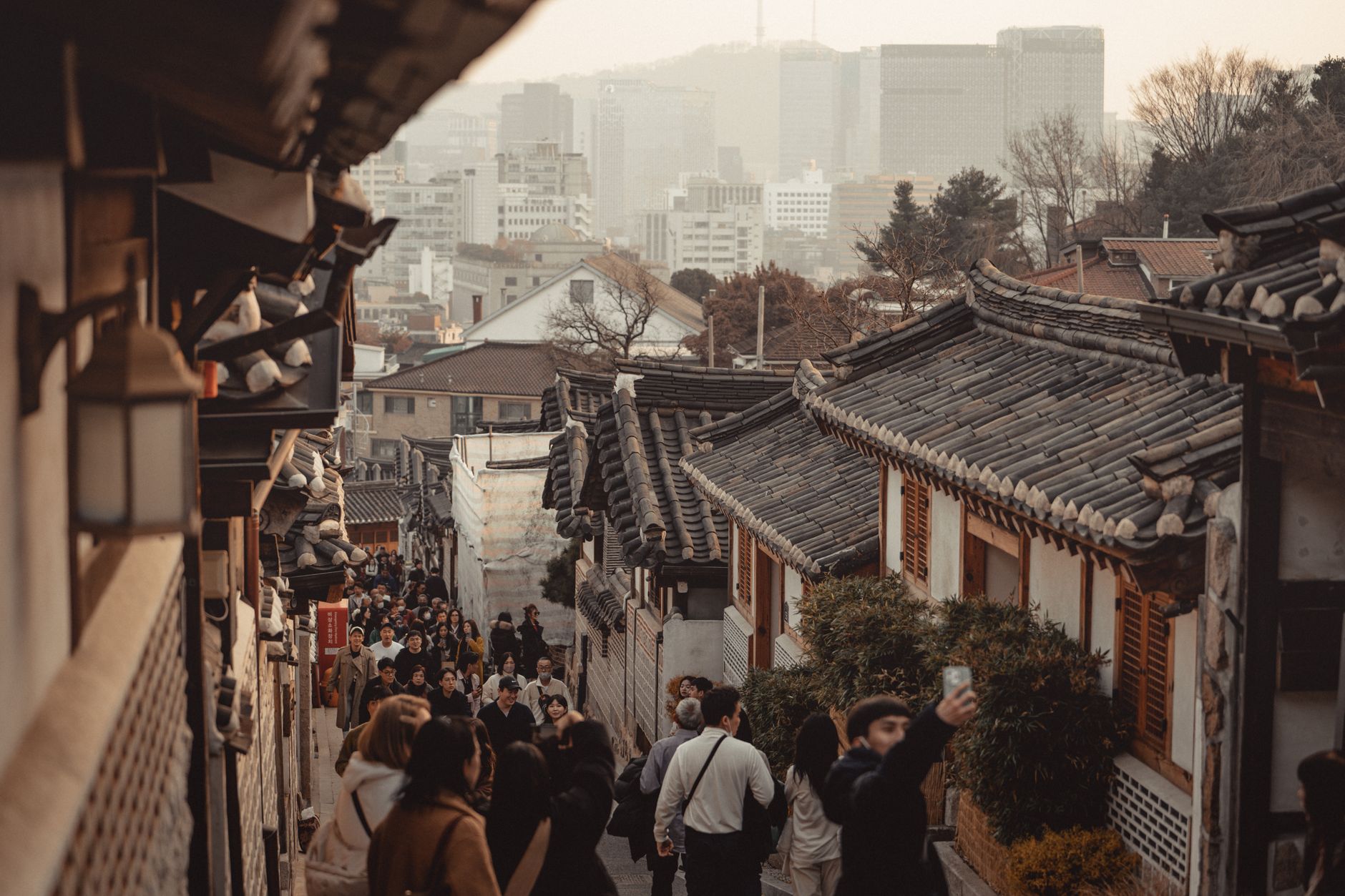
Begin where the city began. Gyeongbokgung, the largest of the five royal palaces, spreads beneath Bugaksan mountain — time your visit to the changing of the royal guard at Gwanghwamun Gate, and note that anyone in rented hanbok enters free. A short walk east, Changdeokgung is the loveliest, its Huwon “Secret Garden” a masterpiece of landscaped restraint and a UNESCO site. Between them climbs Bukchon Hanok Village, a hillside of preserved tile-roofed houses framing the palace roofs and the modern skyline beyond — beautiful, and residential, so tread quietly.
N Seoul Tower and the city view
For the whole city at a glance, ride to N Seoul Tower atop Namsan — by cable car or the leafy walking trail — and find the fence of “love locks” below the observation deck. It is the classic Seoul panorama, best at dusk when the endless grid begins to glitter. Down at street level, the daylighted Cheonggyecheon stream offers a cool, sunken walk through the very centre of the city.
Myeongdong, Insadong, and the neighbourhood moods

Seoul is best understood one district at a time. Myeongdong is the shopping-and-street-food hurricane — skincare shops and stalls of tornado potatoes, egg bread, and grilled cheese lobster. Insadong trades in tea houses, calligraphy brushes, and galleries around the spiralling Ssamziegil complex, and the reborn hanok lanes of nearby Ikseon-dong hide the city’s prettiest cafés. Student-loud Hongdae, by Hongik University, is the place for buskers, indie clubs, and late-night food.
Gangnam and the DDP

Glossy Gangnam — yes, that one — is department stores, the COEX Mall with its photogenic Starfield Library, and the serene Bongeunsa Temple hidden among the towers. To the east, the vast silver curves of Zaha Hadid’s Dongdaemun Design Plaza (DDP) anchor a district that never sleeps, its wholesale malls and night market running into the small hours. These are the faces of hyper-modern Seoul, a deliberate counterpoint to the palaces.
Markets and the art of eating
Korean food is a headline reason to come. Graze the century-old Gwangjang Market for bindaetteok (mung-bean pancakes) and mayak gimbap (moreish “narcotic” rice rolls). Book an evening for Korean barbecue — grilling marbled samgyeopsal at your own table, wrapped in lettuce with garlic and ssamjang. Learn the staples: bubbling kimchi jjigae, cold buckwheat naengmyeon, chewy tteokbokki from a street cart, and fried chicken with beer (chimaek). It is a city that eats at every hour, and superbly.
The DMZ — history you can feel
The most sobering half-day is the DMZ, the Demilitarized Zone dividing the two Koreas. A guided tour takes in the Third Infiltration Tunnel and the Dora Observatory looking across the border, and — subject to conditions — the Joint Security Area at Panmunjom, where the two nations stand face to face. It can only be visited on an organised tour, so book ahead; it is the context that makes the rest of Korea legible.
The Han River and easy escapes
When the density asks for space, the Han River parks are where Seoul exhales — rent a bike, picnic, and watch the Banpo Bridge Rainbow Fountain light up on a summer evening. For a lighter day trip, the tree-lined paths of Nami Island and the garden parks nearby make an easy escape, and the Everland theme park draws families. Each is a comfortable day tour from the city.
Give Seoul four or five days and it reveals itself as few big cities do — ancient and hyper-modern in a single glance, endlessly walkable, and unfailingly easy to be in.
Frequently asked questions
How many days do you need in Seoul?
Four to five days suits a first visit: a day for the palaces and Bukchon, a day or two working through neighbourhoods like Myeongdong, Insadong, Hongdae and Gangnam, a half-day at N Seoul Tower or the DDP, plenty of time to eat, and a DMZ or Nami Island day trip.
Should I book a DMZ tour in advance?
Yes. The Demilitarized Zone can only be visited on an organised tour, and the popular ones — especially any including the Joint Security Area at Panmunjom — sell out and are subject to conditions. Book ahead through a reputable operator to secure your spot and passport paperwork.
What is the best market for food in Seoul?
Gwangjang Market is the classic — try bindaetteok (mung-bean pancakes) and mayak gimbap (mini rice rolls). Myeongdong is the street-food hub for snacks, and any Korean barbecue restaurant is worth an evening. Follow the local queues.
When is the best time to visit Seoul?
Spring (cherry blossoms around early April) and autumn (crisp air and foliage in October) are the two ideal windows, both beautiful and busy. Summer is hot with a July monsoon; winter is cold and dry but festive. Choose spring or autumn if your dates are flexible.
Keep reading on Gently Yonder
- Seoul: A First-Timer's Guide — The royal palaces, Bukchon Hanok Village, Gwangjang Market, and a DMZ day trip.
- Best eSIM for Japan, Korea & Vietnam — Destination-by-destination eSIM picks for three popular Asian countries.
- What Counts as Rude in 12 Cultures — Goffman, Hofstede, and twelve country case studies for international travellers.
- Osaka: The Places Worth Your Time — Osaka Castle, Dotonbori, Shinsekai's kushikatsu, Universal Studios, and a Nara day trip.
- Klook vs Viator vs GetYourGuide — Which tours-and-activities platform to use where — Asia, Europe, and global.