Vietnam — Việt Nam — is a country shaped by a coastline. It runs 3,260 kilometers along the South China Sea, narrow in the middle, broad at both ends in two great river deltas. The country has been many things across two thousand years: a tributary state of China, a sequence of independent dynasties, a French colony, a divided country, a reunified one, and now one of the world's most rapidly growing economies. Each layer is still legible on the ground.
§1
Overview
Vietnam (Việt Nam) is a country in Southeast Asia on the eastern edge of the Indochinese Peninsula. Its territory runs in a long S-shape for approximately 1,650 km from north to south, with a coastline of about 3,260 km along the South China Sea (called the East Sea or Biển Đông in Vietnam). Land borders extend with China to the north, Laos to the northwest, and Cambodia to the southwest.
The population stands at approximately 100 million as of 2024 [General Statistics Office of Vietnam, 2024], making Vietnam the fifteenth most populous country globally. The capital is Hanoi (Hà Nội) in the Red River Delta of the north. The largest city by population is Ho Chi Minh City (Thành phố Hồ Chí Minh, formerly Saigon) in the south. The official language is Vietnamese; the currency is the Vietnamese đồng (₫, VND). Vietnam is a member of the United Nations, ASEAN, WTO, APEC, and a participant in major regional trade agreements including RCEP and CPTPP.
§2
History
Continuous human habitation in Vietnam extends back tens of thousands of years. The Đông Sơn culture, which flourished in the Red River basin from approximately 1000 BCE, produced sophisticated bronze drums whose distinctive iconography remains a Vietnamese national symbol today.
From 111 BCE to 939 CE, the territory now constituting northern Vietnam was ruled at various points by Chinese imperial dynasties. Vietnamese resistance during this millennium produced figures still celebrated in national memory, including the Trưng Sisters (40–43 CE). Independence was secured in 939 CE under Ngô Quyền, beginning a sequence of independent Vietnamese dynasties: the Ngô, Đinh, Lý, Trần, and Lê. The Trần dynasty notably repelled three Mongol invasions in the 13th century — among the few states to do so.
The Lê dynasty (1428–1788) presided over the slow southward expansion known as the Nam tiến, gradually absorbing the territory of the Cham and Khmer peoples and producing the country's distinctive long shape. The Nguyễn dynasty (1802–1945) was Vietnam's last imperial dynasty, with its capital at Huế.
French colonization began with the bombardment of Đà Nẵng in 1858 and was largely complete by 1885. French Indochina formally incorporated Vietnam, Laos, and Cambodia. Japanese forces occupied Vietnam during the Second World War, in arrangement with the Vichy French administration. At the war's end in 1945, Hồ Chí Minh declared the Democratic Republic of Vietnam in Hanoi.
The First Indochina War (1946–1954) between French forces and the Việt Minh ended at the Battle of Điện Biên Phủ in May 1954. The Geneva Accords of that year temporarily partitioned the country at the 17th parallel. The subsequent conflict — known as the Vietnam War in much of the English-speaking world, the American War (Chiến tranh Việt Nam or Kháng chiến chống Mỹ) in Vietnam, and the Second Indochina War in academic literature — continued until the fall of Saigon on April 30, 1975. Reunification under the Socialist Republic of Vietnam was formalized on July 2, 1976.
The Đổi Mới (Renovation) reforms initiated in 1986 transitioned Vietnam from a centrally planned to a socialist-oriented market economy. The reforms are widely credited with the country's subsequent economic transformation [World Bank, Vietnam Systematic Country Diagnostic, 2024].
§3
Geography
Vietnam's territory is shaped by two great river systems and a mountain range. The Red River (Sông Hồng) drains from the highlands of Yunnan, China into the Red River Delta surrounding Hanoi in the north. The Mekong River (Sông Cửu Long, "Nine Dragons"), having flowed through six countries, empties into the South China Sea through the broad Mekong Delta in the south. Between these deltas runs the Annamite Cordillera (Dãy Trường Sơn), the mountain spine that defines the country's narrow central waist.
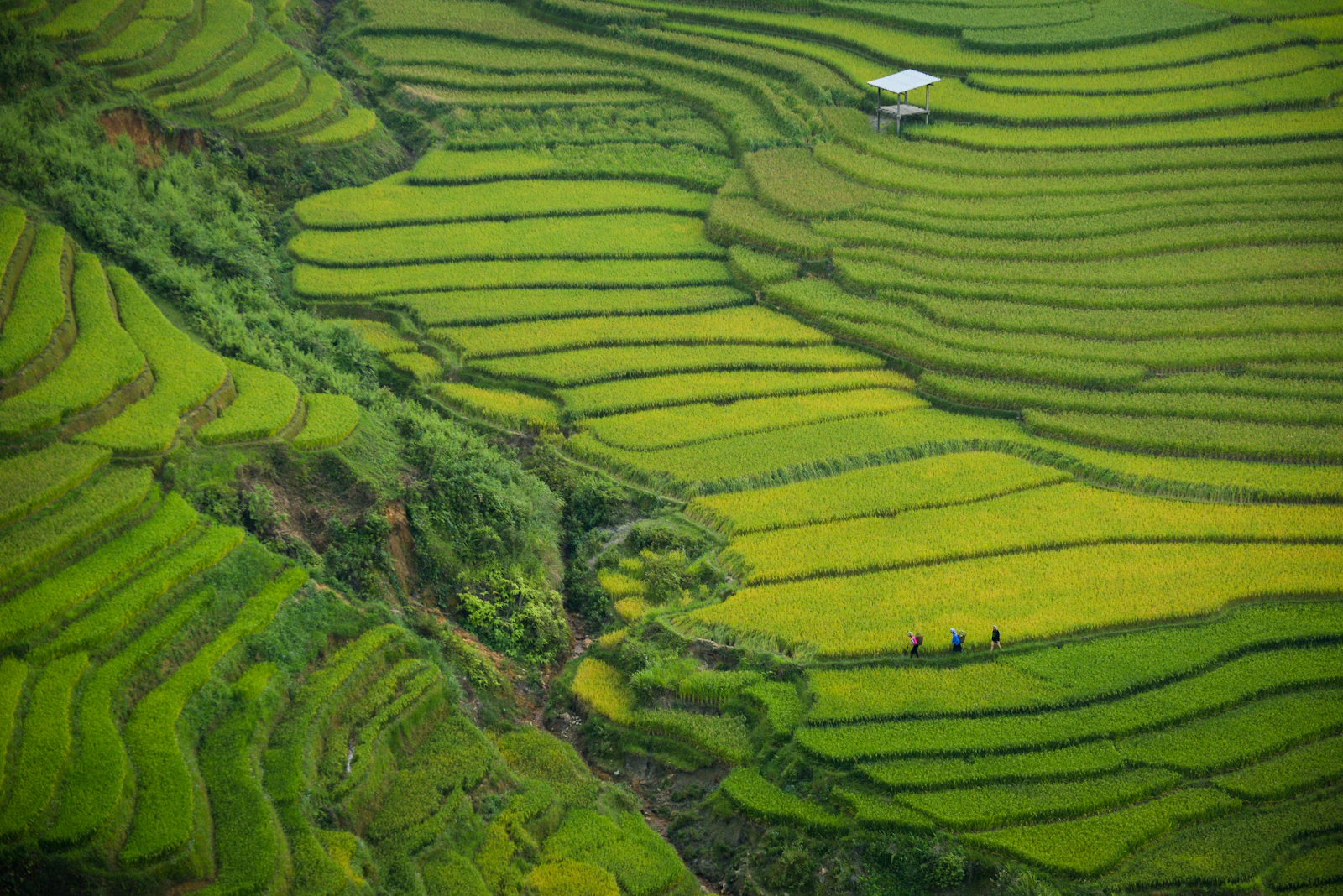
Approximately three-quarters of the country is hilly or mountainous, though most of the population is concentrated in the two delta plains and along the coast. Major coastal cities include Hải Phòng in the north, Đà Nẵng and Huế in the center, and Nha Trang in the south.
Climate is tropical monsoon, but varies significantly across the country's length. The north has four distinguishable seasons including a cool, dry winter; the south experiences only a wet season (May–October) and dry season (November–April). The central coast is the most exposed to seasonal typhoons, which typically peak from September through November [Vietnam Disaster Management Authority].
§4
Politics
The Socialist Republic of Vietnam is a one-party state governed by the Communist Party of Vietnam (CPV, Đảng Cộng sản Việt Nam), founded in 1930. The 2013 Constitution affirms the CPV's leading role in state and society; other political parties are not legally constituted.
Power is exercised through what is colloquially called the "Four Pillars":
- General Secretary of the CPV — the most powerful position, chairing the Politburo.
- President of the Republic — head of state, commander-in-chief.
- Prime Minister — head of government and the Cabinet.
- Chair of the National Assembly — head of the legislative branch.
The National Assembly (Quốc hội) is unicameral and meets twice annually. Members are elected for five-year terms, with candidates vetted by the Fatherland Front. Local elections occur at provincial, district, and commune levels.
Vietnam's foreign policy is sometimes described as "ngoại giao cây tre" ("bamboo diplomacy") — flexible, rooted, capable of bending with prevailing winds without breaking. In practice, the country maintains active relationships with the United States, China, Russia, the European Union, India, Japan, and South Korea simultaneously, while declining formal alliance with any single power [Center for Strategic and International Studies, Vietnam reports].
§5
Economy & Industry
Vietnam is one of Asia's fastest-growing economies, with average annual GDP growth of approximately 6–7 percent over the decade preceding the COVID-19 pandemic [IMF World Economic Outlook]. Following the Đổi Mới reforms of 1986, the economy transitioned from central planning toward a market system while retaining state ownership in strategic sectors.
Manufacturing has emerged as a primary engine of growth and employment. Major global firms including Samsung, Intel, Apple supply chain partners, Nike, and Adidas operate substantial facilities in the country. Electronics and electrical machinery have overtaken textiles as the leading export category [General Statistics Office of Vietnam, 2024].
Agriculture remains economically significant. Vietnam is the world's second largest coffee producer after Brazil, particularly of robusta beans grown in the Central Highlands, and is consistently among the top three global rice exporters [Food and Agriculture Organization, 2024]. Other significant agricultural exports include seafood, cashews, pepper, and rubber.
Tourism has grown rapidly in the 21st century. Pre-pandemic, Vietnam received more than 18 million international visitors annually; the sector has recovered strongly since 2023 [Vietnam National Authority of Tourism, 2024]. Coastal resorts, UNESCO heritage sites, and gastronomy form the basis of much of the country's tourism appeal.
Persistent challenges include high inequality between urban and rural areas, environmental pressures particularly in the Mekong Delta, and the long-term implications of a workforce that, while still young, is beginning to age faster than expected.
§6
People & Languages
Vietnam's population of approximately 100 million includes the majority Kinh (Việt) people — roughly 85 percent — and 53 officially recognized ethnic minority groups. The largest minorities by population include the Tày, Thái, Mường, Khmer, Hoa (ethnic Chinese), Nùng, and Hmong, with significant populations of Dao, Gia Rai, Ê Đê, and others. Many minority communities are concentrated in the northern and central highlands [Committee for Ethnic Minority Affairs of Vietnam].
Vietnamese (tiếng Việt) is the official language. It is a tonal language — northern dialects distinguish six tones, southern dialects five. The modern writing system, chữ Quốc ngữ, uses a Latin alphabet with diacritics. It was developed by Portuguese and French missionaries beginning in the 17th century, formalized in the 19th, and adopted as the standard script in the early 20th century — replacing earlier systems including chữ Hán (Classical Chinese) and chữ Nôm (a demotic Vietnamese script using modified Chinese characters).
Religious life is plural. The majority of Vietnamese follow a syncretic blend of Mahayana Buddhism, Confucianism, Daoism, and ancestral veneration. Roman Catholicism has a substantial following — approximately 7 percent of the population — established largely during the French colonial period. Vietnam is also home to two religions of strictly domestic origin: Caodaism, founded in 1926 in the south and combining elements of multiple world religions, and Hòa Hảo Buddhism, founded in 1939 in the Mekong Delta. Theravada Buddhism is practiced by Khmer communities in the south [Vietnam Government Committee for Religious Affairs].
§7
Society
Vietnam is among the world's most rapidly urbanizing countries. Approximately 38 percent of the population lives in urban areas as of the early 2020s, up from under 20 percent in 1990, and the share continues to rise [World Bank Urban Development Indicators]. The largest urban agglomerations are Ho Chi Minh City (population approximately 9 million in the city proper, with surrounding metro substantially larger) and Hanoi (approximately 8 million).
The country has a comparatively young population, with a median age of around 32 years. Literacy is high at approximately 96 percent. Cultural emphasis on education, particularly at primary and secondary levels, reflects long-standing Confucian heritage and shapes intense competition for university entrance.
Daily mobility in cities is dominated by motorbikes, with more than 70 million registered nationally [Ministry of Transport of Vietnam]. Public transit infrastructure remains limited outside Hanoi and Ho Chi Minh City, both of which have introduced metro lines in recent years. Cashless payment adoption is among the world's highest, with mobile banking and QR-code payments now standard in urban commerce.
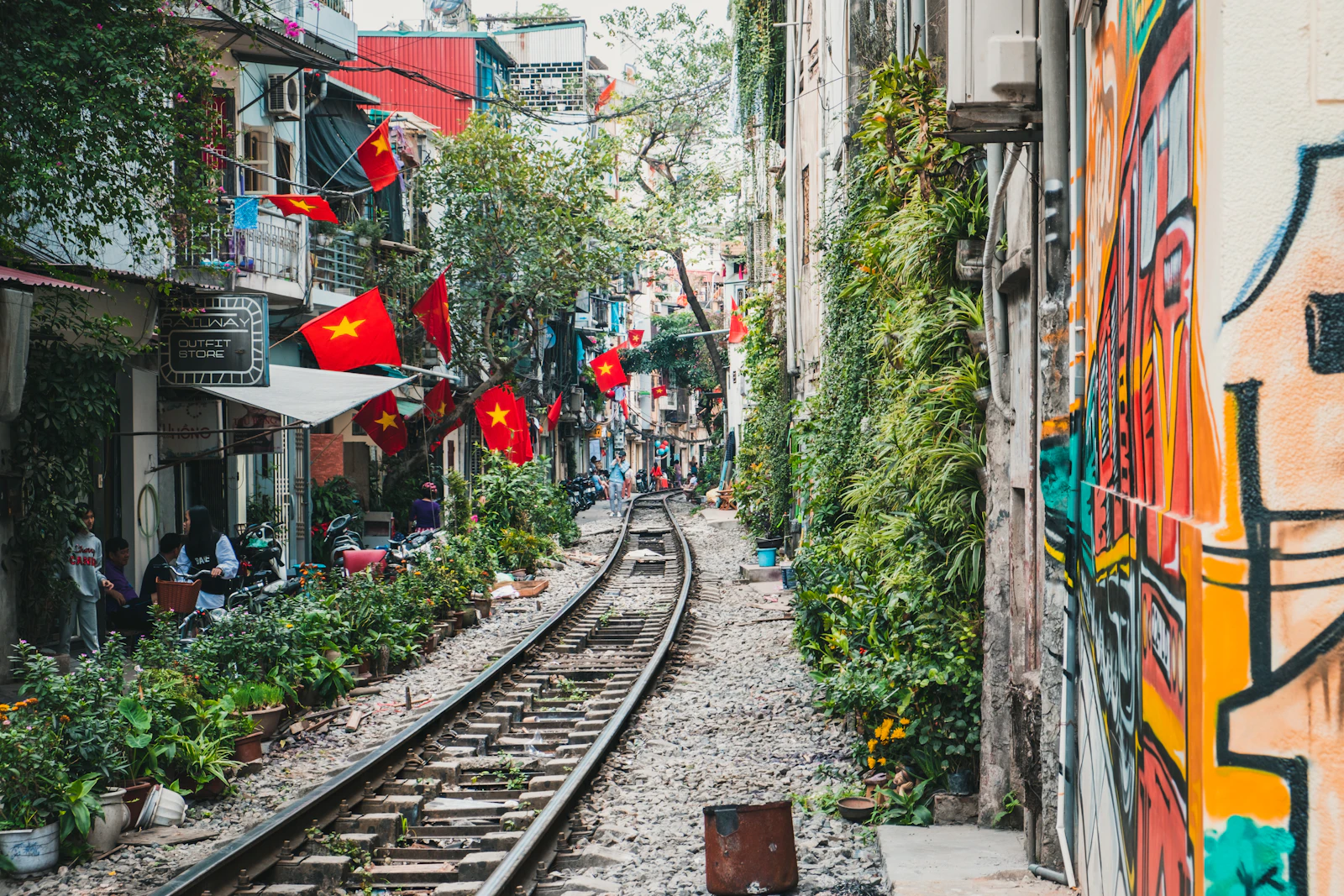
Family structure has traditionally been multi-generational, with adult children commonly remaining in the parental home before marriage. Urbanization and economic transformation have begun reshaping these patterns, with smaller household sizes and later marriage ages now common in major cities.
§8
Culture
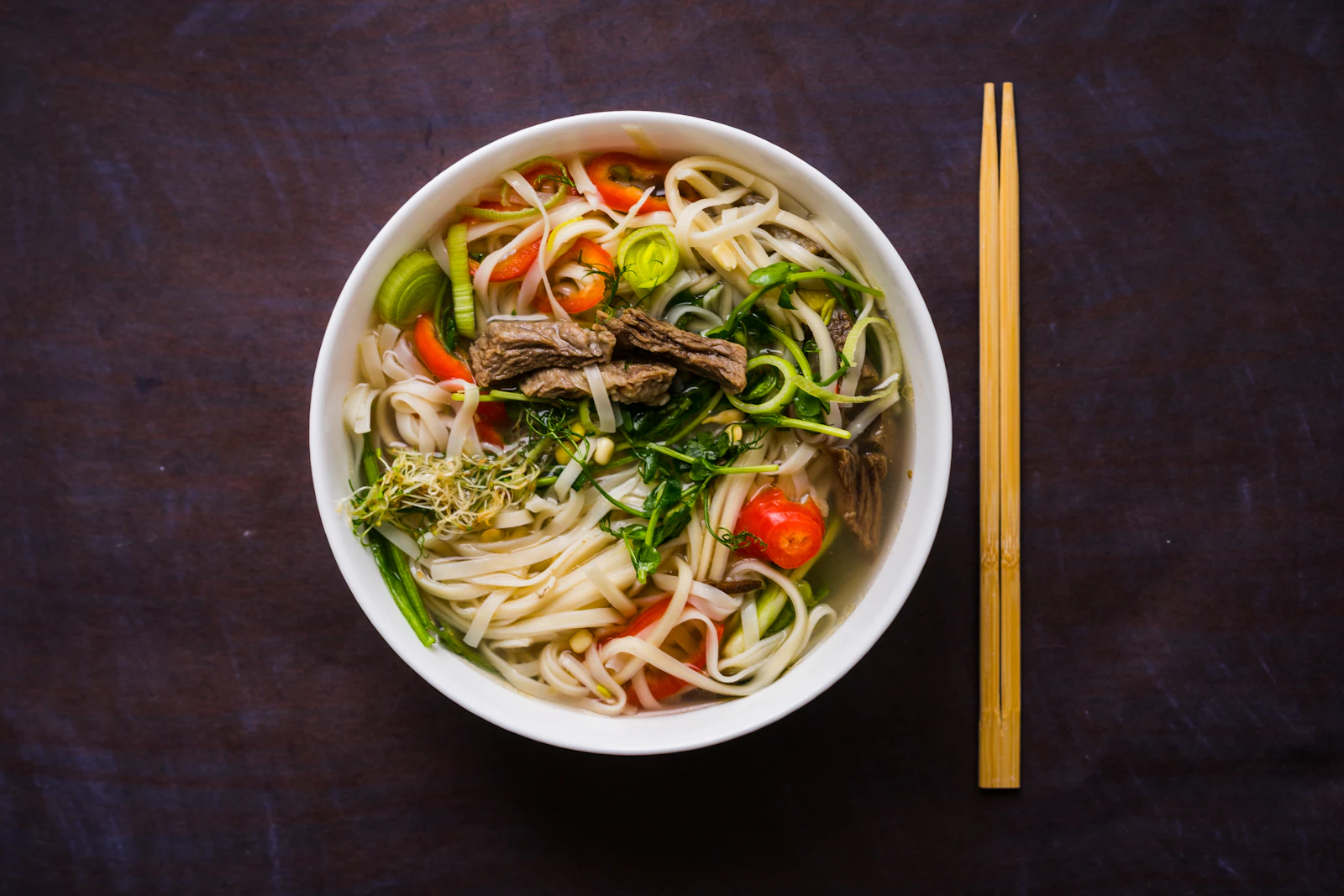
Vietnamese culinary tradition has become one of the world's most internationally recognized cuisines. Signature dishes include phở (rice noodle soup, historically associated with the north), bánh mì (the French-Vietnamese baguette sandwich), bún chả (grilled pork over rice vermicelli, a Hanoi specialty), gỏi cuốn (fresh spring rolls), and cơm tấm (broken rice with grilled meats, southern). Vietnamese coffee culture is distinctive: robusta beans, the small phin drip filter, and the widespread use of sweetened condensed milk produce cà phê sữa đá (iced coffee with milk), now exported globally.
Vietnam's literary heritage is anchored by Truyện Kiều (The Tale of Kiều), a 3,254-line epic poem composed by Nguyễn Du in the early 19th century. It is widely regarded as the masterwork of Vietnamese literature and remains taught at school level throughout the country.
Traditional performing arts include nhã nhạc (Vietnamese court music, inscribed by UNESCO in 2003), ca trù (a chamber music form of the north), đờn ca tài tử (the chamber music of the south, UNESCO 2013), and cải lương (reformed theater developed in the south in the early 20th century). Múa rối nước — water puppetry, performed over the surface of a pool — originated in the Red River Delta and continues in specialized theaters in Hanoi and Ho Chi Minh City.
The Vietnamese festival calendar centers on Tết Nguyên Đán — the Lunar New Year, the country's most important holiday — and Tết Trung Thu, the Mid-Autumn Festival. Both involve significant family gathering, traditional foods, and continuous cultural observance across centuries.
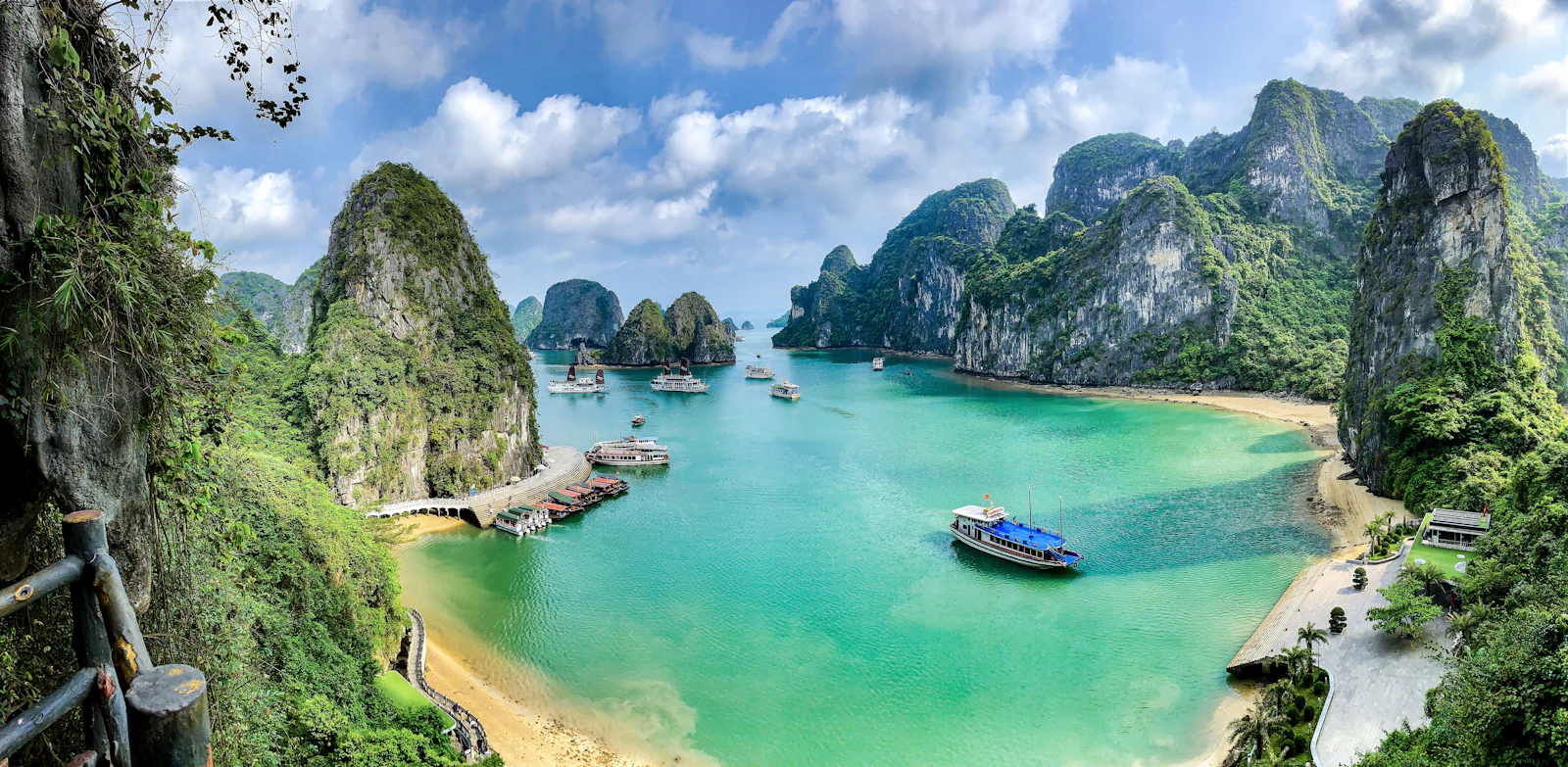
UNESCO World Heritage Sites within Vietnam include the Complex of Huế Monuments (1993), Hạ Long Bay (1994), the Ancient Town of Hội An (1999), the My Sơn Sanctuary (1999), Phong Nha-Kẻ Bàng National Park (2003, 2015), and the Citadel of the Hồ Dynasty (2011). The Imperial Citadel of Thăng Long in Hanoi was added in 2010 [UNESCO World Heritage List].
Travel prep for Vietnam
A few practical items to sort before flying. Vietnam uses Type A/C/F plugs at 220V (a universal adapter handles all of these), is tropical and humid much of the year, and rewards travellers with cashless-payment ready phones in cities.
Universal travel adapter
Vietnam outlets accept multiple plug types at 220V. A universal adapter is simpler than guessing per hotel.
View optionsQuick-dry travel towel
Useful for humid weather, the Mekong Delta, beach destinations, and unexpected swims. Half the bulk of cotton.
View optionsTravel first-aid kit
A compact kit is useful for minor cuts, headaches, and general travel mishaps — particularly when exploring smaller towns.
View optionsKlook — tours, tickets, and transfers across Asia
Strong coverage in Japan, Korea, Vietnam, Thailand, Hong Kong, Taiwan, and Singapore. Skip-the-line tickets, day tours, airport transfers, and pocket Wi-Fi. Often the cheapest reliable option for major attractions in Asian capitals.
Browse Klook tours & tickets →For deeper preparation, see our practical Gently Yonder guides:
- eSIM Setup for International Travel — arrival-ready connectivity for Vietnam.
- Hotel Booking Sites Compared — Agoda is often competitive for Vietnam specifically.
- Beach Trip Packing Checklist — for Phú Quốc, Nha Trang, and other coastal destinations.
- Trip Checklist Generator — build a personalised checklist for your Vietnam trip.
Disclosure: Some links above are affiliate links. As an Amazon Associate, Travel Now may earn from qualifying purchases at no extra cost to you. Affiliate links appear only in this practical section, not within historical, political, or cultural content.
Experiences worth booking ahead in Hanoi & Ho Chi Minh City
Top-rated tours and activities — book skip-the-line where possible:
Where to go next on Gently Yonder
- Japan country profile — the same 8-section format applied to East Asia's most layered country.
- Australia country profile — same format applied to a very different country.
- Tokyo city guide — first-time visitor overview.
Sources & further reading
- General Statistics Office of Vietnam. Statistical Yearbook of Vietnam and population estimates (2024 edition).
- World Bank. Vietnam Systematic Country Diagnostic Update (2024).
- International Monetary Fund (IMF). World Economic Outlook Database, Vietnam entries.
- Food and Agriculture Organization (FAO). Commodity trade statistics on coffee and rice (current).
- Vietnam National Authority of Tourism. International visitor arrivals statistics.
- Committee for Ethnic Minority Affairs of Vietnam. Ethnic group documentation.
- Vietnam Government Committee for Religious Affairs. Religious community statistics.
- Ministry of Transport of Vietnam. Registered vehicle and infrastructure statistics.
- Vietnam Disaster Management Authority. Typhoon and natural disaster records.
- UNESCO. World Heritage List — Vietnamese sites and inscription documents.
- Goscha, C. Vietnam: A New History. Basic Books, 2016.
- Taylor, K. W. A History of the Vietnamese. Cambridge University Press, 2013.
- Duiker, W. J. Ho Chi Minh: A Life. Hyperion, 2000.
- Center for Strategic and International Studies (CSIS). Vietnam foreign policy analyses (current).
- ASEAN Secretariat. ASEAN Statistical Yearbook, Vietnam entries.