Japan is many countries layered on top of each other — an island archipelago, an ancient pottery culture, a samurai feudal order, an empire, a defeated state, a reconstruction, an economic power, and now a country navigating the world's most rapid demographic transition. Each layer is still visible if you know where to look.
§1
Overview
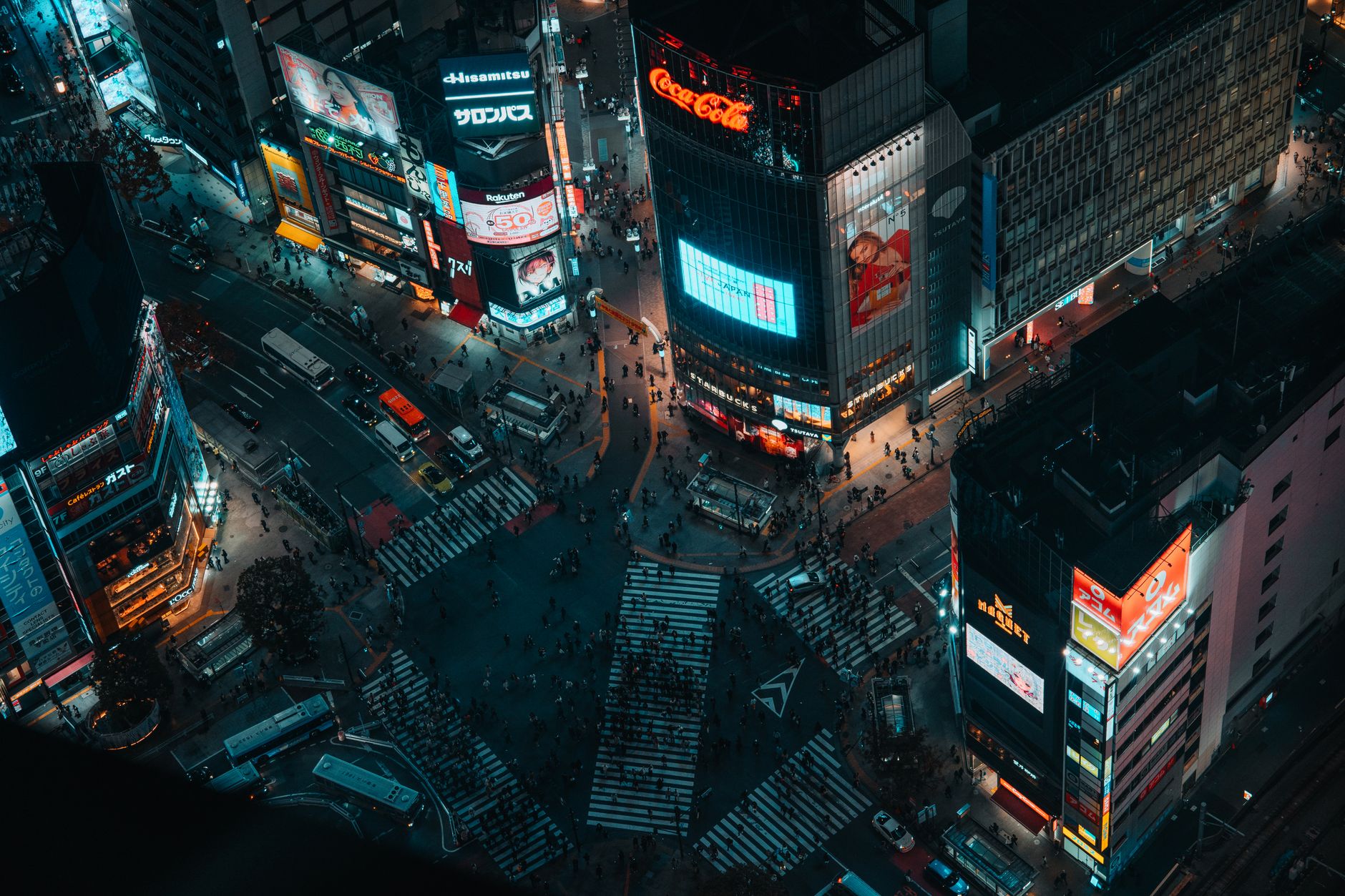
Japan (日本, Nihon) is an East Asian island country in the Pacific Ocean, comprising an archipelago of approximately 14,125 islands. The four main islands — Honshū, Hokkaidō, Kyūshū, and Shikoku — account for 97% of the country's total land area of about 377,975 km². With a population of approximately 124 million as of 2024 [Statistics Bureau of Japan, 2024], Japan is the world's eleventh most populous country and among its most urbanized: nearly 92% of residents live in cities, and the Greater Tokyo Area's population of roughly 37 million makes it the largest metropolitan area by population globally [UN World Urbanization Prospects, 2024].
Japan is a constitutional monarchy with a parliamentary democracy. The official language is Japanese. The currency is the yen (¥). Japan is a member of the G7, G20, OECD, and UN, and maintains active diplomatic relationships across the Asia-Pacific and beyond.
§2
History

Japan's recorded history spans over 1,500 years, but archaeological evidence shows continuous human habitation since the late Pleistocene. The Jōmon period (c. 14,000–300 BCE) represents one of the world's earliest pottery-producing cultures. The introduction of wet-rice agriculture during the Yayoi period (300 BCE–300 CE) transformed social organization and population density.
Classical Japan emerged through the Asuka (538–710), Nara (710–794), and Heian (794–1185) periods, marked by adoption and adaptation of Chinese governance structures, Buddhism, and the writing system. The Heian period saw the production of The Tale of Genji, often considered the world's first psychological novel.
Feudal Japan — the Kamakura (1185–1333), Muromachi (1336–1573), and Edo (1603–1868) periods — developed the samurai warrior class. Under the Tokugawa shogunate during the Edo period, Japan entered roughly two centuries of relative isolation known as sakoku (1633–1853), with restricted foreign contact. This period saw the rise of urban merchant culture, woodblock printing (ukiyo-e), and theatrical traditions including kabuki and bunraku.
The arrival of Commodore Perry's American fleet in 1853 ended the isolation and triggered the Meiji Restoration of 1868, which abolished feudalism and began an extraordinarily rapid industrialization and modernization. The early 20th century brought imperial expansion across East Asia and the Pacific, ending in defeat in 1945. The post-war period transformed Japan again — this time into a pacifist constitutional democracy and one of the world's largest economies.
§3
Geography
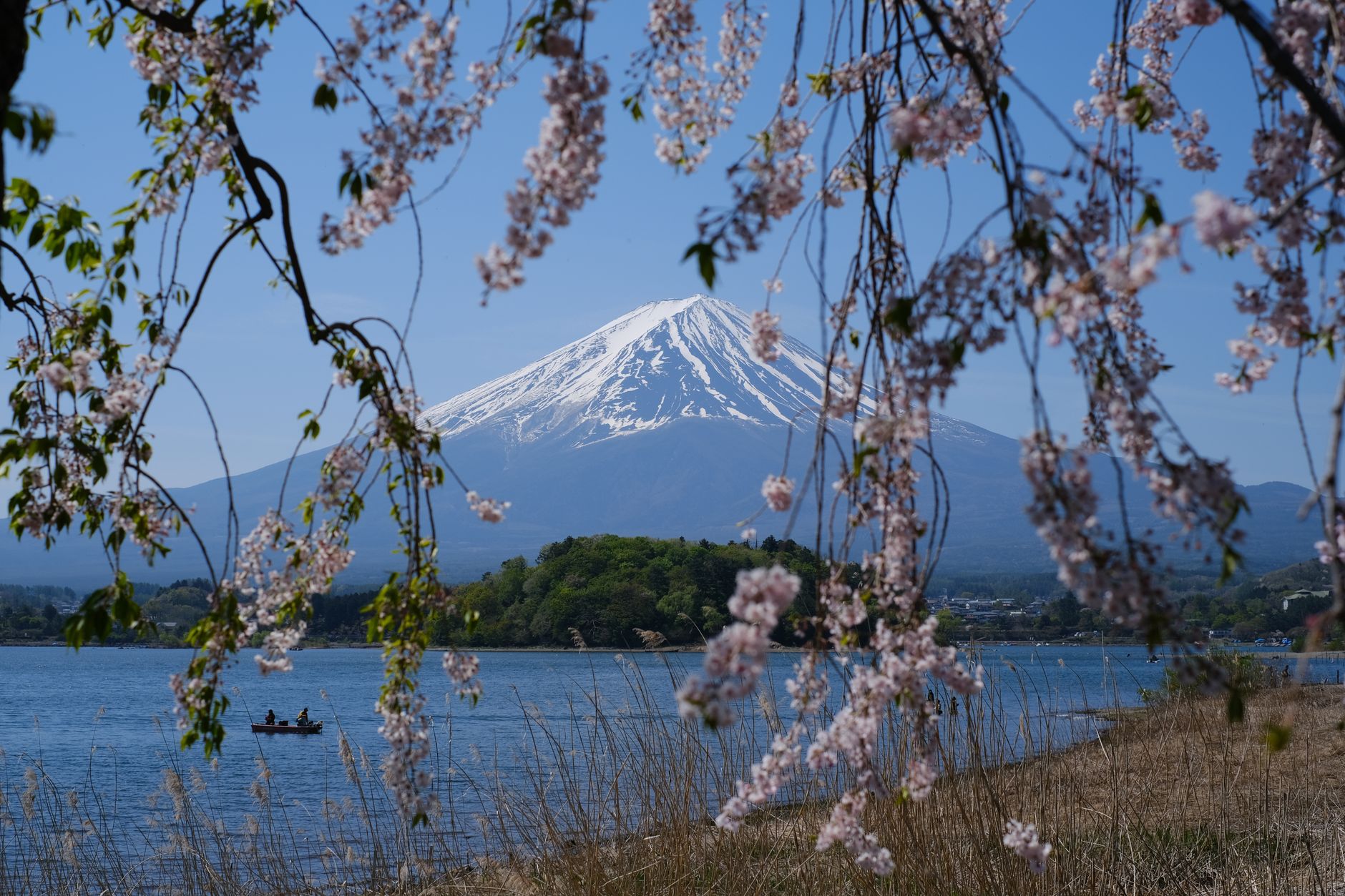
Japan sits along the Pacific Ring of Fire, where the Pacific, Philippine, and Eurasian tectonic plates converge. This produces the country's volcanic landscape — including Mount Fuji (3,776 m), Japan's tallest mountain — and its frequent seismic activity. Earthquakes occur daily, though most are imperceptible.
Approximately 73% of Japan's territory is mountainous and forested. Most agriculture and settlement is concentrated on the coastal plains, particularly the Kantō Plain around Tokyo and the Nōbi Plain around Nagoya. Major rivers including the Shinano (Japan's longest, at 367 km) and Tone shape the agricultural lowlands [Geospatial Information Authority of Japan].
Climate varies dramatically across the archipelago: Hokkaidō in the north experiences subarctic winters and is among the snowiest inhabited regions on Earth, while Okinawa in the south is subtropical and rarely sees snow. The rainy season (tsuyu) in early summer and typhoon season (August–October) affect most of the country annually [Japan Meteorological Agency].
§4
Politics

Japan is a constitutional monarchy with a parliamentary democracy, established under the 1947 Constitution. The Emperor (since 2019, Naruhito of the Reiwa era) serves as a ceremonial head of state with no political authority. Executive power rests with the Prime Minister, who leads the Cabinet and is selected by the National Diet.
The National Diet is bicameral, consisting of the House of Representatives (the lower house) and the House of Councillors (the upper house). General elections for the House of Representatives must be held at least every four years; House of Councillors elections occur every three years for half the chamber.
The Liberal Democratic Party (LDP) has dominated post-war politics, governing for all but four of the years since 1955 — one of the longest stretches of single-party dominance in any modern parliamentary democracy. Article 9 of the constitution renounces war as a sovereign right of the nation. Its interpretation has been politically contested for decades; the current consensus permits a Self-Defense Force for defensive purposes only [Cabinet Public Affairs Office of Japan].
§5
Economy & Industry

Japan has the world's third or fourth largest economy by nominal GDP, varying year to year with currency movements and growth rates [IMF, 2024]. The post-war economic recovery from 1945 to roughly 1990 — often called the "Japanese economic miracle" — transformed Japan from devastation into a global manufacturing leader, particularly in automotive, electronics, precision machinery, and shipbuilding.
Major globally influential corporations include Toyota and Honda (automobiles), Sony and Panasonic (consumer electronics), Nintendo (gaming), Hitachi (heavy industry), and SoftBank (telecommunications and investment).
The 1990 collapse of the Japanese asset price bubble — particularly in real estate and equities — led to the period economists call the "Lost Decades": roughly 1991 to the early 2010s, characterized by low growth, deflation, and stagnant wages [Hoshi and Kashyap, 2004]. Recovery has been gradual and uneven.
Contemporary challenges include the world's most rapidly aging society, a sub-replacement total fertility rate of 1.20 in 2023 [Ministry of Health, Labour and Welfare], and concerns about innovation in established industries. However, inbound tourism has emerged as a significant growth sector since the mid-2010s, with visitor numbers reaching record highs in 2024 [Japan National Tourism Organization].
§6
People & Languages
Japan's population of approximately 124 million is overwhelmingly Yamato Japanese (around 97.5%). Recognized minority populations include the Ainu, indigenous to Hokkaidō and historically also to Sakhalin and the Kurils; the Ryūkyūan people of Okinawa and the surrounding islands; and resident Korean (Zainichi) and Chinese communities established largely during the 20th century [Statistics Bureau of Japan].
The Ainu received official recognition as an indigenous people of Japan in 2008, formalized through legislation in 2019. Their distinct language and cultural traditions face significant revitalization challenges.
The Japanese language uses three writing systems concurrently: hiragana and katakana (phonetic syllabaries) and kanji (logographic characters adapted from Chinese). A standard education includes approximately 2,136 kanji designated for daily use (jōyō kanji), though writers and readers often know more.
Religious affiliation is syncretic: Shintō and Buddhist practices coexist in most everyday lives, with people often participating in both depending on context (e.g., Shintō shrine visits at New Year, Buddhist temple ceremonies for funerals). Only a small minority identify exclusively with one religion [NHK Broadcasting Culture Research Institute].
§7
Society
Japan combines exceptionally high life expectancy (84.7 years average, third highest globally [WHO, 2023]) with one of the lowest crime rates among developed nations. Public infrastructure — particularly rail transit — operates with internationally notable punctuality and capacity. The Shinkansen high-speed rail network, in operation since 1964, has carried billions of passengers without a fatal accident attributable to derailment or collision.
Educational attainment is high, but the system produces well-documented social pressures. The corporate shūshoku (job-hunting) cycle for university graduates, the historical norm of lifetime employment in major firms (now weakening), and intense educational competition for university entrance have shaped generations of Japanese professional life.
Recent decades have seen significant generational shifts. Marriage rates have declined; the share of single-person households has grown; and the 働き方改革 ("work-style reform") initiative launched in 2018 has attempted to address overwork (karōshi) through legal limits on overtime hours [Ministry of Health, Labour and Welfare].
§8
Culture
Japan's cultural traditions span ancient ritual practice — Shintō ceremonies, tea ceremony (sadō), flower arrangement (kadō), classical drama (noh, kabuki, bunraku) — and globally influential contemporary forms, including anime, manga, video games, J-pop, contemporary fashion, and architecture.
The annual festival calendar (matsuri) includes both regional events (such as the Gion Matsuri in Kyōto, dating to 869 CE) and nationwide observances such as O-bon (mid-summer ancestor honoring), Setsubun (the beginning of spring), and the New Year holidays. Many festivals have been continuously observed for centuries.
Japan's culinary tradition extends from kaiseki (formal multi-course meals associated with the tea ceremony) to widely popular forms including ramen, sushi, tempura, and the casual izakaya (Japanese pub) cuisine of small shared plates. Traditional Japanese cuisine (washoku) was inscribed on UNESCO's Intangible Cultural Heritage list in 2013.
The country's "soft power" cultural exports are economically substantial: anime alone generated approximately ¥3.35 trillion globally in 2023 [Association of Japanese Animations]. The combined output of Japanese games, music, anime, manga, and fashion represents one of the most influential cultural exports of any country relative to population.
Travel prep for Japan
A few practical items to sort before flying. Japan uses Type A plugs (same as the US, 100V), runs largely on cash in older establishments, and rewards travellers with offline-ready maps and phone payment ready before arrival.
Compact power bank
Tokyo days involve long walks and heavy phone use (offline maps, translation apps). A compact bank keeps you moving.
View optionsTravel-size toiletries kit
Japanese pharmacies are excellent but signage is mostly in Japanese. Bringing essentials simplifies the first day.
View optionsUniversal travel adapter
For travellers from outside North America. Japan uses Type A plugs at 100V — a universal adapter covers Japan along with other stops.
View optionsKlook — tours, tickets, and transfers across Asia
Strong coverage in Japan, Korea, Vietnam, Thailand, Hong Kong, Taiwan, and Singapore. Skip-the-line tickets, day tours, airport transfers, and pocket Wi-Fi. Often the cheapest reliable option for major attractions in Asian capitals.
Browse Klook tours & tickets →KKday — niche Japanese experiences
Stronger than Klook for off-beat Japan-specific bookings: tea ceremonies, kimono rental, ninja workshops, small-group food tours. Smaller catalog overall, but often the only place these are bookable in English.
Browse KKday experiences →For deeper preparation, see our practical Gently Yonder guides:
- eSIM Setup for International Travel — arrival-ready connectivity for Japan.
- Hotel Booking Sites Compared — Trip.com tends to be competitive for Japan specifically.
- Carry-On Packing for Airport Security — pack in the order security expects.
- Trip Checklist Generator — build a personalised checklist for your specific Japan trip.
Disclosure: Some links above are affiliate links. As an Amazon Associate, Gently Yonder may earn from qualifying purchases at no extra cost to you. Affiliate links appear only in this practical section, not within historical, political, or cultural content.
The Japan preparation library
Everything we have written about preparing for Japan, in the order a trip actually comes together — from picking dates to what goes in the bag.
Plan the trip
- Best time to visit Japan (2026) — a season-honest look at blossoms, foliage, heat, and crowds.
- Japan in 7 days — Tokyo, Kyoto, and Osaka tied together by the Shinkansen.
- Tokyo in 5 days — an unhurried first-timer's itinerary.
- Three slow days in Kyoto — Fushimi Inari at dawn to Arashiyama's bamboo.
- Osaka in 3 days — food, neighborhoods, and day-one energy.
- Osaka or Kyoto? — choosing your Kansai home base.
- Japan in autumn 2026 — foliage timing city by city.
- Kyoto in autumn 2026 — where the colors peak, and when.
- What to book before you fly — Ghibli, teamLab, and the tickets that genuinely sell out.
Tokyo
- Tokyo city guide — the layered introduction, with neighborhood guides.
- Asakusa — Sensoji and the Edo streets, read properly.
- Tokyo: the places worth your time — Senso-ji to teamLab.
- Where to stay in Tokyo — neighbourhoods compared for first-timers.
- Your first day in Tokyo — a calm arrival plan.
- Visit Japan Web — pre-register immigration and customs for a faster arrival.
- Narita & Haneda to central Tokyo — every route compared.
- Where to store luggage in Tokyo — lockers, cloakrooms, and apps.
Kyoto & Osaka
- Kyoto: the places worth your time — the essential city, without the rush.
- Gion — the geisha district beyond the postcard.
- Osaka: the places worth your time — the castle, Dotonbori, and Nara nearby.
- Osaka: a first-timer's guide — orientation before the street food.
- Where to stay in Kyoto — five areas and 14 hotels and ryokan, compared.
- Where to stay in Osaka — Namba or Umeda, and three other bases, with 10 hotels.
- Tokyo to Kyoto — Shinkansen, flight, and bus compared honestly.
Trains, passes & tickets
- Is the JR Pass worth it in 2026? — the arithmetic after the price rise.
- City sightseeing passes — when Tokyo, Osaka, and Kyoto passes pay off.
- Klook vs Viator vs GetYourGuide — which booking platform to use in Japan.
Money & insurance
- How much does a Japan trip cost? — a realistic 2026 budget.
- How much cash do you need? — where cards work and where they don't.
- Travel insurance for Japan — whether you actually need it.
Connectivity & packing
- Best eSIM for Japan (2026) — coverage, plans, and the pick for most trips.
- eSIM Finder — three questions, one recommendation (free tool).
- Pocket WiFi vs eSIM — solo vs group, cost, and battery.
- eSIM setup — the activation order that avoids the airport scramble.
- What to pack for Japan — season by season.
- Carry-on packing list, 10-day Japan trip — the capsule that fits the trains.
- Power adapter for Japan — Type A plugs and the 100V quirk.
Culture, gently
- What counts as rude in 12 cultures — Japan in comparative context.
- 14 untranslatable words — komorebi and company.
Where to go next on Gently Yonder
- Tokyo city guide — first-time visitor overview with neighborhood guides.
- Asakusa, Tokyo — a deep neighborhood guide showing how layered history reads on the ground.
- Vietnam country profile — same 8-section format applied to Southeast Asia.
- Australia country profile — same format applied to a very different country.
Sources & further reading
- Statistics Bureau of Japan. Population Estimates and Statistical Yearbook (2024 edition).
- United Nations Department of Economic and Social Affairs. World Urbanization Prospects: The 2024 Revision.
- Japan Meteorological Agency. Climate and seismic activity records.
- Geospatial Information Authority of Japan. Topographic and geographic survey data.
- Cabinet Public Affairs Office of Japan. Constitutional and governmental documentation.
- International Monetary Fund (IMF). World Economic Outlook Database (2024).
- Hoshi, T. and Kashyap, A. K. "Japan's Financial Crisis and Economic Stagnation." Journal of Economic Perspectives, vol. 18, no. 1, 2004.
- Ministry of Health, Labour and Welfare (Japan). Vital statistics, fertility rate data, and work-style reform documentation.
- World Health Organization (WHO). World Health Statistics (2023).
- NHK Broadcasting Culture Research Institute. Religious affiliation and cultural attitude surveys.
- Japan National Tourism Organization (JNTO). Visitor statistics (2024).
- Association of Japanese Animations (AJA). Anime Industry Report (2023 edition).
- UNESCO. Representative List of the Intangible Cultural Heritage of Humanity — entries on washoku (2013), kabuki (2008), noh (2008), and related.
- Henshall, K. A History of Japan: From Stone Age to Superpower. 3rd edition, Palgrave Macmillan, 2012.
- Gordon, A. A Modern History of Japan: From Tokugawa Times to the Present. 4th edition, Oxford University Press, 2019.