The small set of items you actually keep on you during a trip —
what to carry, what to skip, and how to split it between pockets and your personal item.
Travel EDC — everyday carry — is the small set of items you keep on you each day of a trip,
not the full bag of clothes back at the hotel. A simple, repeatable
travel EDC checklist reduces decisions in the morning and means fewer
"wait, did I bring…?" moments while you're out exploring.
No one pays to be recommended here, and we say when a free or cheaper option wins. Our promise →
EDC stands for everyday carry. For travel it usually means:
Pocket layer: phone, slim wallet, hotel key card, a little cash.
Sling / day bag layer: power bank, short cable, water bottle, hand sanitizer, sunglasses, layer for cold cabins.
Travel-day layer: passport, boarding pass, eSIM screenshots, headphones, snacks for the flight.
The travel-day layer is bigger than your normal EDC and usually lives in your personal item.
Daily EDC can be much lighter once you're settled at the destination.
Full-size wallets and cardholders — slow you down and tempt overpacking cards you do not need abroad.
Heavy multi-tools — most are not allowed in carry-on liquids zones and rarely earn their weight on city trips.
More than one big battery — one well-chosen power bank is lighter than two cheap ones.
Anything irreplaceable — leave family heirlooms, expensive watches, or sentimental items at home if possible.
The travel EDC kit, item by item
The right items make the difference between an EDC pouch you check obsessively
and one you trust. Below are the items we recommend, with the specs that matter
and how to choose between them.
Slim travel sling or daypack
A dedicated personal item that is the right size for under-seat storage
and has internal organisation. NOMATIC's travel-focused slings and packs
are the most carefully thought-out in the category, with dedicated tech
pockets, RFID-blocking compartments, and luggage pass-through straps.
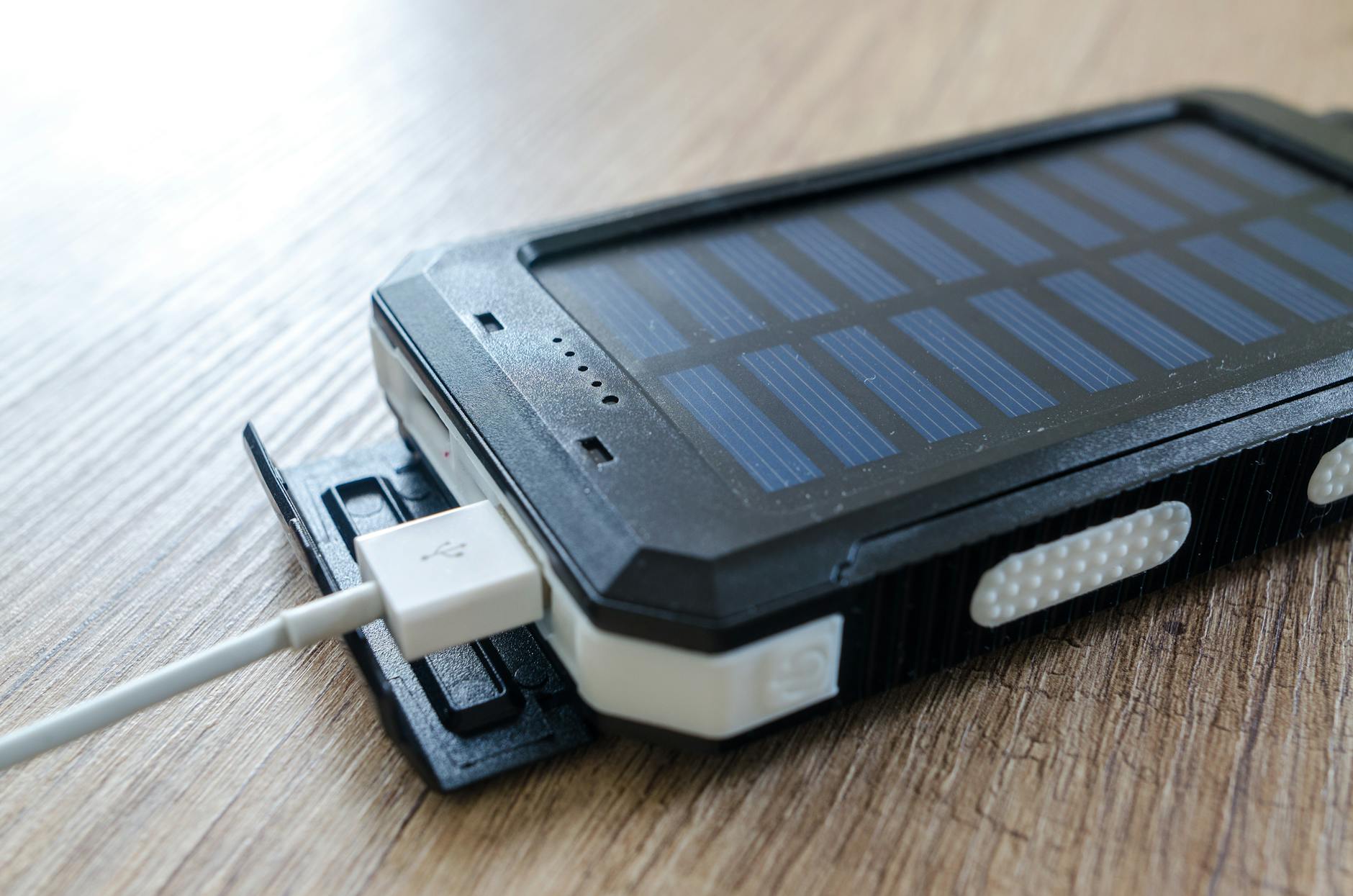
Look for at least 18W Power Delivery (PD) output to fast-charge an iPhone or
most Android phones. 20,000mAh is the largest capacity the TSA permits in
carry-on. Bring it in your personal item, not your checked bag.
Choose a model with at least 2 USB-C PD ports and 1 USB-A, plus the AC pass-through.
This replaces 3 chargers and a separate adapter — the single most useful purchase
for international travel under $40.
Braided nylon outlives plastic-jacketed cables 5–10x. A 1m length is the
sweet spot for travel — long enough to use in bed at a hotel, short enough
to coil into a tech pouch. Keep a second one in your luggage.
For US-bound travellers, USIMS offers competitive prepaid US eSIM plans —
no physical SIM swap, activated by QR code before you fly. Useful for short
trips where you want full data without a roaming bill.
Modern passports and contactless cards have chips that can in theory be
read remotely. The actual risk is low, but an RFID-blocking wallet costs
very little to mitigate it entirely.
Compression cubes reduce volume by roughly 30%, making carry-on-only travel
realistic. Pick a 3-piece set with one each of small / medium / large, in
colours you can tell apart at a glance.
One tracker inside checked luggage means you always know where your bag
actually is — useful when an airline tells you "it's on the way" and you
can see it is still in Frankfurt. Pair to your phone before you fly.
Travel EDC stands for travel everyday carry — the small, repeatable set of items you keep on your person each day of a trip, separate from your main luggage. Typical items include a power bank, water bottle, hand sanitizer, small cash, and a basic personal-item pouch. The point is to have what you need for the day without carrying everything you packed.
What does EDC mean in travel?
Travel EDC means everyday carry — the small set of items you keep on you and in your personal item during a trip. Phone essentials, a small power bank, water, document access, and a little local cash.
What should be in a travel EDC for one day out?
A small daypack or sling with: a charged phone, a slim power bank with short cable, a refillable water bottle, hand sanitizer, a few small local bills, a card backup, and your hotel address saved offline.
How big should a power bank be for travel?
For most travelers, a 10,000 mAh power bank is a good balance — enough for two to three full phone charges, and small enough to fit in a pocket or personal item.
Should I carry cash when traveling abroad?
Even when cards work, a small amount of local cash helps with transit, tips, small shops, and emergencies. Keep cards as the main payment and cash as a backup, split between two places if possible.
What is the difference between travel EDC and a packing list?
A packing list covers everything you bring on the trip. A travel EDC is the small subset you carry on you each day — pockets, sling, or personal item.
Gently Yonder tip:
Run through this checklist the day before you leave, not the morning of your flight.
A repeatable EDC means you can stop re-deciding what to carry each morning.
Bottom line
A good travel EDC is small, repeatable, and boring — which is exactly why it works.
Power, water, cleanliness, and a little cash. Build the layered system once and reuse it every trip.
The Weekly Travel Prep Brief
Liked this guide? Get one like it, every week.
Short, practical travel-prep emails. eSIM tips, packing reminders, airline rule updates.
No spam, no influencer fluff. Subscribe and the printable Pre-Flight Checklist arrives as your welcome.
Free. The welcome checklist arrives instantly. Unsubscribe in one click, anytime.
Sources & further reading
International Civil Aviation Organization (ICAO). Annual Civil Aviation Report — global passenger volume and travel-pattern data.
US Bureau of Labor Statistics. American Time Use Survey — annual data on travel time and patterns.
Cohen, S. A. and Kantenbacher, J. "Holidays as panacea for stress: A critical reflection." Annals of Tourism Research, vol. 80, 2020.
World Health Organization (WHO). International Travel and Health — annual reference for traveler health preparation.
US Centers for Disease Control and Prevention (CDC). Yellow Book — Health Information for International Travel (current edition).
Transportation Security Administration (TSA). "What Can I Bring?" — for carry-on item eligibility.
FAA. Guidance on lithium battery transport (FAR 175.10) — applicable to power banks.