
No one pays to be recommended here, and we say when a free or cheaper option wins. Our promise →
In this guide8 sections
Pack breakables in the middle of the case with soft layers on every side, put every liquid in a sealed bag, and check three sets of rules before the bottle goes in: the airline’s alcohol limits, the connection rules for anything bought duty free, and your arrival country’s customs allowance. Wrapping is the part you control. Rules are the part that catches people out, because a bottle can be fine to fly and still be taxable at the border, or fine in your bag until a connection where it must be screened again.
This guide covers how to wrap and place ceramics, glass, wine, spirits, sauces and cosmetics; what the US and UK rules allow in checked luggage by alcoholic strength; how duty-free liquids behave on connections; what customs allowances look like, using US Customs and Border Protection (CBP) and the UK government as examples; and when posting or shipping is the better option. We have not tested any wrapping product; the method below is standard practice, and the rules come from the official pages listed at the end.

The short answer
| If you… | Do this | Why |
|---|---|---|
| Pack ceramics or glass | Wrap each piece alone, fill hollow pieces with soft items, and place them in the centre of the case with clothes on every side | Items against the shell take the impact; airlines may not cover breakage of fragile items |
| Pack a bottle of wine or spirits | Wrap it, seal it in a bag, and keep it away from the edges and wheels | A leak can ruin clothes, and some airlines will not pay for it |
| Carry strong spirits | Keep within 5 L per person for drinks over 24% and up to 70% alcohol by volume (ABV), in unopened retail packaging | US and UK rules both set this limit for checked bags; stronger drinks are outside the exemption |
| Buy liquids at an airport and connect | Keep them sealed in the shop’s security bag with the receipt visible, and ask staff about your connecting airport | Rules differ by airport and country, and screening may be repeated |
| Return with several bottles | Compare the count with your customs allowance before you buy | US duty-free alcohol is generally 1 litre per adult; the UK allows 4 litres of spirits and 18 litres of wine |
| Have heavy, valuable or irreplaceable pieces | Ship them, or take them in the cabin if size and liquids rules allow | Airline liability for fragile items is limited, and the US postal service treats alcohol as nonmailable |
Wrap and place: a method that works for most breakables
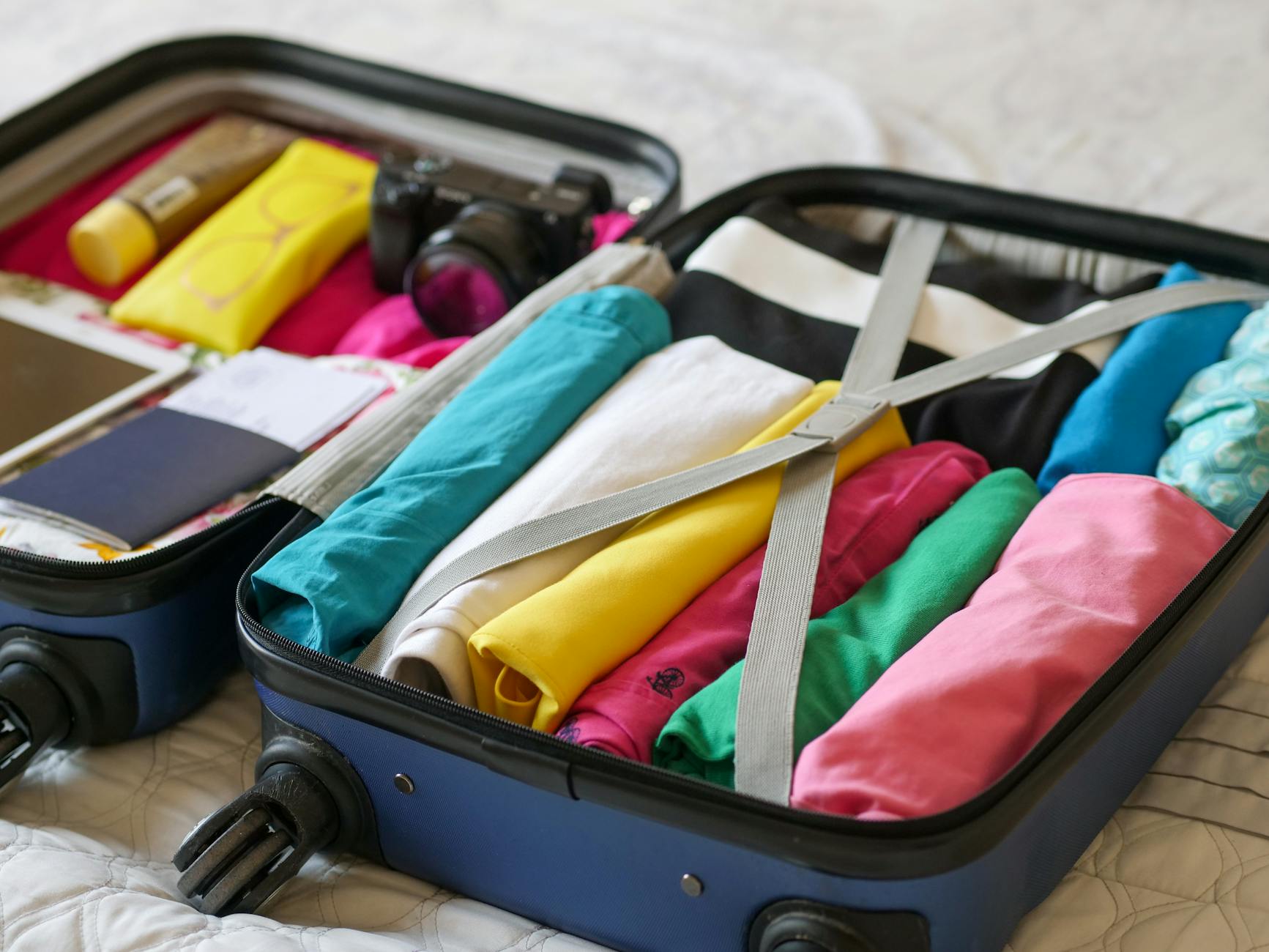
A fragile object should never touch the shell, a zip, another hard object, or the floor of the bag. These steps are our guidance, not an official standard.
- Choose the right bag. A hard-shell or firmly structured case resists crushing better than a soft duffel. Whatever you use, pack it full, because empty space lets contents shift.
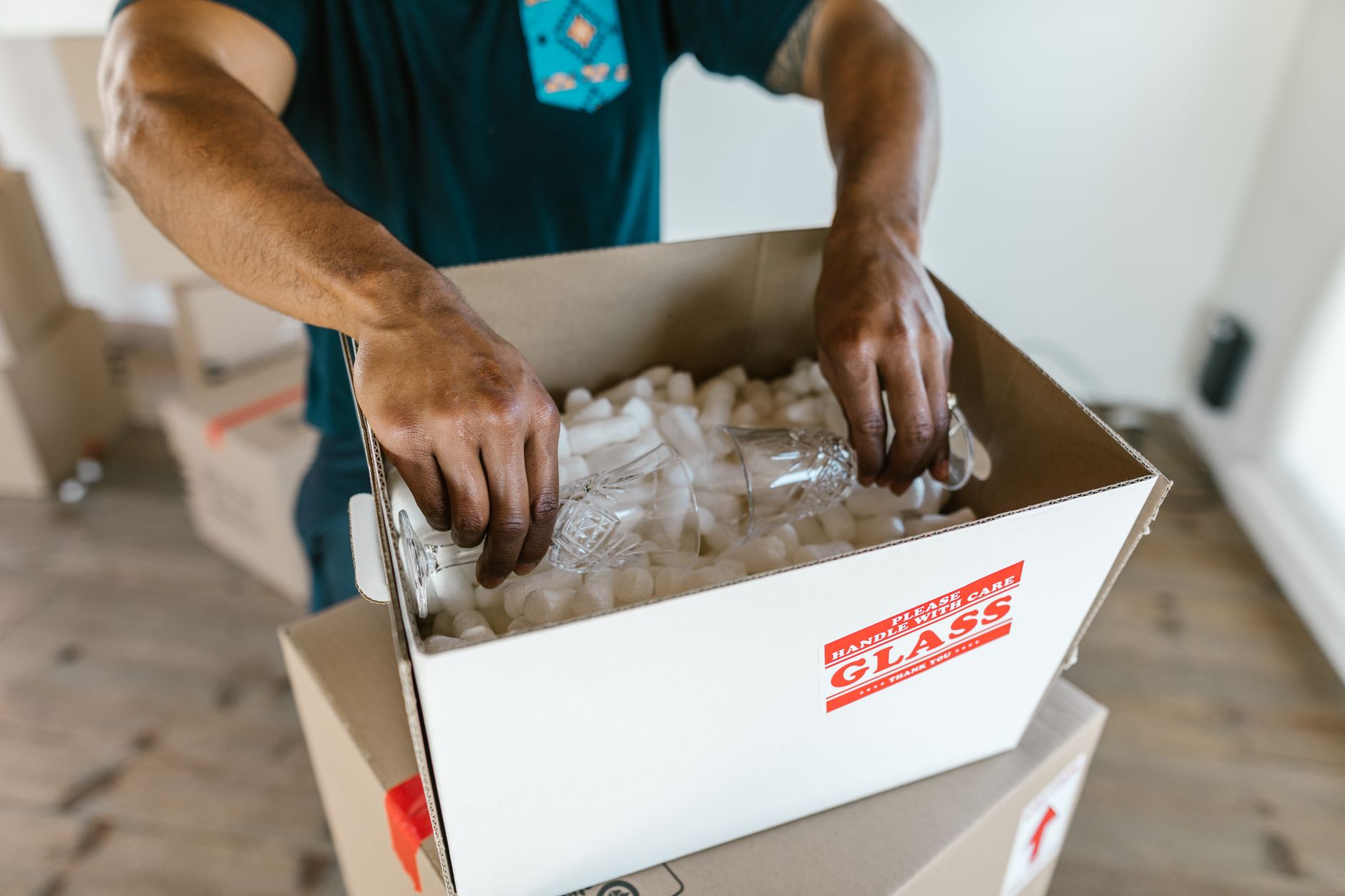
- Wrap each piece alone. Use bubble wrap, a few layers of paper or a soft garment around each item, and tape it so it cannot unwrap. Stacked plates or bowls should be wrapped separately, not as a stack.
- Fill hollow items. Stuff cups, bowls and vases with socks or tissue. A hollow rim is the weak point.
- Stand plates on edge. A plate packed on its side tolerates pressure better than one laid flat under a load, as long as it is padded all round.
- Pack in the middle. Put the wrapped item in the centre of the case, with at least a layer of soft clothing between it and every wall. Avoid the wheel end and the handle end, where bags are dropped and dragged.
- Keep hard things apart. Do not let a bottle touch a ceramic piece, or a shoe sit against glass.
- Photograph the packed item and keep the receipt. If you claim, you will need to prove what the item was and what it cost.

Bottles and other liquids
- Seal every bottle in its own bag. A zip bag or a purpose-made wine bottle protector keeps a leak off your clothes. Use a second bag for anything oily or sticky such as sauces, oils, honey and jam.
- Check the closure. Tape or film over screw caps, corks and pump tops, and unscrew-test any cosmetic bottle before you pack it. Squeeze air out of tubes and soft bottles, because pressure changes can push the contents out.
- Stand bottles upright if you can, wrapped in a thick layer of clothing, and keep them away from the case’s outer edge.
- Group toiletries. A hanging toiletry bag keeps cosmetics together, and packing cubes help build the soft layers around them.
- Mind the totals. For the US, TSA says that checked bags may hold no more than 70 oz (2 kg) or 68 fl oz (2 L) of medicinal and toiletry articles, including aerosols, per person, and no single container above 18 oz (0.5 kg) or 17 fl oz (500 ml). That covers cosmetics, sun cream and similar items, not drinks or food sauces. Aerosol nozzles must be capped or covered.
What happens if it breaks
The UK Civil Aviation Authority (CAA) says that when hold luggage is lost, delayed or damaged the airline is liable, but there are no rules that fix the compensation amount, and the maximum is around £1,000 (rarely paid in full). Damage should be reported at the airport on arrival, ideally getting a Property Irregularity Report, and followed by a written claim to the airline within seven days. Airlines also do not pay “new for old”. British Airways’ own baggage page says the airline does not accept liability for fragile, valuable or perishable articles or for baggage packed in unsuitable containers. Read your own airline’s terms before you check anything fragile. The CAA suggests a claim on travel insurance may be better, noting an excess of around £40 is typical. In the US, TSA says it handles claims for property damaged during screening, and that you should contact your airline for lost or missing baggage. Our lost luggage recovery guide covers the first steps in more detail.
So wrap well, keep proof of value, and do not check anything you could not afford to replace.
What you can carry: alcohol by strength
Alcohol is regulated by strength (alcohol by volume, ABV) rather than by type, so look at the number on the label.
| Strength | United States | United Kingdom |
|---|---|---|
| Up to 24% ABV (most beer and wine) | No limit under the federal rule; TSA says no limits apply in checked bags | Not restricted, according to the CAA |
| More than 24% up to 70% ABV (most spirits and liqueurs) | 5 L per passenger in unopened retail packaging (FAA and 49 CFR 175.10) | Retail packaging and no more than 5 L total net quantity per person (CAA) |
| Over 70% ABV (some overproof spirits) | Not covered by the exemption in 49 CFR 175.10(a)(4); the FAA lists it as a separate category. Treat it as not allowed unless your airline confirms otherwise | Not covered by the exemption in the CAA table; treat it as not allowed unless your airline confirms otherwise |
Notes:
- Carry-on is different. TSA says alcohol in carry-on bags must be in containers of 3.4 oz (100 ml) or less, which means miniatures only. Full bottles go in the hold, or into the cabin only as sealed duty-free purchases (see below).
- Retail packaging means unopened. An opened bottle, or a drink decanted into another container, may not be accepted.
- Airlines can be stricter. The CAA says passengers must contact their airline in advance for clarification, and that some items require airline approval. Check your carrier’s dangerous goods page before you buy anything above 70% ABV or a large quantity.
- Liquid foods and sauces. The UK government’s liquids page counts soup, jam, honey and syrups as liquids and advises packing as much liquid as possible in the hold. In the hold, what matters is your destination’s customs and food rules.
Our airport liquids guide covers the carry-on limits in more detail.
Duty-free liquids and the STEB rule on connections
A security tamper-evident bag (STEB) is the sealed, transparent bag a shop puts liquids in at the till. It lets liquids over 100ml through security if the seal is intact and the receipt is visible. The catch is that every country’s rules apply at the airport where you go through security, so a connection can undo what a shop did.
UK. The UK government says you can take liquids bought at an airport or on a plane (such as duty free) through security if the items are sealed inside a security bag when you buy them and the receipt for the items is sealed in the bag and visible. You must not open the bag until you reach your final destination, and staff may need to open the items to screen the liquid at the security point.
United States. For inbound international flights with a connection, TSA allows duty-free liquids over 3.4 oz (100 ml) in the carry-on if all three conditions hold: the liquids were purchased internationally and you are travelling to the United States on a connecting flight; they are packed in a transparent, secure, tamper-evident bag by the retailer with no signs of tampering; and the original receipt is present and the purchase was made within 48 hours. The contents must still be screened and cleared, and TSA recommends packing liquids over 3.4 oz in checked baggage even when they are in a STEB.
European Union. The European Commission says duty-free liquids must be in a STEB with proof of purchase from that airport on that day for EU airports and carriers, and with proof of purchase within the preceding 36 hours for certain airports in Croatia, Malaysia, Singapore and international airports in Canada and the US.
What this means for you:
- Check the connection before you buy. If a duty-free bottle must change planes, look up the transfer rules for that airport, or ask the shop and the airline.
- Do not open the bag, and keep the receipt. A torn bag or a missing receipt can mean the bottle is confiscated.
- A STEB is for the cabin, not a checked-bag shortcut. A bottle bought after you have checked in cannot join your hold bag. If you are not sure it will pass a connection, buy it at your final airport or ask the retailer about delivery.
Customs allowances: US and UK examples
Packing legally is one thing; arriving with a bag that is within your customs allowance is another. Allowances depend on the country you arrive in, not where you bought the goods, so a duty-free shop receipt does not guarantee that the bottle is tax-free at home. CBP says articles sold in a customs duty-free shop are free only for the country where that shop is located, and become dutiable on entering another country if they exceed your personal exemption.
| United States (CBP) | United Kingdom (GOV.UK, arriving in Great Britain) | |
|---|---|---|
| Alcohol | One American litre (33.8 fl. oz.) in the returning-resident exemption if you are at least 21, it is for personal use and it does not violate the law of the state where you arrive. State limits may be stricter | 4 litres of spirits and other drinks over 22% ABV; 18 litres of wine (still or sparkling); 42 litres of beer and cider; 9 litres of drinks up to 22% ABV (not beer, cider or wine), such as fortified wine |
| Other goods | $800 duty-free exemption for most arrivals (the $200 exemption applies if you were out of the country under 48 hours or more than once in 30 days) | Up to £390 (£270 by private plane or boat) |
| Over the limit | Duty and tax apply to what exceeds the exemption (or the whole amount, if you are on the $200 exemption); CBP can treat unusual quantities as commercial | You must declare and pay tax and duty on all goods in that category, not just the excess |
Two worked examples (our arithmetic):
- Six 750ml bottles of wine to the US. That is 4.5 litres, well over the 1 litre duty-free allowance. CBP says states may allow more than one litre, but you would pay any applicable duty and tax; check the destination state’s own rules.
- Six 750ml bottles of wine to Great Britain. That is 4.5 litres, inside the 18-litre wine allowance, so no excise duty would apply on that count, though the £390 limit still applies to other goods you carry.
Allowances apply to your own use or gifts, and you cannot pool them with another person’s (the UK says so explicitly). Ceramics and cosmetics count towards the value limit, so keep receipts. Both countries ask you to declare goods that exceed an allowance.
When to ship instead
Shipping is worth the cost when the risk or the rules make checking the item a bad bet.
- It is heavy. A few ceramics can use most of a weight allowance. Weigh the packed bag at home with a digital luggage scale and compare the shipping quote with the excess-baggage fee. See our luggage weight guide.
- It is irreplaceable or expensive. Airline liability is limited, and some airlines exclude fragile items, as the British Airways page above shows. Ask the shop whether it ships; many specialist ceramics and wine shops do and pack for transit.
- It is more than 5 litres of spirits, or stronger than 70%. Neither belongs in a suitcase.
- It is wine or spirits and you plan to post it yourself. USPS Publication 52 says that intoxicating liquors and taxable liquors are nonmailable, and defines intoxicating liquors as beverages with 0.5 per cent or more alcohol by weight. If you want a bottle sent home, ask the seller whether it ships alcohol through a carrier that is permitted to carry it; the arrival country’s import rules and duties still apply. Do not hide alcohol in a parcel.
- You are connecting through an airport with strict liquid transfer rules. If a bottle cannot be carried through the connection, shipping avoids the problem.
Whichever way you send it, insure the shipment, get tracking, and keep your packing photos.
Before you go
- Check your airline’s baggage and dangerous goods pages for alcohol and fragile items, and for the weight allowance.
- Look up the customs allowance for your arrival country, and the state or regional rules inside it.
- If you will buy duty free, check the rules at every connecting airport, and ask the shop to confirm the STEB will be accepted there.
- Pack a day’s essentials in the cabin, in case a bag is delayed. Our carry-on packing list for Japan shows how to split a bag.
- Add a tracker to your bag and take insurance seriously: see the best travel insurance for 2026. A travel eSIM helps you reach the airline’s baggage desk and your insurer from the airport.
Frequently asked questions
How do you pack ceramics and glass in a suitcase?
Wrap each piece separately in bubble wrap or soft clothing, fill hollow items with socks, and place them in the centre of the case with soft layers on every side so nothing touches the shell, a zip or another hard object. Avoid the wheel and handle ends and keep the case firmly packed. This is general practice rather than an official standard, and airlines such as British Airways say they do not accept liability for fragile articles, so keep proof of value and consider shipping irreplaceable pieces.
How much alcohol can you put in checked luggage?
In the US and UK, drinks of up to 24% alcohol by volume have no limit under the aviation rules. Drinks above 24% and up to 70% are limited to 5 litres per person in unopened retail packaging. Drinks above 70% are outside the exemption, so treat them as not allowed unless your airline confirms otherwise. Airlines can be stricter, and your arrival country's customs allowance is a separate limit.
Can I take duty-free liquids through a connecting airport?
Sometimes. The UK says duty-free liquids must be sealed in the shop's security bag with the receipt visible and not opened until your final destination. For flights connecting into the US, TSA requires a retailer-sealed tamper-evident bag, an intact seal and a receipt from within 48 hours, and still recommends packing such liquids in checked baggage. EU rules require proof of purchase from the same day, or 36 hours for certain third-country airports. Check the rules at each connection.
How much alcohol can I bring home duty-free?
It depends on where you arrive. US CBP allows one American litre of alcohol in the returning-resident exemption if you are at least 21, it is for personal use and it does not breach state law. Arriving in Great Britain, the UK allows 4 litres of spirits and drinks over 22% ABV, 18 litres of wine, 42 litres of beer and cider, and 9 litres of drinks up to 22% such as fortified wine. Going over an allowance means tax and duty.
What are the rules for liquids like sauces and cosmetics in checked bags?
Security limits on liquids apply to cabin bags, so larger bottles go in the hold. For the US, TSA says checked bags may hold up to 2 litres (70 oz) in total of medicinal and toiletry articles per person, with no single container above 500 ml (18 oz). The UK government counts liquid foods such as jam, honey and syrups as liquids and advises packing them in hold baggage. Seal each container in a bag and check your destination's food and customs rules.
When is it better to ship souvenirs than check them?
Ship items that are heavy, valuable or irreplaceable, because airline liability for fragile items is limited. Alcohol cannot be mailed through USPS, which treats intoxicating liquors as nonmailable, so ask the seller about a carrier that ships alcohol legally and check the arrival country's import rules. Insure the parcel, keep tracking and photograph the packing.
Sources & further reading
- TSA: Alcoholic beverages
- TSA: Liquids, aerosols and gels rule (including inbound duty-free liquids)
- TSA: Sunscreen (checked-bag limits for toiletry articles)
- TSA: Claims
- FAA PackSafe: Alcoholic beverages
- 49 CFR 175.10 (Cornell LII)
- UK CAA: What items can I travel with and which are restricted
- UK CAA: Lost, delayed or damaged baggage
- GOV.UK: Hand luggage restrictions, liquids
- GOV.UK: Bringing goods into the UK for personal use, arriving in Great Britain
- European Commission: Liquids, aerosols and gels
- US CBP: Customs duty information
- US CBP: Types of exemptions
- USPS Publication 52, section 424: Nonmailable intoxicating liquors
- British Airways: Delayed, lost and damaged baggage
Rules change; check the official source for your airline, airport and arrival country before you travel.
Keep reading on Gently Yonder
- When to Activate a Travel eSIM Install early, activate on arrival — when the validity clock starts, and how to switch it on when you land.
- eSIM vs Physical SIM Card for Travel Which to buy — activation timing, cost, coverage, keeping your home number, and when a local SIM still wins.
- Best eSIM for Japan (2026) How to choose a Japan travel eSIM — coverage, data plans, and the pick for most trips.
- Airalo vs Holafly vs Saily The three big travel eSIM providers compared — coverage, pricing, and who each suits.
- Best eSIM for Japan, Korea & Vietnam Destination-by-destination eSIM picks for three popular Asian countries.
- Pocket WiFi vs eSIM Which connectivity option wins — solo vs group, cost, battery, and setup compared.
- Japan Country Profile Eight-section country deep-dive: history, geography, society, and travel prep.