No one pays to be recommended here, and we say when a free or cheaper option wins. Our promise →
In this guide9 sections
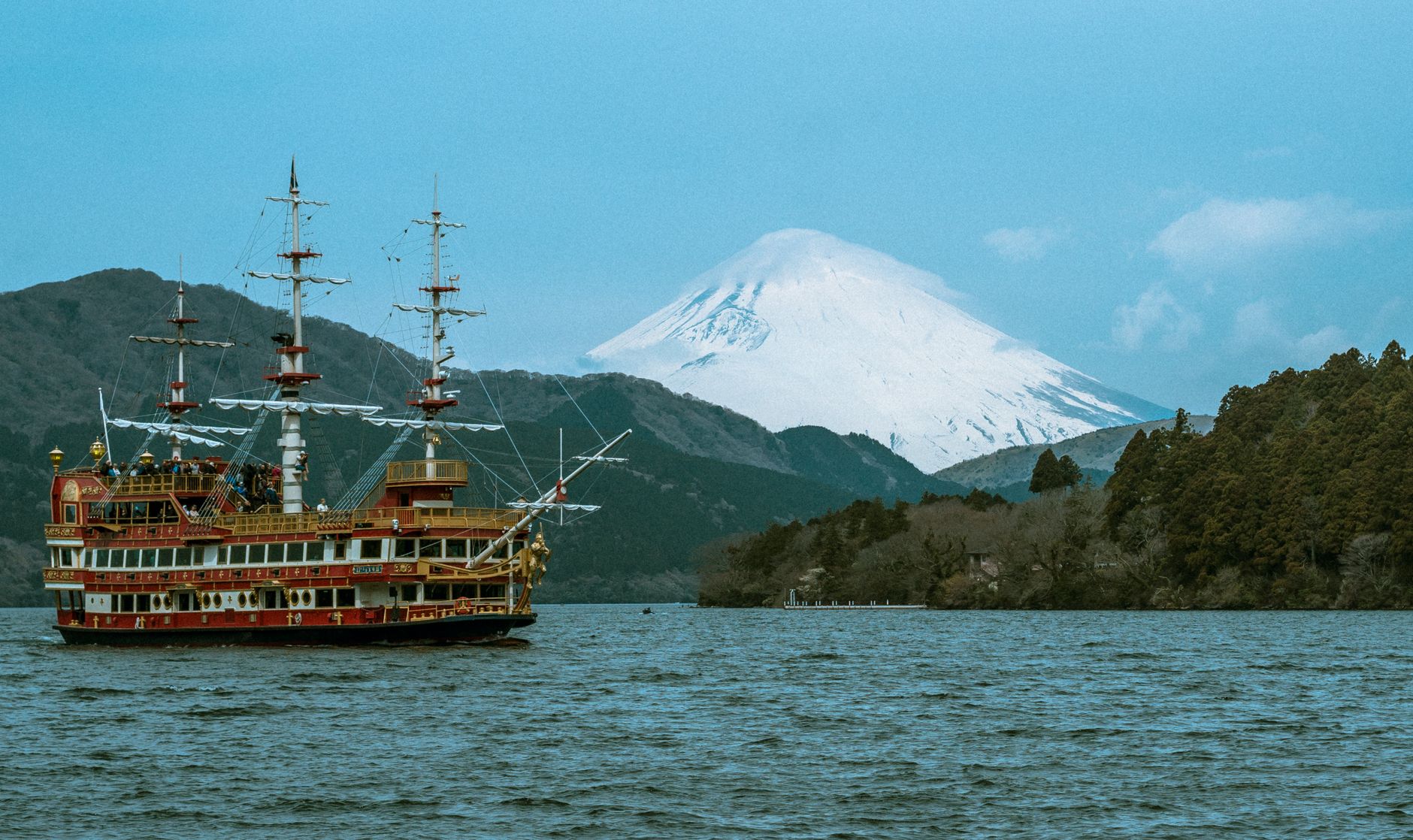
Hakone is not one town but a ring of hot-spring villages on the slopes of an old volcano, joined by a mountain railway, a cable car, a ropeway and the boats on Lake Ashi. Where you sleep decides which of those you ride, and how much of a short stay goes on riding them.
This guide compares the five areas worth knowing, then names twelve places to stay across them, with the reason to pick each and, where there is one, the catch. They are researched picks, chosen for location, what each property publishes and consistent guest feedback, and each was checked as operating in September 2026. No ryokan or hotel pays to appear here. If Hakone is one stop on a longer trip, where to stay in Japan on a first trip covers how it fits between Tokyo and Kyoto.
The short answer
| If you… | Stay in | Why |
|---|---|---|
| have one night and want the easiest trip | Hakone-Yumoto | The Romancecar from Shinjuku ends here, about 80 minutes out, so there is no change of train with your bags |
| want old Hakone and a view of the gorge | Miyanoshita | The Fujiya Hotel, open since 1878, and ryokan above the Hayakawa valley |
| want to ride the whole loop | Gora | Where the mountain railway meets the cable car up towards Owakudani and the lake |
| want quiet, museums and the autumn grass | Sengokuhara | A highland of museums and pampas grass, by bus from Yumoto or straight from Shinjuku |
| want the lake, and Mount Fuji on a clear day | Lake Ashi | Hotels on the water near the pirate-ship piers |
Two things to know first. Hakone charges the standard bathing tax of ¥150 per person per night on hot-spring stays, usually added at check-out. And the question that decides most ryokan choices here is the bath: a room with its own open-air bath means a private soak whenever you like, and it also sidesteps the rules some shared baths still have on visible tattoos. The table at the end shows which of our picks have one.
Hakone-Yumoto: the gateway
Hakone-Yumoto is where the Odakyu Romancecar from Shinjuku stops, in about 80 minutes, and where the Hakone Tozan mountain railway begins. For a single night it is the easiest base in Hakone: you step off the train and walk to your hotel, with the restaurants and shops of the main street along the river. The trade-off is height. Yumoto is at the bottom of the mountain, about 40 minutes by train from Gora and further from the lake, and its autumn colour comes last, from mid to late November.
It is also where the luggage service starts. Leave a bag at the Hakone Luggage Transport Service counter inside Hakone-Yumoto Station by noon (book online by 11:30) and collect it at your hotel from 15:00, for ¥1,500 a piece, or ¥2,500 for a large case. It works in reverse too: hand the bag to your hotel’s front desk by 10:00 and pick it up at the station between 13:30 and 18:30.
Where to stay in Hakone-Yumoto
How the hotel links work: a hotel’s name goes to its own website. “Check rates” opens it on Booking.com through our partner Stay22, which pays us a commission if you book, at no extra cost to you.
- Yumoto Fujiya Hotel, comfortable. About three minutes’ walk from Hakone-Yumoto Station, with an open-air bath, large shared baths, family baths you can book for private use, and some twin rooms with their own hot-spring baths. Choose it for a one-night stay with no bags to drag. Watch out: you are at the bottom of the mountain, so the loop starts with a 40-minute train ride. Check rates on Booking.com →
Miyanoshita: old Hakone and the gorge
Miyanoshita is a small hot-spring village about 25 minutes up the mountain railway from Yumoto, built around the Fujiya Hotel; the Kowakien area, a short bus ride further up, has some of Hakone’s large resorts. The valley of the Hayakawa river drops away below, which is what the rooms here are built to look at. Autumn colour peaks from early to mid November.
Where to stay in Miyanoshita and Kowakien
- Fujiya Hotel, splurge. It opened on 15 July 1878 as Japan’s first full-scale resort hotel and reopened on 15 July 2020 after a two-year renovation; its rooms are spread across buildings from 1891 to 1960, much of the hotel is a Registered Tangible Cultural Property, and the room baths now draw Miyanoshita’s hot-spring water. It is a seven-minute walk from Miyanoshita Station. Choose it for history you can sleep in. Watch out: it is a Western-style hotel; for tatami and a kaiseki dinner, look below. Check rates on Booking.com →
- Hakone Ginyu, splurge. Twenty rooms, each with its own open-air bath looking over the Hayakawa valley, three minutes’ walk from Miyanoshita Station. Choose it for a private soak with the gorge below you. Watch out: book it through its own website.
- Hakone Kowakien Ten-yu, comfortable to splurge. Open since 2017 in the Kowakien area, near the Yunessun spa park. All 150 rooms have a private open-air hot-spring bath, and there are two large shared baths, one an infinity bath facing the mountains of the caldera rim. Choose it for a private bath on a resort scale. Watch out: with 150 rooms it is a large resort, not an intimate inn. Check rates on Booking.com →
Gora: the hub of the loop

Gora is where the Hakone Tozan railway ends, about 40 minutes from Yumoto after three switchbacks on the climb, and where the cable car starts up to Sounzan. From there the ropeway crosses the steaming valley of Owakudani to Togendai on Lake Ashi, so a night in Gora puts the whole classic loop on your doorstep. Autumn colour peaks here from early to mid November.
Where to stay in Gora
- Gora Kadan, splurge. A ryokan since 1952 on the grounds of the former summer villa of the Kan’in-no-miya imperial family, a member of Relais & Châteaux, and a few minutes’ walk from Gora Station. Some rooms have their own hot-spring baths with a view. Choose it for a classic luxury ryokan. Watch out: it is priced accordingly. Check rates on Booking.com →
- Hyatt Regency Hakone Resort and Spa, splurge. Eighty rooms of 56 to 93 m², each with a terrace or balcony, and dog-friendly rooms. Choose it for space and a Western hotel with a hot-spring spa. Watch out: the hot springs are in the shared spa, not in the rooms. Check rates on Booking.com →
- Hotel Indigo Hakone Gora, comfortable. Japan’s first Hotel Indigo, opened in 2020, with 100 rooms, each with a private hot-spring bath on the balcony above the river. Choose it for a private onsen at a hotel’s price and pace. Check rates on Booking.com →
- Hakone Tent, budget. A hostel and bar in a renovated old ryokan, two minutes’ walk from Gora Station, with hot-spring baths fed from Owakudani and a shared kitchen. Choose it for a real onsen on a budget. Watch out: the baths and facilities are shared. Check rates on Booking.com →
Sengokuhara: highland quiet
Sengokuhara is a high plateau to the north of the lake, reached by Hakone Tozan bus from Yumoto in about 30 minutes, or directly from Busta Shinjuku on the Odakyu highway bus in a little over two hours. It is the quiet side of Hakone, with museums such as the Pola Museum of Art, and a hillside of pampas grass that turns silver and then gold from late September to early November. The trees here colour first, from late October to mid November.
Where to stay in Sengokuhara
- Kinnotake Sengokuhara, splurge. Nine rooms of at least 50 m², each with a private open-air bath of milky spring water from Owakudani. Adults only. Choose it for a quiet stay for two. Check rates on Booking.com →
- Fuji-Hakone Guest House, good value. A family-run inn open since 1984, with tatami rooms and hot-spring baths from Owakudani that you can book for private use. Choose it for a warm, ryokan-style welcome at a guesthouse price. Check rates on Booking.com →
Lake Ashi: the water and the mountain
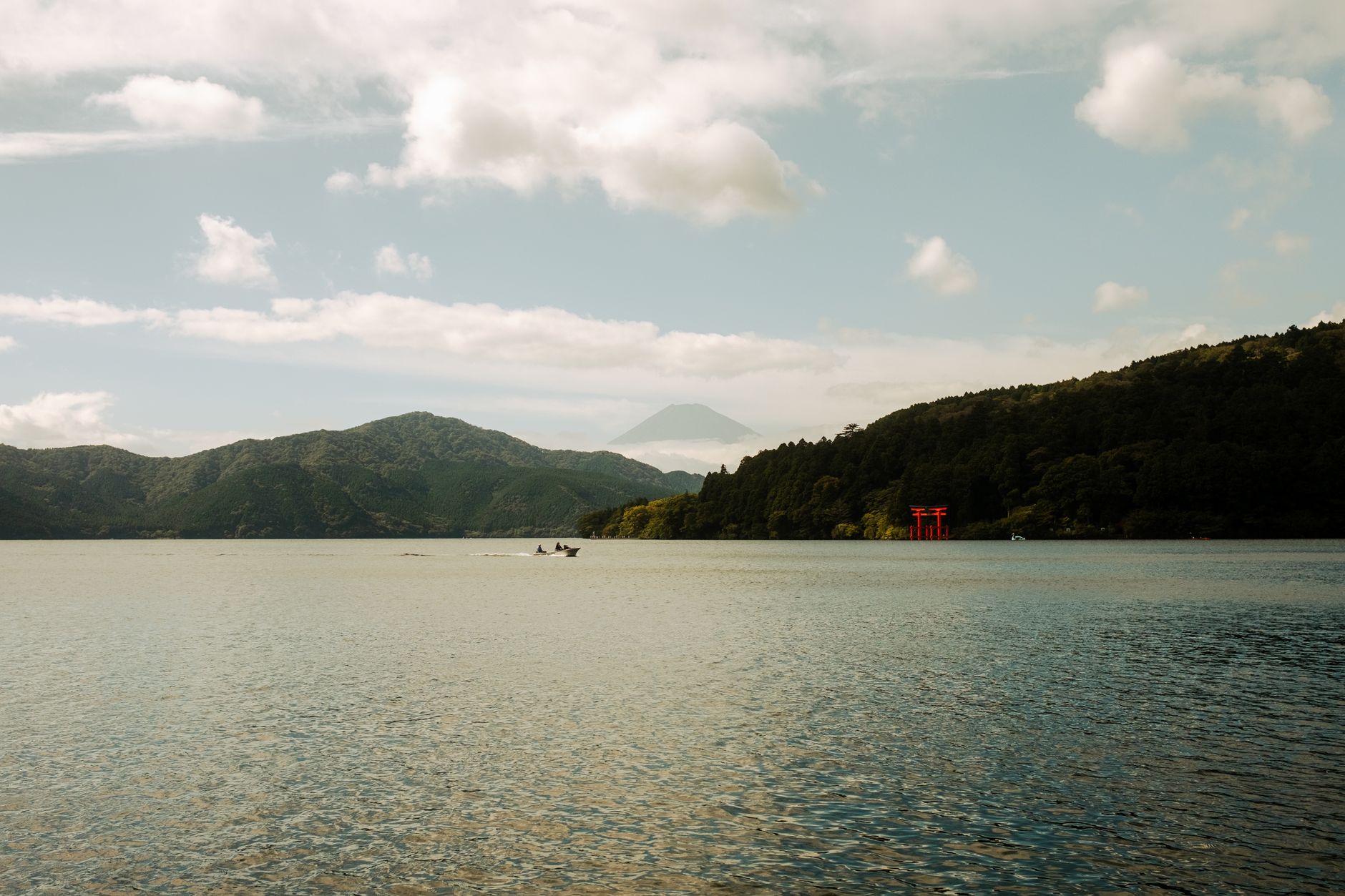
Lake Ashi fills part of the old caldera. The sightseeing cruise’s pirate-style ships link Togendai, at the top of the ropeway, with Hakone-machi and Moto-Hakone, where the red torii of Hakone Shrine stands at the water’s edge. On a clear day Mount Fuji rises beyond the hills. It is the furthest area from Yumoto, about 25 minutes by car, and once the last boats and buses have gone, the evenings are quiet. The lake shore colours in early November.
Where to stay on Lake Ashi
- Odakyu Hotel de Yama, comfortable. On the shore near Moto-Hakone, with a 130,000 m² garden that looks across the lake to Mount Fuji, and hot-spring baths; the top-floor premium rooms have their own bath over the lake. About 25 minutes’ drive from Hakone-Yumoto and five from the Moto-Hakone pier. Choose it for the lake and, on a clear day, Fuji from your window. Watch out: you will rely on buses, the boats or the hotel’s shuttle to the pier, which you request when you book. Check rates on Booking.com →
- The Prince Hakone Lake Ashinoko, comfortable. A circular building by the architect Togo Murano, with 134 rooms including lakeside rooms and cottages, and an indoor hot spring; Fuji can be seen from the top-floor suites on clear days. Choose it for a lakeside hotel with room for a family. Watch out: the hot spring is a shared bath, not in the rooms. Check rates on Booking.com →
All 12 at a glance
| Place to stay | Own bath with a view? | Area | Tier | Best for |
|---|---|---|---|---|
| Yumoto Fujiya Hotel | Some rooms; bookable family baths | Hakone-Yumoto | Comfortable | One easy night |
| Fujiya Hotel | Hot-spring water in the room bath | Miyanoshita | Splurge | History |
| Hakone Ginyu | Yes, every room, open-air | Miyanoshita | Splurge | A private soak over the gorge |
| Hakone Kowakien Ten-yu | Yes, every room, open-air | Kowakien | Comfortable to splurge | A private bath at resort scale |
| Gora Kadan | Some rooms | Gora | Splurge | A classic luxury ryokan |
| Hyatt Regency Hakone | No: a shared spa | Gora | Splurge | Space and a Western hotel |
| Hotel Indigo Hakone Gora | Yes, every room, on the balcony | Gora | Comfortable | A private onsen at a hotel price |
| Hakone Tent | No: shared baths | Gora | Budget | A real onsen on a budget |
| Kinnotake Sengokuhara | Yes, every room, open-air | Sengokuhara | Splurge | A quiet stay for two (adults only) |
| Fuji-Hakone Guest House | Bookable private baths | Sengokuhara | Good value | A family-run welcome |
| Odakyu Hotel de Yama | Top-floor premium rooms | Lake Ashi | Comfortable | The lake and Fuji |
| The Prince Hakone Lake Ashinoko | No: a shared indoor spring | Lake Ashi | Comfortable | Families by the lake |
Getting around from your hotel
- The Hakone Freepass covers eight kinds of transport, including the Odakyu line to Odawara, the mountain railway, the cable car, the ropeway, the sightseeing cruise and the Hakone Tozan buses in its area. From Shinjuku it costs ¥7,100 for two days or ¥7,500 for three; from Odawara, ¥6,000 or ¥6,400. The Romancecar is extra: ¥1,200 from Shinjuku to Hakone-Yumoto. Klook and KKday sell it ahead, as does Odakyu itself.
- The classic loop runs from Yumoto up the mountain railway to Gora, the cable car to Sounzan, the ropeway over Owakudani to Togendai, the boat across Lake Ashi to Hakone-machi or Moto-Hakone, and the bus back to Yumoto. Staying in Gora or on the lake splits it in two.
- Luggage: send big cases from Hakone-Yumoto Station to your hotel (see Hakone-Yumoto above), or, coming from Tokyo, have them delivered to your next city instead and bring a day bag.
- Autumn: the colour moves down the mountain, from Owakudani, Sengokuhara and Togendai in late October to mid November, through Gora and Miyanoshita in early to mid November, to Yumoto in mid to late November.
Frequently asked questions
Where is the best area to stay in Hakone?
For one night and the easiest trip, Hakone-Yumoto, where the Romancecar from Shinjuku arrives in about 80 minutes. For the classic loop of mountain railway, cable car, ropeway and lake cruise, Gora. For the lake, and Mount Fuji on a clear day, Lake Ashi. Miyanoshita has the historic Fujiya Hotel and ryokan over the gorge, and Sengokuhara is the quiet, highland side.
Which Hakone ryokan have a private open-air bath in every room?
Among our picks: Hakone Ginyu (20 rooms, over the Hayakawa valley), Hakone Kowakien Ten-yu (150 rooms), Hotel Indigo Hakone Gora (100 rooms, on the balcony) and Kinnotake Sengokuhara (9 rooms, adults only). Gora Kadan has private baths in some rooms.
Is one night in Hakone enough?
For a ryokan evening and one ride round the loop of mountain railway, cable car, ropeway and lake cruise, yes, if you arrive in the early afternoon. Two nights make it unhurried, or let you split the loop across two days.
How much is the Hakone Freepass?
From Shinjuku, ¥7,100 for two days or ¥7,500 for three; from Odawara, ¥6,000 or ¥6,400. It covers eight kinds of transport, including the mountain railway, cable car, ropeway, sightseeing cruise and Hakone Tozan buses. The Romancecar is extra: ¥1,200 from Shinjuku to Hakone-Yumoto.
How do I send luggage to my hotel in Hakone?
Use the Hakone Luggage Transport Service counter inside Hakone-Yumoto Station: drop the bag by noon (book online by 11:30) and collect it at your hotel from 15:00, for ¥1,500 a piece or ¥2,500 for a large case. In reverse, give it to your hotel's front desk by 10:00 and pick it up at the station between 13:30 and 18:30.
When are the autumn leaves in Hakone?
The colour moves down the mountain: Owakudani, Sengokuhara and Togendai from late October to mid November, Gora and Miyanoshita in early to mid November, Lake Ashi in early November, and Hakone-Yumoto in mid to late November.
Sources & further reading
- Odakyu: the Hakone Freepass
- Odakyu: the Romancecar from Shinjuku to Hakone
- Hakone Navi: Hakone Luggage Transport Service
- Hakone Navi: fall foliage spots and timing
- Hakone Navi: Sengokuhara pampas grass field
- Japan National Tourism Organization: Hakone Tozan Railway
- Fujiya Hotel: history and directions
- IHG: Japan welcomes its first Hotel Indigo, in Hakone Gora
- Japan National Tourism Organization: Gora Kadan
- japan-guide.com: Hakone hot springs and the bathing tax
- Official websites of each place to stay named above, checked in September 2026
Ryokan and hotels renovate and reprice. Every detail here was checked in September 2026; confirm rates, bath arrangements and meal plans with the property before booking. These are researched picks, not reviews. This article contains affiliate links: hotel rates on Booking.com and other booking sites through Stay22, and Klook and KKday for the Freepass; if you book through them we may earn a commission at no extra cost to you. No ryokan or hotel pays to be included.
Keep reading on Gently Yonder
- The Best Day Trips from Tokyo Nikko, Hakone, Kamakura, Mount Fuji and more — where to go from Tokyo and how to book each.
- Where to Stay in Japan on a First Trip Two bases beat four: how many nights in Tokyo, Kyoto and Osaka, and moving day in between.
- Where to Stay in Tokyo Six neighbourhoods and 17 named hotels, from Park Hyatt to a 70-year-old family ryokan.
- Where to Book a Mount Fuji Day Tour Klook and KKday both sit at about ¥7,800, so price is not the decision — the month, the departure time and the cancellation line are.
- How Much Does a Trip to Japan Cost? A realistic 2026 budget — flights, hotels, rail, food, and where costs surprise people.
- Best Time to Visit Japan (2026) A season-honest guide — blossom and foliage windows, the summer heat, typhoons, and crowds.