No one pays to be recommended here, and we say when a free or cheaper option wins. Our promise →
In this guide8 sections
The most expensive mistake on a first trip to Japan is rarely the wrong hotel. It is too many of them. Every move costs most of a morning: checking out, usually by ten or eleven, carrying bags through a station, then waiting for a check-in that is usually at three. Four hotels in ten days is three of those mornings given to lobbies and luggage, and the trains that make moving so tempting are exactly what make it unnecessary.
So this guide starts with how many bases to have, then how many nights in each, then which part of each city. Our city guides go further and name the hotels: where to stay in Tokyo, in Kyoto and in Osaka.
The short answer
| Trip length | Where to sleep | Why |
|---|---|---|
| 5 or 6 days | Tokyo only, with day trips | Nikko, Hakone and Kamakura are each about one to two hours away by train |
| 7 or 8 days | Tokyo 4 nights, then Kyoto 3 | One move, by Shinkansen; Osaka and Nara become day trips from Kyoto |
| 10 days | Tokyo 4, Kyoto 3, Osaka 2 | Fly into Tokyo and home from Kansai Airport, so nothing backtracks |
| 12 days or more | Add one ryokan night, in Hakone or Kyoto | One night gives you nearly all of the experience |
The rule behind the table: give every base at least two nights, the only exception being a single night in a ryokan. Fewer moves means fewer mornings lost, and in a country this well connected, a well-placed base reaches far more than it seems to.

Tokyo: choose the station first
Tokyo is not one centre but several, each grown around a railway station, and the station you sleep near shapes every day of the stay. That is why the first decision is the station, not the hotel.
For most first trips, the south or west side of Shinjuku, or Shibuya, is the answer. Shinjuku has direct trains to almost everywhere, plus the Romancecar to Hakone and the highway buses to Mount Fuji; Shibuya is younger, walkable and superbly connected to the south and west of the city. The Marunouchi side of Tokyo Station suits Shinkansen days and quiet evenings. Asakusa and Ueno trade a little convenience for old-Tokyo character and better value, and Ueno has the Keisei Skyliner from Narita next door.
Stay put once you have chosen. Changing hotels within Tokyo to be “near” each day’s sights costs more time than the extra train rides would.
Where to stay in Tokyo compares the six areas and names 17 hotels, from Park Hyatt Tokyo to a family-run ryokan in Yanaka, each with its catch. If Shinjuku is your answer, you can also see the hotels around Shinjuku Station with current prices.
Moving day: Tokyo to Kyoto or Osaka

The one move on most first trips is the Shinkansen west. The Nozomi takes about 2 hours 15 minutes from Tokyo to Kyoto and costs about ¥14,170, city centre to city centre; our guide to Tokyo to Kyoto by Shinkansen, flight or bus compares every way to make the trip.
The bags are the only real question, and there are two good answers.
- Carry them. On the Tokaido Shinkansen, a bag whose length, width and height add up to more than 160 cm, and no more than 250 cm, needs a seat reserved with an oversized-baggage area. The reservation costs nothing; without one you pay ¥1,000 and put the bag where the conductor tells you. A carry-on-size case is well under the limit.
- Send them ahead. Yamato Transport’s TA-Q-BIN delivers suitcases between cities, next day to almost anywhere in Japan, and its Kyoto page quotes ¥3,160 for a large suitcase (its 160 size) going to Tokyo. Many hotel front desks will arrange it. It frees you to travel with a day bag, which matters most on the night you spend somewhere small, such as a ryokan.
Kyoto or Osaka for the second base?
This is where most first-timers hesitate, and it matters less than it seems: the two cities are 15 to 30 minutes apart by train, depending on the service, so whichever you choose, the other is a day trip. Osaka or Kyoto as a base weighs up the choice in full; here is the short version.
Kyoto is for temples, gardens and the old streets before and after the day visitors. Stay downtown near a subway station for the best all-round base, by Kyoto Station if you are arriving by Shinkansen or from Kansai Airport, or in Gion and Higashiyama to be in the old city at dawn and dusk. Nara is about 45 minutes away. Where to stay in Kyoto compares five areas and names 14 hotels and ryokan, or you can see the hotels in downtown Kyoto with current prices.
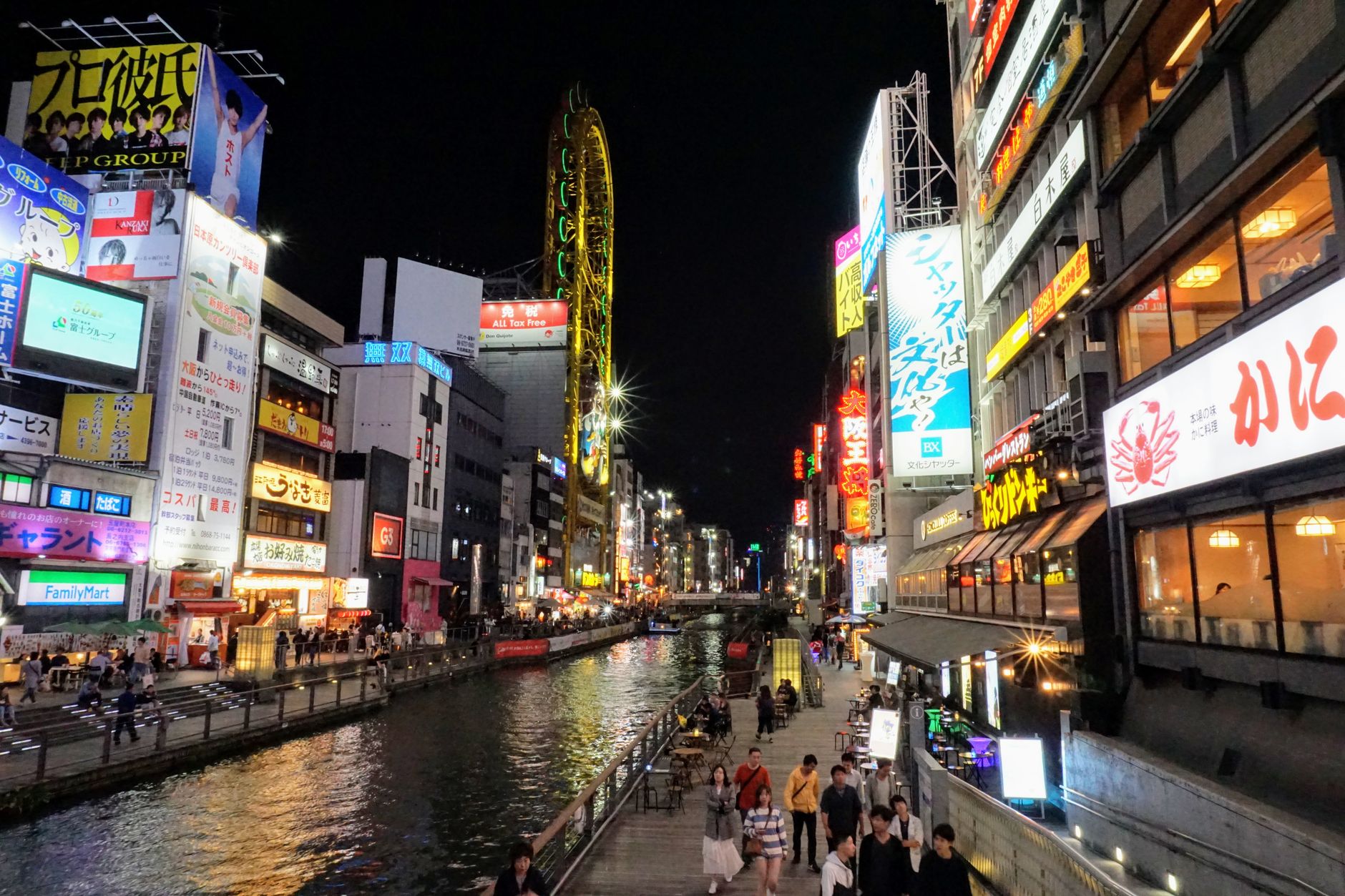
Osaka is for food and nightlife, with a smaller lodging tax than Kyoto’s (see below). Namba and Shinsaibashi put the canal, the street food and the nightlife on foot; Umeda, around Osaka Station, is the transport end, with the Haruka to Kansai Airport stopping there since March 2023. Where to stay in Osaka compares five areas and names 10 hotels, or you can see the hotels around Namba and Shinsaibashi.
With ten days, you don’t have to choose: three nights in Kyoto, then two in Osaka, flying home from Kansai Airport.
Where one ryokan night fits
A ryokan is a traditional inn: tatami rooms, futons laid out while you are at dinner, and usually a shared bath. On a first trip it is worth one night, rarely three, because the second and third nights mostly repeat the first evening, at full price each time (how much Japan costs makes the case).
There are two natural places for it. In Kyoto, the historic inns are in the city itself; our Kyoto guide includes Tawaraya and Hiiragiya. In Hakone, about 80 minutes from Shinjuku on the Odakyu Romancecar, the draw is the hot springs and, on clear days, Mount Fuji (where to stay in Hakone compares five areas and 12 ryokan and hotels). Dinner is often part of the rate and served at a set time, so plan to arrive in the afternoon, and send the big suitcase on to your next hotel.
What each night costs on top: lodging taxes
All three cities add a small tax per person per night, usually collected at check-out. Kyoto’s rose sharply on 1 March 2026.
| City | Tax per person, per night |
|---|---|
| Tokyo | ¥100 on rooms from ¥10,000 to ¥14,999; ¥200 from ¥15,000. From April 2027, 3% of the rate on stays of ¥13,000 or more per person |
| Kyoto (from 1 March 2026) | ¥200 under ¥6,000; ¥400 from ¥6,000; ¥1,000 from ¥20,000; ¥4,000 from ¥50,000; ¥10,000 from ¥100,000 |
| Osaka (since 1 September 2025) | ¥200 on rooms from ¥5,000 to ¥14,999; ¥400 from ¥15,000; ¥500 from ¥20,000; none under ¥5,000 |
For a mid-range room these are small sums, but in Kyoto’s luxury tier they are not, and they are one more reason some travellers sleep in Osaka and visit Kyoto for the day. Japan’s tourist taxes in 2026 has the detail, including the departure tax in your airfare.
When to book
Book the rooms first, before the tickets and the timed attractions, if your dates touch any of these:
- Cherry blossom, roughly late March to early April in Tokyo and Kyoto.
- Golden Week, 29 April to 6 May in 2026, when much of Japan travels at once.
- Obon, in mid-August.
- Autumn leaves in Kyoto, usually from late November into early December.
- The New Year holidays.
In those windows the well-located mid-range hotels go first, often months ahead (the best time to visit Japan has the calendar). Outside them you can usually book closer to the date; either way, a free-cancellation rate lets you hold a good room early without losing flexibility.
Frequently asked questions
How many nights should I spend in Tokyo on a first trip?
Three or four on a trip of seven to ten days: enough for two or three neighbourhoods and one day trip, such as Nikko, Hakone or Kamakura, all from the same hotel.
Is it better to stay in Kyoto or Osaka?
Kyoto for temples and quiet early mornings in the old city; Osaka for food, nightlife and a smaller lodging tax. They are 15 to 30 minutes apart by train, so either works as a base for visiting the other.
Can I visit Kyoto as a day trip from Tokyo?
You can, but it is a long day: about 2 hours 15 minutes each way on the Nozomi at about ¥14,170 each way. Most first trips are better giving Kyoto at least two nights.
How do I move luggage between cities in Japan?
Carry it, reserving a seat with an oversized-baggage area on the Tokaido Shinkansen if a bag's dimensions add up to more than 160 cm, or send it ahead with Yamato's TA-Q-BIN, which delivers next day to almost anywhere in Japan. Many hotel front desks will arrange the sending.
Do I need to book hotels in Japan in advance?
For cherry blossom, Golden Week, Obon, Kyoto's autumn leaves and the New Year, yes: well-located mid-range rooms often go months ahead. Outside those windows you can usually book closer to the date.
How much is the hotel tax in Japan?
It depends on the city. Tokyo adds ¥100 or ¥200 per person per night on rooms from ¥10,000; Osaka ¥200 to ¥500 on rooms from ¥5,000; Kyoto, since March 2026, from ¥200 to ¥10,000 depending on the rate.
Sources & further reading
- Central Japan Railway Company: reservations for seats with an oversized baggage area
- Yamato Transport: baggage delivery and storage in Kyoto
- Odakyu: the Romancecar from Shinjuku to Hakone
- Tokyo Metropolitan Government Bureau of Taxation: accommodation tax
- Kyoto City official travel guide: accommodation tax change from March 2026
- Osaka Prefecture: changes to the accommodation tax (Japanese)
Every detail here was checked in September 2026; fares, taxes and delivery prices change, so confirm them when you book. This guide contains affiliate links: the hotel searches go through our partner Stay22, which pays us a commission if you book, at no extra cost to you. No hotel pays to be included.
Keep reading on Gently Yonder
- Where to Stay in Tokyo Six neighbourhoods and 17 named hotels, from Park Hyatt to a 70-year-old family ryokan.
- Where to Stay in Kyoto Five areas, 14 hotels and ryokan, and the accommodation tax that changed in March 2026.
- Where to Stay in Osaka Namba or Umeda? Five areas and 10 hotels, from Dotonbori to the park gates of USJ.
- Where to Stay in Hakone Five areas and 12 ryokan and hotels, and which have a private open-air bath.
- Japan: A 7-Day First-Timer's Itinerary Three days in Tokyo, a day trip, two days in Kyoto, and a day in Osaka — tied together by the Shinkansen.
- Tokyo to Kyoto: Shinkansen vs Flight vs Bus Price, time and comfort compared honestly — and when the plane actually wins.
- Osaka or Kyoto: Choosing Your Kansai Base Two very different home bases compared — cost, food, day trips, and atmosphere.